Showing posts with label adventure. Show all posts

Friday, August 14, 2015

Hank the Cowdog (series review) ~ 4.5 stars

Time for a fun review of a very fun series that’s great for just about any person of any age. I haven’t met anyone so far who doesn’t like these books, and since I love them so much, it’s high time I wrote a review.

John R. Erickson is a author from Texas who has written 65 books (and counting) about a fictional dog called Hank the Cowdog. Since I have yet to read a Hank the Cowdog book that isn’t worthy of at least 4 stars, this review will be a general one that can apply to any one of the books.

Hank the Cowdog, the narrating character, is the Head of Ranch Security on a ranch in the Texas Panhandle. Basically, his job is to keep the entire ranch running and safe from coyotes, monsters, and whatever else might pose a threat. He also barks the sun up every morning, herds cattle, helps the cowboys bale hay, and keeps his screwball assistant Drover from causing too much trouble.

Hank is a real character—you can’t always trust everything he says. Half it is exaggerated or completely made up, and the other half is the result of a garbled conversation with Drover. According to Hank, he’s a blue-ribbon, papered, pedigreed cowdog—the truth is that he’s just a ranch mutt with an inflated opinion of himself. But Hank’s adventures are not exaggerated—while he may not fight Laundry Monsters in Sally May’s front yard, he does have some narrow shaves with cannibal coyote brothers Rip and Snort. And there’s the time when he ends up in the dog pound, and the time when he’s stranded in town, and, well, you get the idea. Plus Hank thinks he’s a big favorite with the lady dogs, which adds another level of hilarity to every encounter he has with them.

Drover, Hank’s assistant, is the source of a lot of the humor in the Hank the Cowdog books. He spends most of his time daydreaming, watching the clouds, and otherwise behaving in what Hank would call a “frivolous manner.” Drover has a hard time dealing with reality, and his preferred response is to run to the safety of the machine shed until things blow over. He spends most of his time confused, and this has led to a lot of misleading conversations with Hank that have caused some pretty spectacular mix-ups. Take, for instance, the time Drover thought the world was coming to an end after Sally May went to a clearance sale in town.

There’s a mixed bag of other recurring characters in the Hank the Cowdog books that are just as important as Hank and Drover. There’s Slim, the bachelor ranchhand and Loper, his boss. There’s Sally May, Loper’s wife, and Pete the Barncat, Sally May’s pet. There’s also the buzzards, Wallace and Junior, a tribe of wild coyotes, J.T. Cluck the rooster, and a whole bunch of others. They all add up to make the Hank the Cowdog books some of the funniest books I’ve ever read. Hands down.

Why are they funny? It’s hard to explain, but John R. Erickson takes full advantage of all the screwy characters in his books and uses them to create situations that are funny in a way that makes you laugh out loud. It’s not slapstick humor, and it’s not a dumb kind of funny. Hank the Cowdog is always hilarious in new ways every time, and it’s good, clean humor that everyone can laugh at because it really is funny. Hank’s adventure’s are also just plain entertaining, and they’re just as fun to read the eighth time as they were the first time. Basically, I’d suggest you get the first five of these and start reading them. We bring them along to read aloud in the car. If you’re that kind of person, I bet you could read them to the kids before bed. And if you’ve got kids who are starting to get interested in reading, these are definitely good books to put into their hands. I really can’t recommend the Hank the Cowdog series highly enough.

This isn’t the first Hank the Cowdog review I’ve written either. I had one published in my local newspaper, and also posted a short review on my other blog, Too Hick To Be Square. But trust me, they all say the same thing. Hank the Cowdog is a great series. They’re fun, they’re funny, they are really, really good books. Enough said. Now get yourself to a library and check one out.

Link to author website: http://www.hankthecowdog.com/

Friday, April 17, 2015

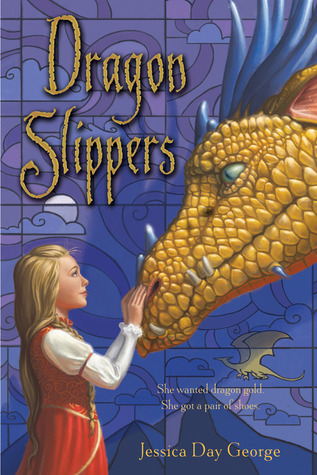
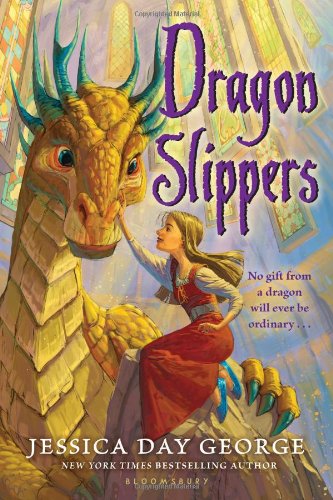
Dragon Slippers (series review) ~ 4 stars

     The Dragon Slippers trilogy by Jessica Day George consists of Dragon Slippers, Dragon Flight, and Dragon Spear. It's the story of an unlikely heroine who uses her dauntless spirit, courage, and embroidery skills(!) to save her country, save her friends, and save the dragons.

     Creel has never been what you might call a damsel-in-distress. After her aunt tried to foist her off on the local dragon in hopes that some prince would rescue her, Creel set off on her own to make her fortune as a dressmaker. Wearing a pair of slippers given to her by a dragon, she soon finds a job and seems about to realize her dreams. She even strikes up an unlikely friendship with Luka, prince of Feravel, as well as befriending another dragon named Shardas. When the normally peaceful and solitary dragons suddenly attack the people of Feravel, Creel is the only one who believes that they might have been forced to attack. Together, she and Luka discover that not only are Creel's slippers far from ordinary, but that the dragons are being controlled by a foreign princess who intends to conquer Feravel. It will be up to Creel to rescue her friends and point out the person who is really behind the Dragon Wars.

     Dragon Slippers happens to be my favorite of this trilogy. Creel is just getting started on her dressmaking business, and she still has a lot to figure out about dragons. I liked the atmosphere of Feravel, and in this book, you get to find out a lot about Creel and what she's like. In the other books, there's more focus on action and on dragons - and while I love dragons, I really liked Creel. Also, since the romance with Luka is just beginning and Creel's two friends Alli and Marta are more involved in this book, we get more interaction with people in this book.
     In Dragon Flight, everything has just returned to normal, and the humans are beginning to get used to living side by side with dragons again. Creel divides her time between her new dressmaking shop, her reward for ending the Dragon Wars, and spending time with her friend Shardas and his mate Velika, who were both wounded during the war. Then the neighboring country of Citatie declares war on Feravel, and Prince Luka learns that Citatie intends to use dragons in their impeding invasion. Creel, Feravel's resident expert on dragons, is sent to Citatie to find out what she can about this invasion force. Once there, she discovers to her horror that not only are the dragons enslaved and alchemically controlled by the king of Citatie, but that the king of Citatie is being controlled himself - by a white dragon. Before the two countries go to war, which would certainly result in Feravel being destroyed, Creel has to find a way to free the enslaved dragons and defeat the white dragon, who is none other than the brother of Shardas. The fate of dragons and of Feravel hangs in the balance.

     This book definitely concentrated on dragons quite a lot, as well as the strange culture of Citatie. I enjoyed this book because this time, although alchemy was used again, the villain wasn't a person. It was another dragon, and so this was more of a dragon civil war than a war between humans. That aspect lends a voice to this book that is different from the previous one. I really liked this book, but not quite as much as I liked Dragon Slippers.

     Peace between humans and dragons has been restored as Dragon Spear begins. The dragons have flown away to remote islands overseas where they no longer pose a threat to the human kingdoms, even if someone were to find a way to control them again. Creel and Luka, soon to be married, fly to these islands to visit their friends, and arrive just as Velika, Shardas' mate and the queen of the dragons, is kidnapped by rogue dragons. These dragons keep humans as slaves and believe they are the chosen followers of the true dragon queen. Though they consider Velika a pretender, their own queen has died and their eggs are poisoned by the fumes of the volcanic island where they live. Desperate, they have kidnapped the pregnant Velika and intend to raise one of her hatchlings as their new queen. Somehow Creel, Luka, and Shardas will have to find a way to rescue Velika and her eggs, and time is running short. The volcano is about to explode and when it does, no one on the island will survive - not the rogue dragons or their human slaves.

     As different as Dragon Slippers and Dragon Flight were from each other, Dragon Spear is even more different from each of them. I actually like that, because although I get the same characters back each time, I don't have to read a repeat of the last book. Every time I get something fresh. Dragon Spear was definitely a book about the dragons - only three humans really have any significant roles in the book: Creel, Luka, and Creel's brother  Hogan. But as far as dragons are concerned, a lot of the ones from the first two books have returned once again, and some new ones are introduced. I also liked getting a little bit of the background story of the dragons - where they came from, how they governed themselves, what things had happened in their past.

     This trilogy was a real gem. For those who like books about dragons but are having a hard time finding a good dragon book that they haven't already read, this is one to try out. I also want to point out that it's not just a dragon book, it's also a very good story as far as plot, setting, and characters go. Even if you're not one of those people who comb the library and bookstore for the latest books with dragons on the cover, this is a trilogy worth adding to your summer reading list.

     I've reviewed another series by Jessica Day George, the Castle Glower series. Dragon Slippers is more complex and detailed than that one, aimed at a slightly higher reading level, but both of them are definitely Jessica Day George series. She always has characters who aren't just characters, they're individuals. They always have plenty of attitude and spice, which keep the story moving even if it isn't action-packed. Also, I like her romances because for one thing, they never dominate the entire story, they just provide another layer to the plot. And for another thing, the guy character in the romance isn't just there to be the other half, he's a person with as much personality as the girl character. That's something that's missing in quite a lot of books, so its one of the reasons I like her romances.

     Another thing I like about Jessica Day George's books is that she adds that little extra touch to make her characters and her stories definitely different from the books they share the shelf-space at the library with. Yes, there are dragons, a country in peril, wars, and even a romance with a prince. But don't forget that Creel makes dresses for a living. That's her special skill. And actually, her talent for dressmaking and embroidery remains a constant and important feature of each of the books, so you never forget that she's more than just a friend of dragons. In other words, this is definitely a trilogy worth reading, especially for the dragon-loving readers out there.

Link to author website: http://jessicadaygeorge.blogspot.com/

Friday, April 10, 2015

The Glass Sentence ~ 3 stars

     The Glass Sentence, by S.E. Grove, is a book that I've had on my read-and-review booklist for a month or two now. I saw it on Amazon and the little blurb about it there looked promising - some pirates, some sailing, a lot of maps, some sort of intricate setting, that kind of thing. It looked like it was going to be a really sweet story, a really interesting beginning to what could be a very interesting trilogy. When I saw that the library had gotten it, I was very excited and of course checked it out.

     The story began fairly interestingly, introducing a world that has been torn and fragmented by the Great Disruption, a devastating event which caused the Ages of the world to fluctuate and change so that all over the world people are trapped in different Ages. New Occident, previously known as the American Colonies, is home to Shadrack Elli, a world-renowned cartologist, a man who makes it is business to map the world and the Ages in it. Living with him in their home in Boston is his niece Sophia Tims. Sophia is effectively an orphan after her parents disappeared on an expedition when she was three. Raised by Shadrack, Sophia has learned a lot about maps, mapmaking, and knows more than most thirteen-year-olds about the Great Disruption and its effects. 

     When her uncle Shadrack is kidnapped by a cult seeking the location of a legendary map called the carta mayor, a map that is said to chart all the Ages of the world, Sophia is the only one who begin the search for him. Helped by Theo, a refugee from the Baldlands, Sophia sets out on a quest to track down her uncle. Along the way they are pursued by his kidnappers, because Shadrack has entrusted her with a valuable map that is key to finding the location of the carta mayor

     With this kind of plot, the story sounded good - very good, in fact. I was very, very excited to read it, and maybe my high expectations are part of why I was so disappointed by this book. From the moment Sophia left Boston, I grew more and more confused as to where she was, and even more importantly, what she was doing there. With all the things going on - being attacked by Sandmen, throwing in with gentlemen pirates, and running across Theo's enemies - it was hard to keep track of the main thread of the story and the reason Sophia was going where she was going. Also, because of the Ages being all mixed up and varying from place to place, the world was fractured and cultures in these different Ages were vastly different. Normally this would make for an incredibly rich setting for the story to take place in, but I felt like there was so much extra detail thrown in that the story would occasionally be derailed when some new fact of the particular Age they were in had to be explained. The story would have been simpler and easier to read if some of those extra things had been pulled out and saved for a moment when they would really be important and not just peripheral information.

     The other thing that really disappointed me in this book was the lack of a good villain. Blanca, the mysterious woman who has Shadrack kidnapped, lacked real power. Sure, when she was first introduced into the story, I expected her to be a truly terrifying villain who would stop at nothing to get what she wanted - unlimited power and control of the carta mayor. Not so. Although Blanca seemed like she would be a thoroughly heartless villain, all of her casual acts of cruelty that would have made her seem truly evil never really had that effect because Shadrack never seemed to feel really afraid. He was too much like a robot in my mind, barely touched by his emotions and forever thinking about everything without really feeling anything. S.E. Grove set her up to be a magnificent example of pure villainy, but she tore her down just as quickly by failing to make the characters react as if she were really that terrible. Because of this, Blanca never manages to be the villain who would have made the book really stand out.

     However, the part about the Great Disruption and the maps was very good, the maps in particular. S.E. Grove definitely used her imagination in concocting this setting and the numerous details of Shadrack's trade. All the different kinds of maps - glass maps, metal maps, sand maps, even water maps - add such a unique dimension to the story. Also the emphasis that everyone in this world places on time. Since the Great Disruption, time and how it is measured has become a very important part of everyone's life. That's not a concept that I've seen discussed in a lot of books, and it adds a whole new dimension to The Glass Sentence. I can definitely say that the maps and the issue of time were my favorite parts of this book.

     I also admire what S.E. Grove did with Sophia. She has no internal clock, and she finds it very hard to keep track of time. For her, hours can pass by in a matter of seconds, while a minute or two can drag on forever. In order to keep track of her own memories and life story, she has to map the events of her days, giving her a record of what has happened. In fact, its the fact that time has no hold on Sophia that makes it possible for her to do what has to be done to save the carta mayor from Blanca's clutches and keep the Ages of the world from colliding and destroying each other. 

     In the end, I give this book three stars because although it could have been really good, the lack of a strong villain character and my difficulty in keeping track of where things were taking place made this book less satisfying than I expected. However, I won't judge it too harshly, since it's just the first book of a new trilogy, called The Mapmakers Trilogy. A first book is only intended to start setting up the bigger story, so although I wasn't entirely happy with this first book, some of the issues I had with The Glass Sentence will most likely be resolved and dealt with in the two books to come. It's at least worth 3 stars, and I would definitely point you toward this book if you're interested in quest stories, imaginative settings, and fictional imaginings of the world.

Thursday, April 2, 2015

The Books of Umber: Happenstance Found ~ 4 stars

I found P.W. Catanese's first book of The Books of Umber by chance. Part of the reason I checked it out from the library was the fact that Brandon Mull, the author of the Fablehaven series and The Beyonders series, had reviewed it. Our blog's motto is 'Never judge books-or people-by their covers', and I often stick to that rule. But this time I broke it. It just looks so cool!
I know I stay within my book genre preferences. I rarely ever venture out for something new. But going from author to similar author hasn't disappointed me yet, and Brandon Mull's name on this book's cover gained it access to my bookshelf. And gladly so! I was thoroughly pleased by this book. The characters were believable and relatable, though there was some tough love thrown in the mix.

Literally.

On the subject of romance, there is only about 5% out of the 100% goodness in here, and what is mentioned leaves you wanting to hear more. Yes, I said it. More romance. More details, specifically. I love the way Catanese adds mystery to the story. Every hint is subtle, but has a nuclear bomb impact on the reader. That, in my experience, is hard to pull off.

The book begins with a young boy, just awaking, blindfolded, and seemingly alone in a dark environment. As he searches his mind he finds that he has no memory of his past, nor his present, and then someone speaks. And Catanese whisks you away into a world full of mystery and adventure! The boy Happenstance (nicknamed Hap) meets Lord Umber, Sophie, and Oates first thing after he wakes and starts a voyage across the sea on a giant whale-like friend, Boroon, captained by Nima, a part fish, part human young lady. The best bits of the book are the tiny details, and so without giving way and telling the whole story, I cannot say much else.

I will say that Umber is easily my favorite character. His boisterous mood swings, playful attitude, and fun-loving nature catch my attention. But then there are also Sophie, Lady Truden, Happenstance, Balfour...And so the rest are all equals.
I rated this book a four because it held all I was looking for, but it added a sort of cliffhanger at the end, and I know that the next books will continue the mystery. I am trying to leave higher ratings for the future, in other words.

Saturday, March 14, 2015

Boston Jane ~ 4.5 stars

     Boston Jane: An Adventure, by Jennifer L. Holm, is a historical fiction story which revolves around the realities of frontier life in 1854 and the inexperience of a young woman fresh from the civilized city of Philadelphia.

     Jane Peck is not what anyone would call a 'proper lady.' As a girl she was a complete tomboy and too fond of eating cherry pies. As a young woman of sixteen, though she has learned everything that Miss Hepplewhite's Young Ladies Academy can teach, she still seems incapable of becoming one of those women who hold an esteemed place in Society. But what she doesn't at first see is that the very things that prevent her from becoming a 'proper lady' are the things that enable her to survive and endure the challenges that the Northwest Territory hold for her. Without her strong, irrepressible nature and the stubborn will to succeed that she got from her father, she'd never have decided to travel to the untamed frontier of Shoalwater Bay to marry a man she has admired since childhood.

     These happy plans doesn't go as expected. When she reaches Shoalwater Bay where her fiance was supposed to be waiting for her, he has gone far away to work for the Governor of the territory, and has already married to a Chinook Indian woman. Friendless, without family or money, and with no way to get back home, Jane must find a way to survive in the primitive settlement. Everything she learned at Miss Hepplewhite's proves utterly useless as she rubs shoulders with the smoking, drinking, tobacco-spitting frontiersmen of the settlement and the Chinook Indians living nearby. But as she mends clothing, bakes pies,and begins make a place for herself at Shoalwater Bay, Jane discovers that what it takes to be a lady is not fine embroidery and fine clothing, but a stout heart and a refusal to give up.

     Boston Jane is a book that I enjoyed very, very much when I first read it about two or three years ago. Jane was a girl who I liked from the first page. She had an ironic view of life, and bold, forthright attitude. She was funny, she was brave, she didn't hesitate to screech at the frontier men when they starting getting on her nerves. And although she ended up in some of the most ridiculous situations, she somehow manages to make the best of everything that happens, including a smallpox epidemic that kills many of the native Indians. Jane isn't a dainty lady, she's far from perfect, and she's not always grateful for what she does have. It was those things that made me like her so much. She was just like me, except she could bake pies much better than I can.


     I liked many of the other characters in Boston Jane: An Adventure, and they all added to the distinct flavor of the book. Mr. Russell, the dirtiest, most flea-bitten man on the settlement, seems to have a low opinion of Jane, but beneath his gruff and grubby exterior is a heart of gold. Other new friends are Mr. Swan, an eccentric gentleman, and Handsome Jim, a Chinook Indian. Besides these, she also forms an unlikely friendship with a sailor called Jehu Schudder which may eventually bloom into something more. All these characters and more are found in Boston Jane, a collection of people with varied personalities that together this an entertaining, memorable read.

     And did I mention that this is actually a trilogy? So after Boston Jane: An Adventure,  there are two more books of Jane, Jehu, Mr. Swan, and Mr. Russell, along with new characters and new adventures/dilemmas for Jane to face. What's not to like? Be sure to check these both out of you like the first book.
Boston Jane: Wilderness Days
Boston Jane: The Claim
     By the way, my pet peeve about these books? They changed the cover art. My copies have interesting covers of Jane doing something she does in the book, and they're very inviting covers. Here you just get a girl in a dress standing. Pretty, but not very interesting, at least in my opinion. But that's just my pet peeve. The books are still good, regardless of what covers they have, and I highly suggest you read them. 

Link to author website: http://www.jenniferholm.com/p/novels.html

Thursday, March 5, 2015

Beyonders trilogy ~ 3 stars


     The Beyonders trilogy, by Brandon Mull, is a story of action, adventure, and courage set in a fantastical world pulled straight from the imagination of the author of the wonderful Fablehaven series. It's one of those books where a kid from our world travels to another place and finds himself the answer to prophecy. That's what Jason is: the answer to a prophecy, the hero who could save the world of Lyrian or destroy it. But he's also just an ordinary, baseball-loving teenager and at heart he's just like every one else.

     Jason comes from the Beyond - that would be our world - and his sudden arrival in a place nothing like Earth couldn't be more startling to him. Lyrian is a place like no other - you won't find another book with a world like Lyrian, and around every corner you're discovering something new about it. It's populated by humans, yes, but there are strange races living there, too, races created years ago by wizards. The food is exotic and varied, and the places Jason adventures to are as diverse as a swampy jungle full of huge frogs to the Tavern-Go-Round, a spinning tavern. All these things provide the backdrop for the story Brandon Mull has prepared.

     Jason, together with Rachel, another teen who has traveled from our world to Lyrian, are set on a quest by the Blind King to find the syllables to a magical world that can destroy the evil, tyrannical wizard Maldor, who seeks to conquer and control the entire world of Lyrian and everyone and everything in it. This quest will be dangerous enough, but no less dangerous than confronting Maldor in his fortress and speaking the word that will save Lyrian. And because of the nature of this series, I can't tell you what happens beyond that. You'll have to read them to find out.

     Now, with this fairly glowing description, maybe you're wondering why I'm only giving this series 3 stars. Here's why.

     In Lyrian, Brandon Mull created an amazingly detailed, intricate, unique world, filled with things and creatures I'd never heard of before, including wizard-born races that you will not find the like of in any fantasy novel you've ever read. Usually that's a good thing. I like to find unique worlds in books, but in Beyonders there was just too much for me to handle. I got lost in all the imagery - and not in a good way. There was so much going on in the background that I had a difficult time following the thread of the story with all these strange names of creatures and things popping up every few pages.

     Secondly, I had problems with the cast of characters in the Beyonders. As far as creating unique characters, Brandon Mull did well, especially with his wizard-born races to draw from. I do have a certain attachment to Ferrin the displacer, and I dare you to read the whole trilogy and hate him. Jason and Rachel were also great people, and the Blind King was...blind, of course, but pretty awesome. The problem for me was that there were other people who would join Jason and Rachel as they set off on each new quest, not so much in the first book, but definitely in the other two. And there were SO MANY of them, each with such a special skill-set that whenever they ran into trouble - and they did - there was always someone perfectly equipped to save their necks.

     Now, having a large cast of characters meant that Brandon Mull could regularly kill a few to remind Jason and Rachel to keep moving, but I find that creating characters and adding them to the story for a bit-part before killing them as a casual reminder isn't a mark of good writing. So between the jack-of-all-trades aspect of Jason and Rachel's ever-growing group of questers and their frequent, sudden deaths just to prove a point, I found the story lacking something. I couldn't get genuinely attached to the characters when I knew they'd be dead in 150 pages or so, only to be replaced by someone just as good or better. 

     Those are my reasons for rating the Beyonders the way I do. Despite having a brilliantly imagined world and a story premise that I loved, technicalities in how the author executed the story just didn't live up to my standards. However, there are lots and lots of people who had loved these books to an insane degree. I've read the reviews on Amazon, and there are fans out there as diehard as any fans of Harry Potter. So if you did like Fablehaven, I think the Beyonders might be worth looking into. It just didn't work for me.

     To sum up my somewhat extended review, let me just say that the first book of this trilogy has already been reviewed on Under Cover Agents by Mountain Gal, my blogging buddy. Check out her review HERE, and hopefully between us we can give a less biased assessment of these books.

Link to author website: http://brandonmull.com/site/beyonders-books

Tuesday, February 24, 2015

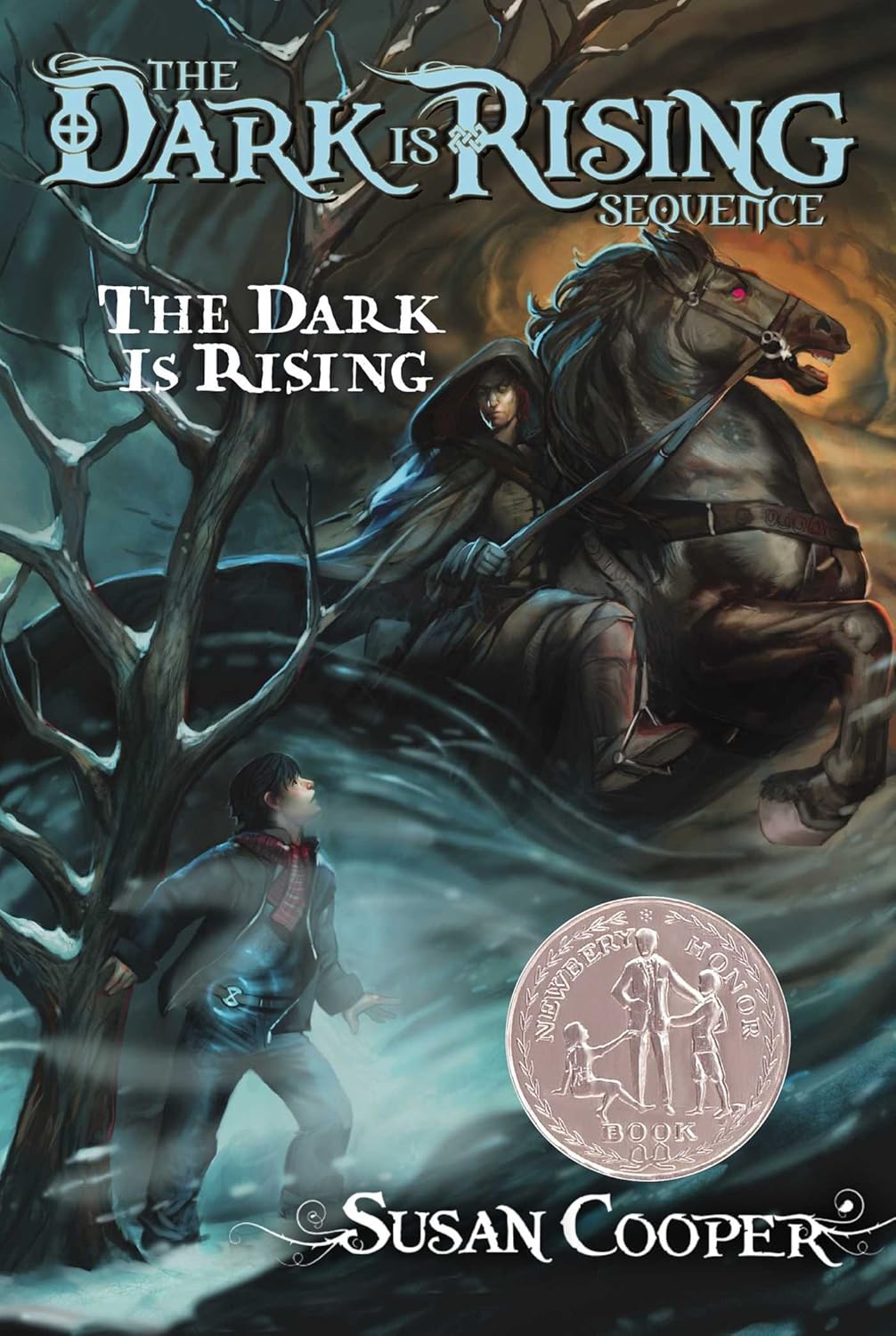
The Dark is Rising (series review) ~ 4 stars

Review requested by Katie

     The Dark is Rising sequence, by Susan Cooper is a mix of Arthurian legends and Irish/Scottish/Welsh folktales where good battles evil in an epic battle that spans all time. Will Stanton is the youngest of the Old Ones, and he is vitally important to this fight. The three Drew children, Simon, Jane, and Barney, are also connected to the fight between the Light and the Dark in ways that even they don't understand.


     In Over Sea, Under Stone, the three Drew children are staying in the seaside village of Tressiwick with their Great-Uncle Merry, who, although he isn't actually related to them, has been a part of their family for as long as they can remember. When Barney finds an ancient map in the attic of the cottage they're vacationing in, it sets them off on a dangerous quest to recover something that will help the Light defeat the Dark forever: the grail. But agents of the Dark have learned about the map as well and they are closing in. I liked the atmosphere of this one - when I started I expected some fluffy story about three kids having a wonderful vacation on the seaside. What I got was just the tip of the iceberg of a very epic, fantastic story that just got bigger and better the further into the series I went.

     The Dark is Rising introduces Will Stanton for the first time, probably my favorite character. The youngest of the Old Ones, beings who wield incredible powers, Will is the last of the Old Ones, the Sign Seeker. It is his task to find the six signs that will be the second of the important tools that the Light can use to defeat the Dark once and for all. The Hunter, a fearsome champion of the Dark, has been assigned to stop Will and steal the signs for the Dark, and Will will need all his wits about him, as well as the help of the first of the old ones, Merriman Lyon. This book was the most complicated of the books. Will goes from a completely ordinary boy to something entirely different, and his journey involves a lot of far-fetched stuff that Susan Cooper somehow makes completely believable under the circumstances. This would be the book I'd reread the most times, just because so much happens.


     Book three of this series, The Greenwitch, is where Will and the Drew children meet for the first time. There's some tension at first as the four of them figure out how to work together, but they've got a very important job to do. The grail has been stolen by the Dark and they have to get it back. Also, a being that belongs to neither the Light or the Dark has possession of a clue that will help strengthen the Light. The Greenwitch is a creature of wild Magic, reborn every year by the women of Tressiwick in a ritualistic ceremony. Together will Merriman Lyon, also known as Great-Uncle Merry, Will and the Drew's have to retrieve the grail and strike a bargain with the unpredictable Greenwitch. What I liked about this book was that this time around, the Old Ones didn't hold all the answers, and the Drews played a very important part in the story, even though they were basically ordinary human beings.

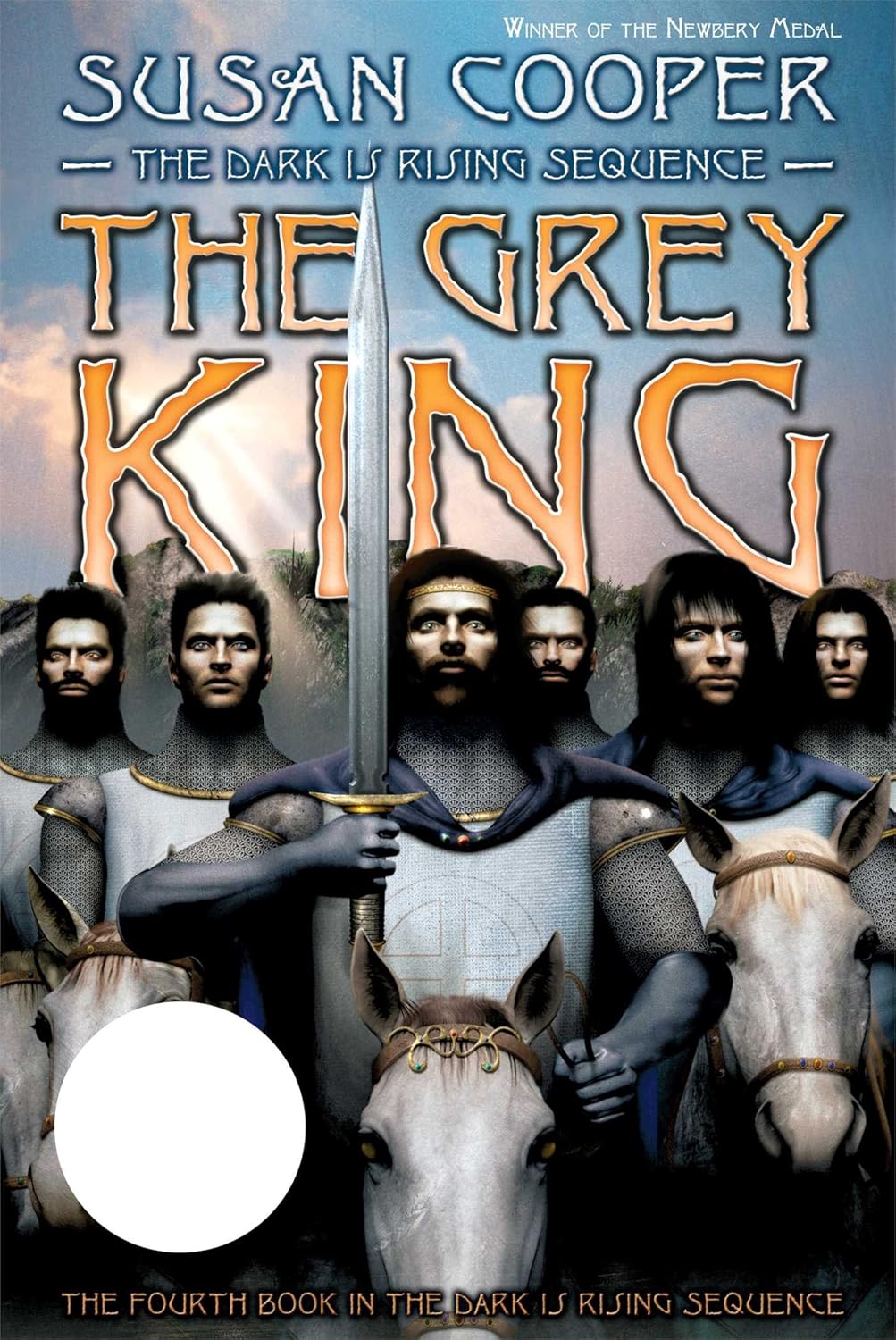
     A new character is added to the group in The Grey King, a Welsh boy called Bran. Will has been sent to Wales for the summer to recover from an illness, and together he and Bran will go on a quest of their own to find a golden harp which must be used to wake the six Sleepers. In this book we get an entirely new setting with its own forces of High Magic, Light, and Dark. There were plot twists here, too, such as Bran's mysterious mother and a dog who can see the wind. What I enjoyed here was getting to see Will working mostly on his own. Merriman was busy elsewhere and wasn't able to help Will directly, unlike in the previous three books. As much as I liked having Merriman show up to save the day, it was good to see Will taking charge in this one, and really learning how to be both an Old One and an (almost) ordinary boy.

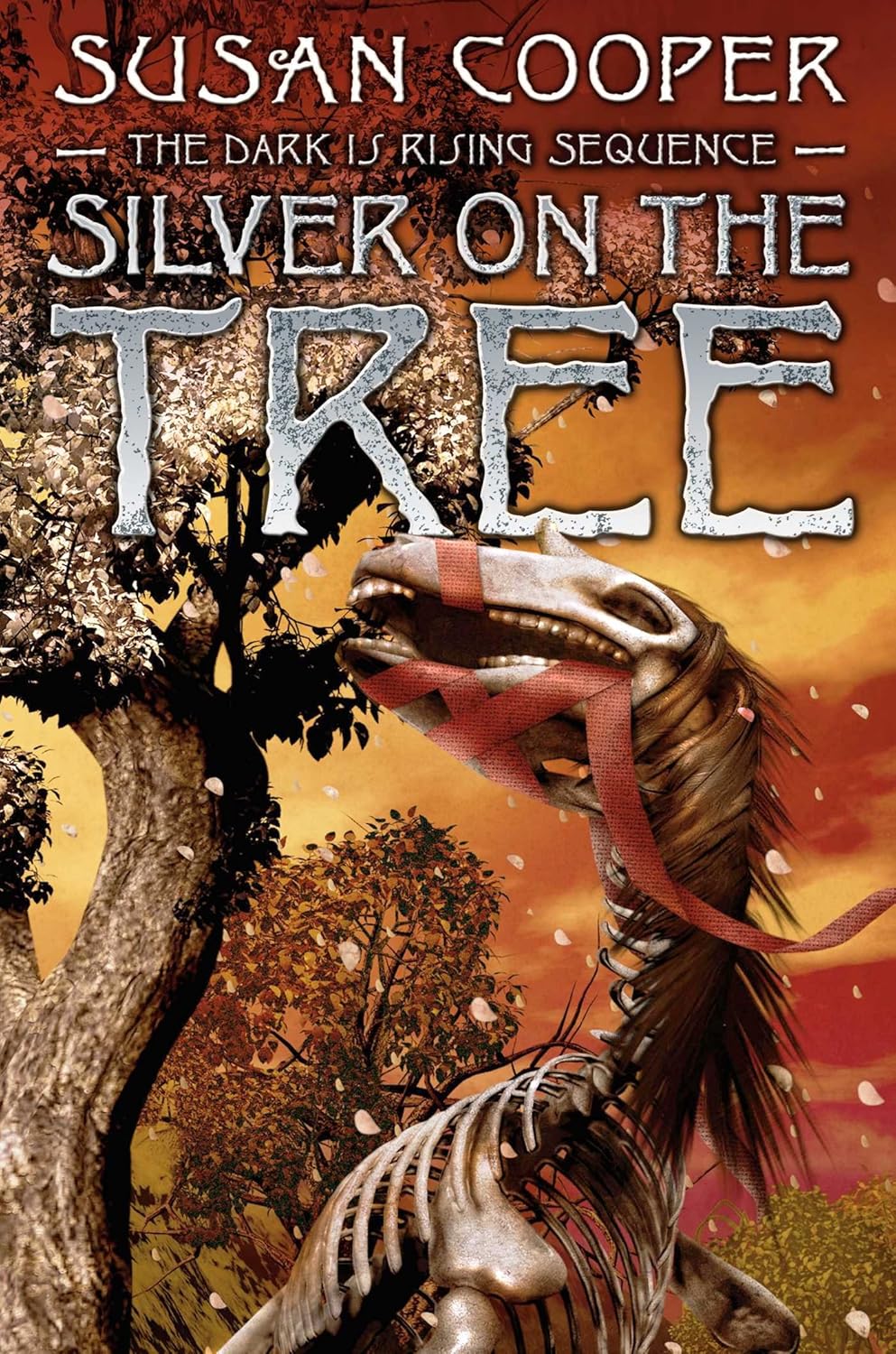
     The final installment of The Dark is Rising sequence is Silver on the Tree. In this book, the story takes a more fantastical turn as the allies of both Light and Dark start to gather. Will, Bran, and the three Drew's have a few final tasks to complete, but they are short on time and their enemies are everywhere. In this book, the adventures of Will and Bran are even more magical than before - not only are they stepping out of time, but they're also going to a new dimension in search of the crystal sword. Then the five of them, along with Merriman, have to finish what was started when the grail was found. The Dark is rising, but the Light has gathered everything they need to destroy it once and for all.

     The Dark is Rising sequence was a thoroughly interesting read. It was a pretty epic adventure, but didn't meander on for hundreds and hundreds of pages. It was to the point, which I appreciated because I could really get at the good parts of the story without having to read 2000 pages to get there. I also really liked Will, Bran, and the Drew's. Sometimes Merriman saved the day once too often, but he is the first of the Old Ones, so he has been around for basically forever and it would take a lot to defeat him. Also, the prominence of Arthurian legends and old folktales in the background of these stories was really intriguing. I've always loved mythology of any kind, and Scottish and Irish mythology isn't involved in stories as often as Greek mythology is, so it was a treat to find it here. And lets not even get started on Welsh folklore! After reading these books, I'd really like to see Wales and read some old Welsh stories.

     In other words, thank you, Katie! If you hadn't suggested this series I might never have picked it up on my own!

Link to author website: http://www.thelostland.com/works/yabooks/bk_dircollector.html

Sunday, February 8, 2015

Rebellion Under the Stars ~ 3 stars

Review requested by Copper Dirt.


     Rebellion Under the Stars, by Katherine Marie, is another recent read for me. It's a story of adventure, rebellion, loyalty, and perseverance. The kingdom of Zaracor is about to be attacked by a mysterious and relentless force, led by a man driven by ambition and greed. Help must come if Zaracor is to survive the rebellion - and help is far away. An attack will soon be launched on the City, the home of the King of Zaracor.

     A varied cast of characters find themselves burdened with the task of saving the kingdom. Selena, a commoner girl, and her close friend, Prince Johnathan of Zaracor. Master Jolan, a man with many secrets, but still the closest and wisest advisor of King Charles of Zaracor. MacKenna, the daughter of a blacksmith, who has strange and frightening visions of the future. And Marzena, a powerful and mysterious woman who lives in the forest just outside the City. Working together and separately, its up to them to find out how Zaracor can be saved - or if that's even possible.

     Rebellion Under the Stars is a brand new book that was just published in December of 2014. In fact, it was self-published by Katherine Marie, a blogger and writer and now new author that I follow. The fact that Rebellion Under the Stars is a self-published book, and also the first book Katherine Marie has ever had published makes it more of a challenge to review than other books I've done, but I'll give it my best shot.

     First of all, as a self-published book, it was better than some I've seen. Often I find self-published authors to have poor spelling and punctuation or tons of typos which aren't in books published and edited by big companies. Also, I've read books where the self-published author was too lazy to make sure their formatting was consistent throughout the book - sometimes words are spaced widely in one place and indented from the page in another place. This is just confusing to read and jolts the reader out of the story. Rebellion Under the Stars had none of these problems - there were two or three typos, but formatting was consistent. 

     One other thing I noticed is that there were no chapter breaks. Instead, there would be a bit of a page break when the story switched narrators or an important event was completed. This was a bit exhausting to read after a while. I found that when I didn't have chapter breaks to mark my progress, the story would drag a little bit. Still, it was an interesting choice and gives the book a distinctive voice. But as self-published authors go, Katherine Marie did a good job making sure the outward appearance of Rebellion Under the Stars wasn't disruptive to the story.

     As for the story, I have a few comments to make about that, both positive and negative. The things that bugged me about Rebellion Under the Stars was partly the big cast of characters. In most books, there are lots of named characters, and sometimes more than one narrator. I've read books with as many as four narrators, and that can be hard to cope with. Rebellion Under the Stars had seven or more narrators, I may have forgotten one or two. With that many narrators, you have to use a somewhat omniscient style of writing, otherwise you risk blending the characters together in the story. Unfortunately, in a story the length of Rebellion, I wasn't able to connect with any of the characters very well, which is important. Primarily, though, my difficulty was that I couldn't decide who the main character was out of so many narrators.

     Also, each of these characters has their own story, and with seven or more to deal with, I as a reader wasn't able to discover much about their histories. By the end of the book, I was left with tantalizing hints of secrets and hidden pasts for several of the characters, but nothing concrete. However, Katherine Marie has talked about a sequel/prequel for Rebellion, so maybe another book will clear that up.

     The positive things I have to say about Rebellion Under the Stars have to do with the writing style of Katherine Marie herself, not specifically Rebellion. I enjoyed the story, don't get me wrong, but I just felt like there wasn't enough for it to be special to me. Her writing style and grasp of story mechanics: characters, scenes, dialogue, action - all the stuff that make a story stick with you - were good. She wrote scenes that made sense, she knew what her setting was and could describe it and the characters inside it. And although I doubt she had a professional editor paid to edit her story, Rebellion shows that she put the time and effort into editing herself and did a good job. If she writes more stories, which I hope she does, I'd definitely be willing to try them.

     In the end, Rebellion was a pretty good book from a first-time self-published author. It shows bravery from the author to be willing to make herself the face of her book, and not some publishing company, since she'll have to do all the footwork to get her book known (though maybe my reviews and other reader responses will help). I thought the story was interesting, and though it could have used a bit of tightening to clearly bring the plot together and showcase the characters ideally, it was a nice debut novel. Good job, Katherine Marie!

Link to author website: https://kmariecreativity.wordpress.com/
Links to Rebellion Under the Stars page: https://kmariecreativity.wordpress.com/rebellion/

Monday, February 2, 2015

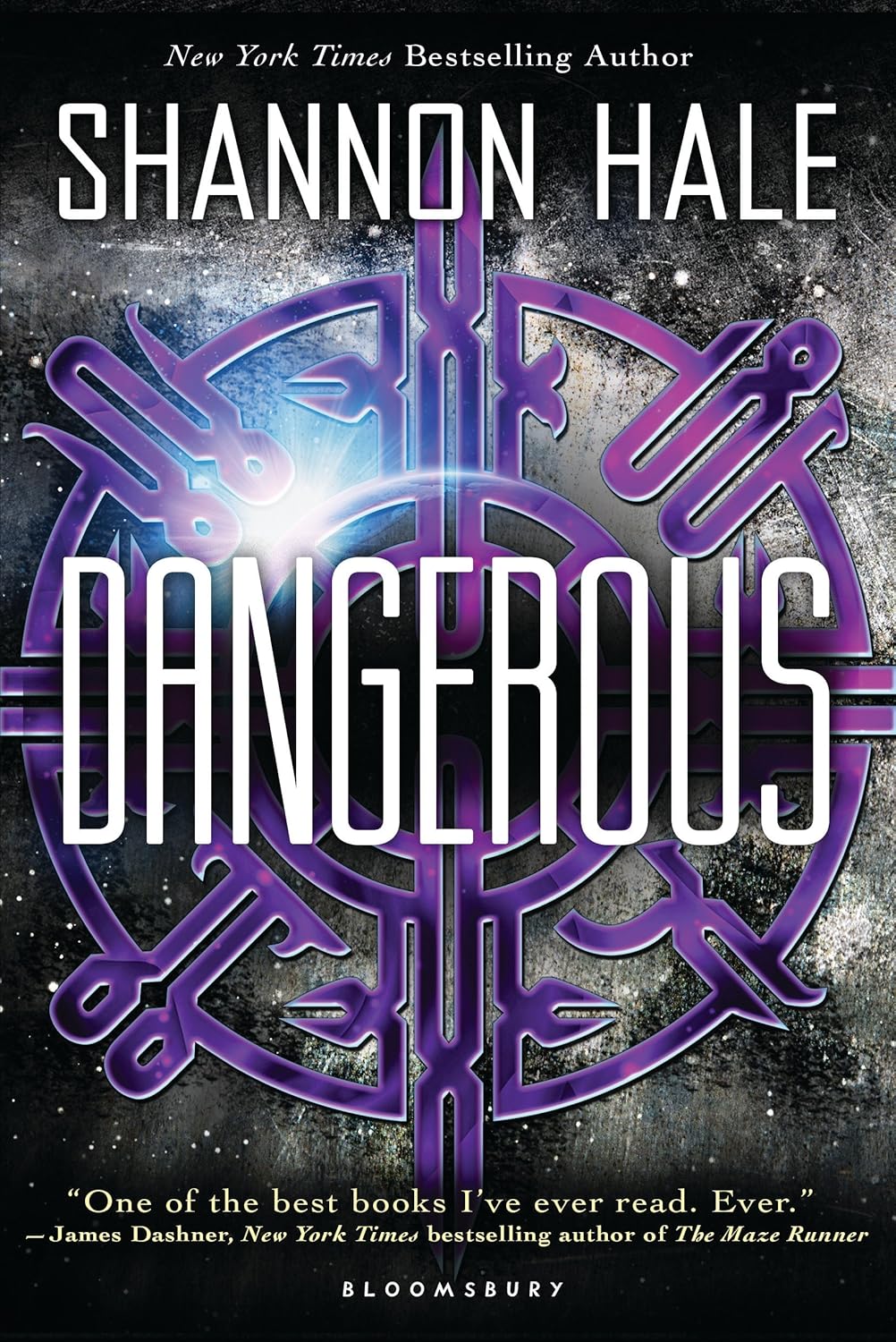
Dangerous - 3.5 stars


     Dangerous, a new novel by Shannon Hale, is a book entirely different from her Books of Bayern series or her Princess Academy series, which are both fantasy. Dangerous reveals an entirely new side of Shannon Hale because it's basically a superhero story, with science and high-action, superpowers, aliens, and then the bad guys on earth trying to use our superheros for their own gain.

     Maisie Danger Brown is an unusual girl to start with, even before anything interesting happens to her. She was born with only one hand to a Spanish-speaking Mom and a biologist Dad. Besides her missing hand and habit of speaking Spanish, there are two other things that make Maisie different from your average person. She's homeschooled and she's obsessed with science and space. So when she gets a chance to attend a space camp for teens, she jumps on it. 

     But Danger is her middle name and somehow can't help attracting it. First, she and four other teens at the space camp are infected by alien technology which gives them superpowers. Maisie can make anything, anything she wants, anything she can think of. It's like a dream come true, but none of the infected kids can be sure what's going to happen next. They know for certain that the infection didn't just 'happen' to them. There was a purpose, and they can all feel it. But their powers are getting out of control, and after the death of one of the new superheroes, the group begins to break up.

     Can Maisie save the team of superheroes from breaking up and wrecking havoc across Earth? Can she figure out what the Purpose that's nagging at them all is? And can she trust her heart now that she's fallen in love? 

     Dangerous was a good book. I don't usually go in for science-fiction type stuff, but this book wasn't quite that. It reminded me a lot of The Avengers, a superhero movie. A team of unlikely people with varied superpowers come together to save the world - maybe from aliens, maybe from something else. It's an action-packed story, but Shannon Hale made it appealing with a singular heroine in the form of Maisie Danger Brown. Maisie has guts, she's smart, and through it all, she tries to do what is right - even when that's not possible to do. 

     There were a few things that keep me from being totally happy with Dangerous, though. I'm totally okay with romance in book, including teen romance that involves kissing, as long as the romance doesn't become the point of the entire story. Maisie's romance wasn't the focus of the book, but she and Wilder kissed way more than I was comfortable with. Despite that, I would have rated Dangerous 4.5 stars except for this one scene when she and Wilder almost went further in their romance than 'just kissing.' And after that, regardless of how good the rest of the story was, I dropped my rating to 3.5 stars.

     Taking an entire star from a rating is a pretty big step, so I want to provide my reasons for that. First, coming from Shannon Hale, just the sheer amount of kissing in Dangerous was kind of a surprise. If you've ever read her Books of Bayern series, you'll know that the kisses are few and far between - and I'm not saying that's a bad thing or a good thing. It's just the way those stories went. And the amount of kissing in Dangerous was just how this particular story goes. I can understand that - doesn't mean I approve of it 100%, but I can tolerate it, and it doesn't get in the way of my enjoying the story. But then there was the almost scene, and that really bothered me. 

     Without getting really deep into this, I basically felt a little betrayed by Shannon Hale for doing that. One, because it was totally unexpected from her. But every writer has a right to write whatever he or she feels like, so that's not her fault. It's up to me to either put up with it and keep reading, or decide it's too much and quite. I didn't quit, but I was more than a little disappointed that Shannon Hale decided to go there. Two, I'm not a fan of that kind of content. I can put up with it, but I don't like it and it really bothers me. The third reason I was so bothered by the almost scene goes back to the fact that Maisie is homeschooled.

     Now, maybe I'm overreacting and being really harsh in my judging here, but everyone should be entitled to their own opinion, and I'm just writing mine. I felt that early on, when Maisie first meets Wilder, she was being represented as a niave homeschooler who has no idea what people are like. Also, when she and Wilder are kissing within three weeks of having met each other, I thought it was going too fast and made Maisie seem gullible. Later, during the almost scene, the way things lined up and the way Maisie thought again felt like they were casting a bad light on homeschoolers. Please note that I don't judge Shannon Hale for writing a homeschooler. Nothing I noticed offended me really - I just smiled and shook my head. It's a fictional book about fictional events and people. I can bear if the book isn't flawlessly realistic.

     I'm also 100% certain that Shannon Hale didn't mean for anyone to have this kind of reaction to Dangerous. She talked to several homeschoolers during the writing of the book, and had people give her feedback on how she represented them. And on the whole, she did a great job. Maisie seemed just like any normal person - and that's really the problem. Homeschoolers are (except in extreme cases) just normal people. The homeschooling didn't really add anything to the story. It's a trivial detail, and the book would probably have been better if it weren't there. When you make your character distinct in some way as big as making her one-handed or homeschooled, readers expect that detail to be vital to the story (at least I do), and homeschooling wasn't. And by having that detail there, Dangerous gets judged a certain way. Maybe all this is hogwash, but its what I thought. If you read Dangerous and have an opinion about how homeschooling and almost were written, comment below - I'd love to hear from you.

     In the end, the almost in Dangerous bugs me, but besides that I really enjoyed it. It had great characters, great action, and a great plot. I discovered I have a thing for superpowers, and these were really cool! Plus the aliens were obviously not a rip-off of something that had been written before. In a genre full of science-fiction-alien-invasion stories, I think Shannon Hale has carved out her own niche with superheros and a brand of bad guys that no one has thought of before. If you're really picky about the content you're getting in a book, the almost might be too much for you, but the rest of the book is very good. I'm not a big sci-fi reader, but I liked it. The romance was stronger than suited me, but the plot itself was captivating and gives a good example of how talented Shannon Hale is. She wrote a book outside of her normal fantasy genre, and came up with something very distinct and interesting.

     As a final note to a really long review - I apologize, I had no idea I'd go on this long! - I want to share this statement I found on Shannon Hale's website:  
Dangerous is a "novel that asks, How far would you go to save the ones you love? And how far would you go to save everyone else?" A big question for just one book to deal with, but Shannon Hale does a good job of it.
Link to author website: http://www.squeetus.com/stage/main.html
Also, there's a post on Hale's blog where she talks about Dangerous and the main character, Maisie Danger Brown, which you can find HERE if you're interested in hearing more.

Sunday, January 25, 2015

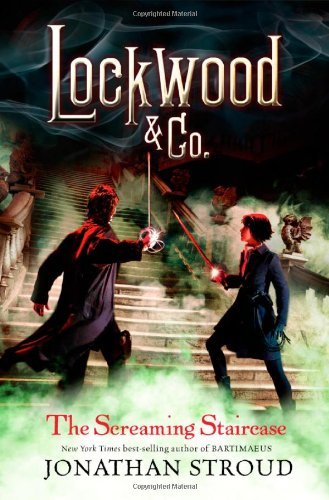
The Screaming Staircase - 4.5 stars

Second edition cover
     The Screaming Staircase by Johnathan Stroud is another new book I picked up recently. Johnathan Stroud wrote the Bartimeaus Sequence - I reviewed the first book in that series earlier. I've liked most of what I've read from Stroud. A few of his stand-alone novels didn't appeal to me much, but I've always liked the Bartimeaus Sequence, so when I saw he was writing another series, I gave it a go.

     The Screaming Staircase is the first book in the Lockwood and Co. series. It could be only a trilogy, which would be a shame, but since it's not finished yet - the second book in the series, The Whispering Skull, only came out September 2014 - I don't know. But so far, I've really enjoyed the first two books, so I'm probably going to be getting myself any sequels he comes up with.

     This story is set in London. A sinister Problem has been troubling the world for nearly fifty years now. All manner of ghosts and spirits have begun to appear in rapidly increasing numbers, and they don't appear to be friendly. Unfortunately, only young people have the ability to perceive these spirits. Many different agencies have sprung up, employing hundreds of adolescents and children to find and destroy these Visitors, as the spirits are called.. Lucy Carlyle is a brave and talented young agent with the ability to hear the Visitors. When she teams up with clever, charismatic Anthony Lockwood and his mildly repulsive assistant George, they all have hopes that the agency is about to make its mark on the world.

     Unfortunately this is not to be, and after their latest case ends disastrously with a house going up in flames, Lockwood and Co. face the possible end of their new agency. To save it, they must brave the most dangerous haunted house in London, perhaps in all of England. Combe Carey Hall has a reputation of spirits and hauntings that stretches back several centuries - long before the Problem really began. Can the three intrepid agents survive the horrors of the Screaming Staircase and the Red Room? Can they put an end to the haunting of Combe Carey Hall, or will they be the next three lives the forces of that house have taken?

     The Screaming Staircase was definitely a page-turner. Stroud balanced the comfy relationship of the three-person agency with a lot of fast-paced action and really dangerous situations. I was also really captivated by the originality of the plot. The story is set in slightly post-modern London, but it wasn't sci-fi at all. Something else that I found was interesting was the fact that agents use rapiers to fight Visitors - what's not to like about some dashing teens with flashing, silver-coated blades? Furthermore, there was definitely a mystery element to this story, and although the clues were there, I was kept deliciously guessing the entire time. I think you can agree that that's a mark of very good story-telling.

First edition cover
     As for the characters of The Screaming Staircase, they display Stroud's trademark sarcasm and humor. If you're like me and couldn't get enough of Bartimeaus in the Bartimeaus Sequence then the characters in Lockwood and Co. have a taste of that same sharp wit and irresistible, careless charm. Lucy is a very plucky and extremely admirable young lady. I didn't expect her to be my favorite, but she is, hand's down. It's also hard not to be charmed into liking the irrepressible Lockwood, and though I still have my doubts about George, he turned out to be a good egg after all. 

     Another mark of Stroud's ability to write very, very good stories is the Visitors. The descriptions of ghosts, spirits, and other things not quite of this world that stem from the Problem are incredibly riveting, and though I really should say 'realistic' that's what I'm going to go with. I honestly wished I hadn't started to read the climax after dark, because what they encountered in the Red Room was actually pretty scary stuff. If you've got a problem with getting emotionally involved with a book and getting as freaked out as the characters are, then you'll probably want to save The Screaming Staircase for strictly daytime reading.

     Other than that, The Screaming Staircase was a captivating and fun read from an author I know and trust to write good, high-quality material and tell intriguing stories. I'm actually really impatient for the next book to be published.

Link to series website: http://www.lockwoodandco.com/

Saturday, January 24, 2015

Ascendance Trilogy - 5 stars

     In these past few months, I (Noodle) have been reading some new books, ones I see suggested on the blogs I follow or that I find at the library or on Amazon. Some of those have gotten reviews, and more reviews of these new books are coming still. For instance, Poison is a book I found on another blog, and Snow White and Rose Red and The Grimm Legacy were both stumble-upons. As you can see by recent reviews, I have liked some of these new books I've been reading, while others have been duds. But just a few weeks ago, I stumbled upon a real gold-mine.

     The Ascendance Trilogy, by Jennifer A. Nielsen has suddenly become one of my very favorite trilogies. Ever.

     It's going to be hard to review this trilogy, though, because a lot of what makes it good is that it kept me guessing the entire time. Not just in the first book or the second, but the whole time, in every book. Furthermore, part of what makes this trilogy so brilliant is the slow reveal of secrets. I actually sort of ruined one of the biggest secrets of The False Prince for myself by reading the little summary of it that's up on Amazon. So the most important advice I can give you about this series is: Don't read anything that's been written about the books. Basically everything will be some kind of spoiler.

     I know that sounds weird, but it really is true. 

     With that kind of warning, I'll try and do my best to write some sort of review of this trilogy. It won't be my best, or my most thorough, but I'll give it a shot.

     First of all, the Ascendance trilogy is one of the most impossible series to put down. It's one of the most suspenseful stories I have ever read. And in my book, any story that I hate having to put down and step away from is one that's worth reading and rereading. Secondly, I can't and won't write much about the events of The False Prince, The Runaway King, and The Shadow Throne. It would give away way, way too much. But I think I can safely give a little starter for The False Prince, just so you know what you're getting into when you start reading. Because I know you will.

     Sage is an orphan boy, quick on his feet, quick with his tongue, quick with his hands. A few days before he turns fifteen, a nobleman called Connor buys him as a servant. But instead of serving tables for the rest of his life, Sage has become a part of a daring scheme that Connor has concocted. A scheme which treads very close to being treason. Sage has no choice but to cooperate with Connor, however, because if he doesn't, he'll never be heard from again.

     Sage's secrets are slowly revealed all the way through the first book,and you never quite know what he's getting at and what his plans are until the very last pages of the very last chapter. I can't/won't say a word about the other two because that would give away way too much of the story, but they're very bit as good and suspenseful as The False Prince. 

     I can say a few things about the characters of the Ascendance trilogy. Sage, the main character and narrator, is funny, quick-witted, and probably the smartest fictional person I've ever had the pleasure of reading about. He's very distinct, and I was constantly on that fine line between laughing at his jokes and groaning at his seemingly stupid mistakes the whole time I was reading. Sage is genuine. He has a good sense of what is right and wrong, and although sometimes he seems like a no-good thief, he's probably one of the most honest people in the entire trilogy. He's also the kind of person that naturally takes the lead and comes up with the ideas and plans. Sage is what makes the Ascendance trilogy as good as it is. They wouldn't be the same without him. 

     Other characters, such as Imogen, the mute serving girl, Mott, Connor's bodyguard, and the other two orphan boys, Tobias and Roden, are also incredibly varied and unique. Nielsen did an amazing job when she created them. They're complex and well-rounded characters who all add so much to the story just by being there on the pages. 

     As for setting, there are king and queens, as the titles should indicate, but the story isn't set in a medieval world. I suppose I would have to say it has some of the characteristics of 14th century Europe. There are swords and chain mail, but there was also the one cannon, so it's not strictly a Middle-Ages type of setting. And although it qualifies as a fantasy story, there is not magic - Sage gets out of every one of his scrapes through sheer luck and his sharp mind.
     In the end, I have to say that in the Ascendance trilogy, Jennifer A. Nielsen did a wonderful job of bringing together a cast of unforgettable and entertaining characters, a complex and mysterious plot, and a mastery of the art of suspense. I can't speak highly enough of them - though maybe that's obvious by now. They're complicated enough to be satisfying for adult and teen readers, but there's so much action going on all the time that my younger siblings will probably like them a lot if I can just get them to read them. I rarely advise people to buy books, especially when it's so much easier to just check things out from the library. But with this trilogy, I'm going to make an exception. These are definitely worth buying so that you can have them around all the time. If I could rate higher than 5 stars, I would.

Link to author website: http://www.jennielsen.com/

Saturday, January 17, 2015

Memory, Sorrow, and Thorn trilogy (guest review) ~ 5 stars

Guest review by Eli Hansen


     Memory, Sorrow, and Thorn is the title of an epic fantasy series by Tad Williams. The title is deceptive, since the name of the trilogy is not the name of the three books, which are titled The Dragonbone Chair, The Stone of Farewell, and To Green Angel Tower. My name is Eli Hansen, and epic fantasy is definitely my cup of tea – perfect for my guest review on my sister's blog.

     One thing we can all agree on is that this is an exceptionally long story. Altogether, the edition of the series that I own was about 2600 pages long. That's close to even the Harry Potter series, and I can assure you that Tad Williams' writing is much more complex than J. K. Rowling's early work. 

     In fair warning, this series was also one of the slowest series to "get in to" that I've ever read. Some reviewers say it takes 100 pages in to the first book to really get moving, others say 200 pages, and others say it takes half of the book before the story really get started. In my opinion the story really didn't get so exciting that I didn't want to put the book down until I was 600 pages in, almost all the way through the first book! Even for a seasoned reader, that's a long time to stick with a book that just doesn't seem all that great at first glance before you get to the good part. I would almost have to say it was poor writing. To me, the set up for the rest of the story was worth it, but I've had a hard time getting other readers (like my sister!) past the long intro to the rest of the trilogy without losing their interest. 

     Once you do get past the intro, however, you get to all the good things that I enjoy about Tad Williams' writing. For one thing, he keeps it real. The protagonist of his story starts out as a servant boy at the castle and over the course of 2600 pages, he develops from a simple adolescent who dreams of achieving great things, but would rather avoid responsibility, to being a strong leader and actually becoming the ruler of the human kingdom. But the development of this young man's character is never as if the author waved a magic wand and suddenly made him into a saint with all the virtues of a fairytale hero. Through the experiences he faces, the character actually comes to adulthood. I don't know any better example of character development in a piece of fictional writing.

     The other fantasy races that Tad Williams uses in his story also help to keep it real. He takes races like elves and dwarves and succeeds in making them really unique and distinct. Their motivations, their thoughts, and their culture are different and much stronger than the stereotypes that are typically portrayed for those races. 

     Another characteristic of Tad Williams' writing is that it's very dark. The situations his characters encounter can be very desperate, and you never actually know which ones will survive to see "happily ever after." Personally, I enjoyed the dark style of writing in the series; however, I know it can be offputting to some. Who wants to read about more suffering when there's already plenty of it to go around in the real world? As a sidenote, of all the books that Tad Williams has written, this is actually the least dark and grim.

     The plot of the series is definitely archetypical of the classic fantasy or fairytale type of story. It has some elements of mystery mixed in as well. I guess the reason I like it so much is that it is such an epic fantasy tale, but it does not resort to the kinds ofdeus ex machina and implausibilities that are so common in the genre, like waving the author's magic wand to change a formerly shallow and selfish character into a brave and self-sacrificing hero with no explanation for his change of heart. The characters, though, are the best part of the story – all very realistic in their choices and their motivations.

     The length of the story and the dark style of writing definitely make it a series for an experienced reader. There is some adult content; while it's not too overt, nor is it the focus of the story, it's there, so beware. The best thing I can say about the Memory, Sorrow, and Thorn series is that it will blow you away with its depth. It takes a plotline that really is a classic example of fantasy and makes it so much more than its stereotype. A piece of "easy reading" it is not, but if you like writing that challenges you and really makes you think to keep up with the author, you will really enjoy Memory, Sorrow, and Thorn. I encourage you to give it a read!

     Noodle: Thanks, Eli! He has is own website and blog over at www.elihansenart.com which you should really check out. Eli asked me to review this series, but I really think we can all agree he did a better job of it than it than I would have.