Showing posts with label Middle Ages. Show all posts

Sunday, February 8, 2015

Rebellion Under the Stars ~ 3 stars

Review requested by Copper Dirt.


     Rebellion Under the Stars, by Katherine Marie, is another recent read for me. It's a story of adventure, rebellion, loyalty, and perseverance. The kingdom of Zaracor is about to be attacked by a mysterious and relentless force, led by a man driven by ambition and greed. Help must come if Zaracor is to survive the rebellion - and help is far away. An attack will soon be launched on the City, the home of the King of Zaracor.

     A varied cast of characters find themselves burdened with the task of saving the kingdom. Selena, a commoner girl, and her close friend, Prince Johnathan of Zaracor. Master Jolan, a man with many secrets, but still the closest and wisest advisor of King Charles of Zaracor. MacKenna, the daughter of a blacksmith, who has strange and frightening visions of the future. And Marzena, a powerful and mysterious woman who lives in the forest just outside the City. Working together and separately, its up to them to find out how Zaracor can be saved - or if that's even possible.

     Rebellion Under the Stars is a brand new book that was just published in December of 2014. In fact, it was self-published by Katherine Marie, a blogger and writer and now new author that I follow. The fact that Rebellion Under the Stars is a self-published book, and also the first book Katherine Marie has ever had published makes it more of a challenge to review than other books I've done, but I'll give it my best shot.

     First of all, as a self-published book, it was better than some I've seen. Often I find self-published authors to have poor spelling and punctuation or tons of typos which aren't in books published and edited by big companies. Also, I've read books where the self-published author was too lazy to make sure their formatting was consistent throughout the book - sometimes words are spaced widely in one place and indented from the page in another place. This is just confusing to read and jolts the reader out of the story. Rebellion Under the Stars had none of these problems - there were two or three typos, but formatting was consistent. 

     One other thing I noticed is that there were no chapter breaks. Instead, there would be a bit of a page break when the story switched narrators or an important event was completed. This was a bit exhausting to read after a while. I found that when I didn't have chapter breaks to mark my progress, the story would drag a little bit. Still, it was an interesting choice and gives the book a distinctive voice. But as self-published authors go, Katherine Marie did a good job making sure the outward appearance of Rebellion Under the Stars wasn't disruptive to the story.

     As for the story, I have a few comments to make about that, both positive and negative. The things that bugged me about Rebellion Under the Stars was partly the big cast of characters. In most books, there are lots of named characters, and sometimes more than one narrator. I've read books with as many as four narrators, and that can be hard to cope with. Rebellion Under the Stars had seven or more narrators, I may have forgotten one or two. With that many narrators, you have to use a somewhat omniscient style of writing, otherwise you risk blending the characters together in the story. Unfortunately, in a story the length of Rebellion, I wasn't able to connect with any of the characters very well, which is important. Primarily, though, my difficulty was that I couldn't decide who the main character was out of so many narrators.

     Also, each of these characters has their own story, and with seven or more to deal with, I as a reader wasn't able to discover much about their histories. By the end of the book, I was left with tantalizing hints of secrets and hidden pasts for several of the characters, but nothing concrete. However, Katherine Marie has talked about a sequel/prequel for Rebellion, so maybe another book will clear that up.

     The positive things I have to say about Rebellion Under the Stars have to do with the writing style of Katherine Marie herself, not specifically Rebellion. I enjoyed the story, don't get me wrong, but I just felt like there wasn't enough for it to be special to me. Her writing style and grasp of story mechanics: characters, scenes, dialogue, action - all the stuff that make a story stick with you - were good. She wrote scenes that made sense, she knew what her setting was and could describe it and the characters inside it. And although I doubt she had a professional editor paid to edit her story, Rebellion shows that she put the time and effort into editing herself and did a good job. If she writes more stories, which I hope she does, I'd definitely be willing to try them.

     In the end, Rebellion was a pretty good book from a first-time self-published author. It shows bravery from the author to be willing to make herself the face of her book, and not some publishing company, since she'll have to do all the footwork to get her book known (though maybe my reviews and other reader responses will help). I thought the story was interesting, and though it could have used a bit of tightening to clearly bring the plot together and showcase the characters ideally, it was a nice debut novel. Good job, Katherine Marie!

Link to author website: https://kmariecreativity.wordpress.com/
Links to Rebellion Under the Stars page: https://kmariecreativity.wordpress.com/rebellion/

Saturday, January 24, 2015

Ascendance Trilogy - 5 stars

     In these past few months, I (Noodle) have been reading some new books, ones I see suggested on the blogs I follow or that I find at the library or on Amazon. Some of those have gotten reviews, and more reviews of these new books are coming still. For instance, Poison is a book I found on another blog, and Snow White and Rose Red and The Grimm Legacy were both stumble-upons. As you can see by recent reviews, I have liked some of these new books I've been reading, while others have been duds. But just a few weeks ago, I stumbled upon a real gold-mine.

     The Ascendance Trilogy, by Jennifer A. Nielsen has suddenly become one of my very favorite trilogies. Ever.

     It's going to be hard to review this trilogy, though, because a lot of what makes it good is that it kept me guessing the entire time. Not just in the first book or the second, but the whole time, in every book. Furthermore, part of what makes this trilogy so brilliant is the slow reveal of secrets. I actually sort of ruined one of the biggest secrets of The False Prince for myself by reading the little summary of it that's up on Amazon. So the most important advice I can give you about this series is: Don't read anything that's been written about the books. Basically everything will be some kind of spoiler.

     I know that sounds weird, but it really is true. 

     With that kind of warning, I'll try and do my best to write some sort of review of this trilogy. It won't be my best, or my most thorough, but I'll give it a shot.

     First of all, the Ascendance trilogy is one of the most impossible series to put down. It's one of the most suspenseful stories I have ever read. And in my book, any story that I hate having to put down and step away from is one that's worth reading and rereading. Secondly, I can't and won't write much about the events of The False Prince, The Runaway King, and The Shadow Throne. It would give away way, way too much. But I think I can safely give a little starter for The False Prince, just so you know what you're getting into when you start reading. Because I know you will.

     Sage is an orphan boy, quick on his feet, quick with his tongue, quick with his hands. A few days before he turns fifteen, a nobleman called Connor buys him as a servant. But instead of serving tables for the rest of his life, Sage has become a part of a daring scheme that Connor has concocted. A scheme which treads very close to being treason. Sage has no choice but to cooperate with Connor, however, because if he doesn't, he'll never be heard from again.

     Sage's secrets are slowly revealed all the way through the first book,and you never quite know what he's getting at and what his plans are until the very last pages of the very last chapter. I can't/won't say a word about the other two because that would give away way too much of the story, but they're very bit as good and suspenseful as The False Prince. 

     I can say a few things about the characters of the Ascendance trilogy. Sage, the main character and narrator, is funny, quick-witted, and probably the smartest fictional person I've ever had the pleasure of reading about. He's very distinct, and I was constantly on that fine line between laughing at his jokes and groaning at his seemingly stupid mistakes the whole time I was reading. Sage is genuine. He has a good sense of what is right and wrong, and although sometimes he seems like a no-good thief, he's probably one of the most honest people in the entire trilogy. He's also the kind of person that naturally takes the lead and comes up with the ideas and plans. Sage is what makes the Ascendance trilogy as good as it is. They wouldn't be the same without him. 

     Other characters, such as Imogen, the mute serving girl, Mott, Connor's bodyguard, and the other two orphan boys, Tobias and Roden, are also incredibly varied and unique. Nielsen did an amazing job when she created them. They're complex and well-rounded characters who all add so much to the story just by being there on the pages. 

     As for setting, there are king and queens, as the titles should indicate, but the story isn't set in a medieval world. I suppose I would have to say it has some of the characteristics of 14th century Europe. There are swords and chain mail, but there was also the one cannon, so it's not strictly a Middle-Ages type of setting. And although it qualifies as a fantasy story, there is not magic - Sage gets out of every one of his scrapes through sheer luck and his sharp mind.
     In the end, I have to say that in the Ascendance trilogy, Jennifer A. Nielsen did a wonderful job of bringing together a cast of unforgettable and entertaining characters, a complex and mysterious plot, and a mastery of the art of suspense. I can't speak highly enough of them - though maybe that's obvious by now. They're complicated enough to be satisfying for adult and teen readers, but there's so much action going on all the time that my younger siblings will probably like them a lot if I can just get them to read them. I rarely advise people to buy books, especially when it's so much easier to just check things out from the library. But with this trilogy, I'm going to make an exception. These are definitely worth buying so that you can have them around all the time. If I could rate higher than 5 stars, I would.

Link to author website: http://www.jennielsen.com/

Wednesday, January 7, 2015

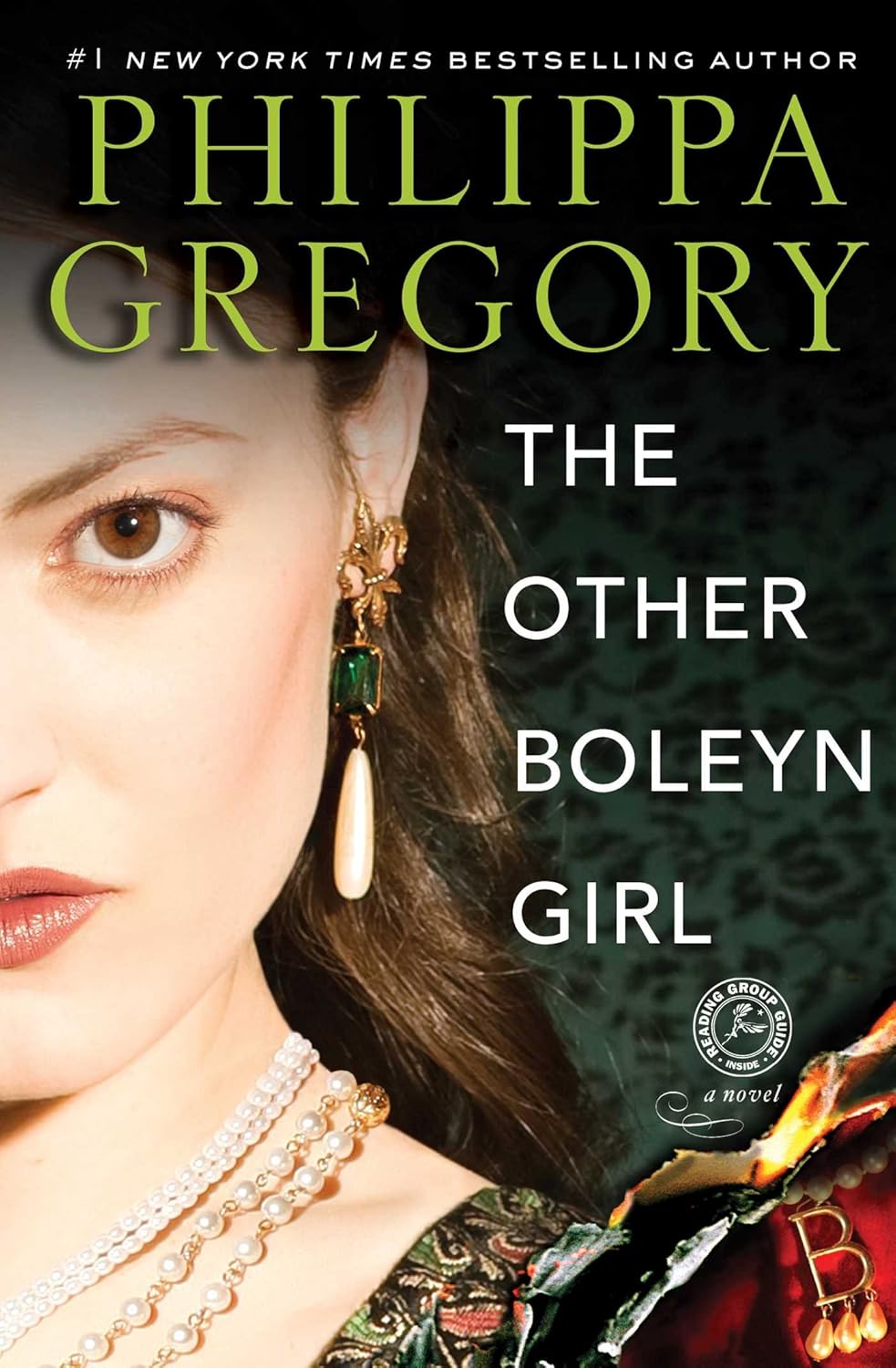
The Other Boleyn Girl ~ 1.5 stars


The Other Boleyn Girl, by Phillipa Gregory, is a book I picked up at a friend’s house. It’s a historical fiction set in England during the time of King Henry the VIII, the English king who is known for having six wives. The Other Boleyn Girl is the story of Mary Boleyn, the sister of King Henry's second wife, Anne Boleyn.

Note: This book is what I would consider an adult level book, so while I will try and be discreet in my word-choice, I don't intend to beat around the bush in stating the facts of what this book contains.

I won't go into much detail describing the incredibly complicated plot, which is full of surprising twists and turns and a great deal of intrigue. I thought the plot was pretty good, with a very human main character with human feelings - although her moral code wasn't quite up scratch, according to me. Basically, this book is set in a time period when people behaved very immorally, and any historical book written about King Henry VIII’s court would have to at least mention a few of these immoral practices. The Other Boleyn Girl, narrated by the sister of the second wife of the king, does more than mention - the plot of the book revolves around them. The Other Boleyn Girl is also a very character driven. Most, if not all, of the characters in the story participate in highly immoral practices, and so these get a fair amount of pages dedicated to describing them.

For these reasons, I didn’t find it to be a very pleasant story. I have never been fond of stories that contain much of this sort of material because to me it's highly inappropriate and distasteful to read about. I can tolerate a certain extent of the kinds of immoral material I found in The Other Boleyn Girl, as long as the story itself is still interesting and entertaining. But because The Other Boleyn Girl was, at least the way I see it, entirely about sinful people and their sinful actions, I didn’t enjoy it very much at all.

In other aspects, such as how well it was written and how well the characters were developed, I’m sure the author did a very good job. Mary Boleyn was a very human character, and very well-developed - I just didn't approve of the things she did. In other respects, it seemed to be a very historically accurate book. I'm no expert of 16th century England, but if she was faking the details, she did a very impressive job of it. If it hadn’t been for the central role that unappealing immoral and improper behaviors played in the story, I might have given it a higher rating that 1.5 stars. This is a book I’d only advise to people who enjoy that sort of material or are very interested in that historical period, and it’s certainly not a book I’d suggest to readers younger than seventeen or eighteen.

Tuesday, December 30, 2014

Snow White and Rose Red ~ 4 stars

I’ve been a Patricia C. Wrede reader for several years now. She wrote a few Star Wars novels and I've also enjoyed her Enchanted Forest Chronicles. I’ve always liked the spicy, distinct characters in her books, so when I saw she had also written a retelling of the old fairy tale about Snow White and Rose Red, I thought I’d give it a go.

It wasn't quite what I expected from Patricia C. Wrede. I was used to reading her more recent publications, but Snow White and Rose Red was one of the first stories she had published, and her writing has changed a lot since then. Snow White and Rose Red follows the original fairy tale closely enough that I could see where the parallels were, but the characters had changed enough that the story was obviously "wearing new clothes" as I like to put it. It had been fleshed out and made more intricate. All the leaps of logic, typical of old fairy tales, had been ironed out and explained.

Patricia C. Wrede's Snow White and Rose Red is the story of two beautiful sisters, Blanche and Rosamund, who live with their widowed mother near the border of the world of the fay. When a half-fay, half-mortal man called Hugh is subjected to human magic and forced to take the shape of a bear, kind Blanche and Rosamund try to do everything they can to return him to his original shape. This means taking the considerable risk of being discovered and tried as witches by suspicious neighbors. In the end, they need the help of Hugh's brother John, another half-fay, to break the spell. In so doing, they discover that Hugh's transformation was the result of a plot to tear the human world and the world of the fay apart. 

The story concludes with the classic fairy tale ending: the fair maidens wed their new sweethearts, the half-fay Hugh and John. Usually I don't like these kinds of endings, because it makes the romances very unrealistic, but Patricia C. Wrede did an admirable job of making the relationships between the characters real enough that I could see them getting married.

I found Snow White and Rose Red to be a fairly entertaining story. It was written with a more reserved, strict style than other fairy tale retellings that I’ve read. It doesn't have the very personal style that most novels published in the past 5 or 6 years have, but this is mainly because Snow White and Rose Red was published in 1989, before that style of writing became popular. In fact, the style of Snow White and Rose Red is great for that story, because it makes it read more like a fairy tale and adds grace and elegance to it. I also enjoyed the way the original fairy tale was restructured for Wrede’s retelling, and I think that her revision of it added a lot of appeal to the story.

The biggest thing that I noticed about Snow White and Rose Red was the language. Wrede uses ‘thee’ and ‘thou’, in addition to the usual ‘you.’ Other changes to the language, such as some of the more archaic forms of words (forsooth, seemth), and even the use of ‘an’ in the place of 'if' in some cases, all make the language a little more challenging to less experienced readers. To me, these things just added to the unique style of the book, since it hearkens back to an older way of speaking. But for other, less patient readers, this might make it too difficult to be interesting. My twelve-year-old sister Jo also read Snow White and Rose Red, and although she enjoyed it, she did say that the language was sometimes an impediment.

So, in the end, I would just say this.


"An thou can read and understand it, thou’lt know why I sayeth that it seems a goodly book."

Link to author website: http://pcwrede.com/

Wednesday, September 10, 2014

Behold the Dawn - 5 stars

Behold the Dawn     When I first got Behold the Dawn by K.M. Weiland, I didn't really have any expectations for it. I thought it might be a fun read and an interesting story, but not necessarily something which would rank among my favorite books. Within three chapters I literally could not put it down. Eating and spending time with people was reduced to the bare minimum, and I don't think I even got myself anything to drink. I didn't put the book down unless I absolutely, absolutely, absolutely had to, and then I was back as soon as possible to keep reading. That's how good it was. 

     Behold the Dawn has a lot of aspects that I enjoyed reading. First of all it was set during the Crusades, right around the time period of Robin Hood, and I enjoy reading fiction set during that time period. I was also captivated by the main character, Marcus Annan, a champion tourneyer. He's a strong and silent sort of person with a lot of pain in his past he's trying to hide from, and he is also one of the best-written characters I've read in a long time. Behold the Dawn is also a story of redemption, not the cheesy, sugary kind I've read in some books, but the kind that really rang with truth and resonated with me. 

     There were other aspects of Behold the Dawn that were very, very good as well, such as the characters, so genuine and real they should be walking off the page. There's also a slow-burning romance, strong enough to change Annan's life but not the defining feature of the book. I enjoy romance in a book, but I don't like that to be the entire focus of the story. There's also plenty of gritty action, and when Annan fights I can feel the battle. Weiland writes with passion and captures the little moments of her story masterfully. And there's suspense on every page - the secrets the characters carry will drive you mad until they're finally revealed in an stunning climax at the very end.

     The only negative thing I have to say about Behold the Dawn is that no one told me I shouldn't read it as fast as I did. It's the kind of book that should be taken at a reasonable pace so that all the details can sink in - I devoured it in about four hours. Another thing I noticed was that the book did allude to some unpleasant details of real life, and those things affected the past and present choices of several of the characters. These hints don't detract from my opinion of the book, but it was a detail I noticed which some readers might want to be aware of before they start reading this book. 

     My opinion of K.M. Weiland has definitely been boosted after reading this book. She's a powerful writer, and I highly recommend this book and any of her others as great reading material. I really can't believe Behold the Dawn is her first published novel, but it is now one of my favorite books.

Link to author website: http://www.kmweiland.com/