Showing posts with label classic. Show all posts

Tuesday, February 24, 2015

The Dark is Rising (series review) ~ 4 stars

Review requested by Katie

     The Dark is Rising sequence, by Susan Cooper is a mix of Arthurian legends and Irish/Scottish/Welsh folktales where good battles evil in an epic battle that spans all time. Will Stanton is the youngest of the Old Ones, and he is vitally important to this fight. The three Drew children, Simon, Jane, and Barney, are also connected to the fight between the Light and the Dark in ways that even they don't understand.

     In Over Sea, Under Stone, the three Drew children are staying in the seaside village of Tressiwick with their Great-Uncle Merry, who, although he isn't actually related to them, has been a part of their family for as long as they can remember. When Barney finds an ancient map in the attic of the cottage they're vacationing in, it sets them off on a dangerous quest to recover something that will help the Light defeat the Dark forever: the grail. But agents of the Dark have learned about the map as well and they are closing in. I liked the atmosphere of this one - when I started I expected some fluffy story about three kids having a wonderful vacation on the seaside. What I got was just the tip of the iceberg of a very epic, fantastic story that just got bigger and better the further into the series I went.

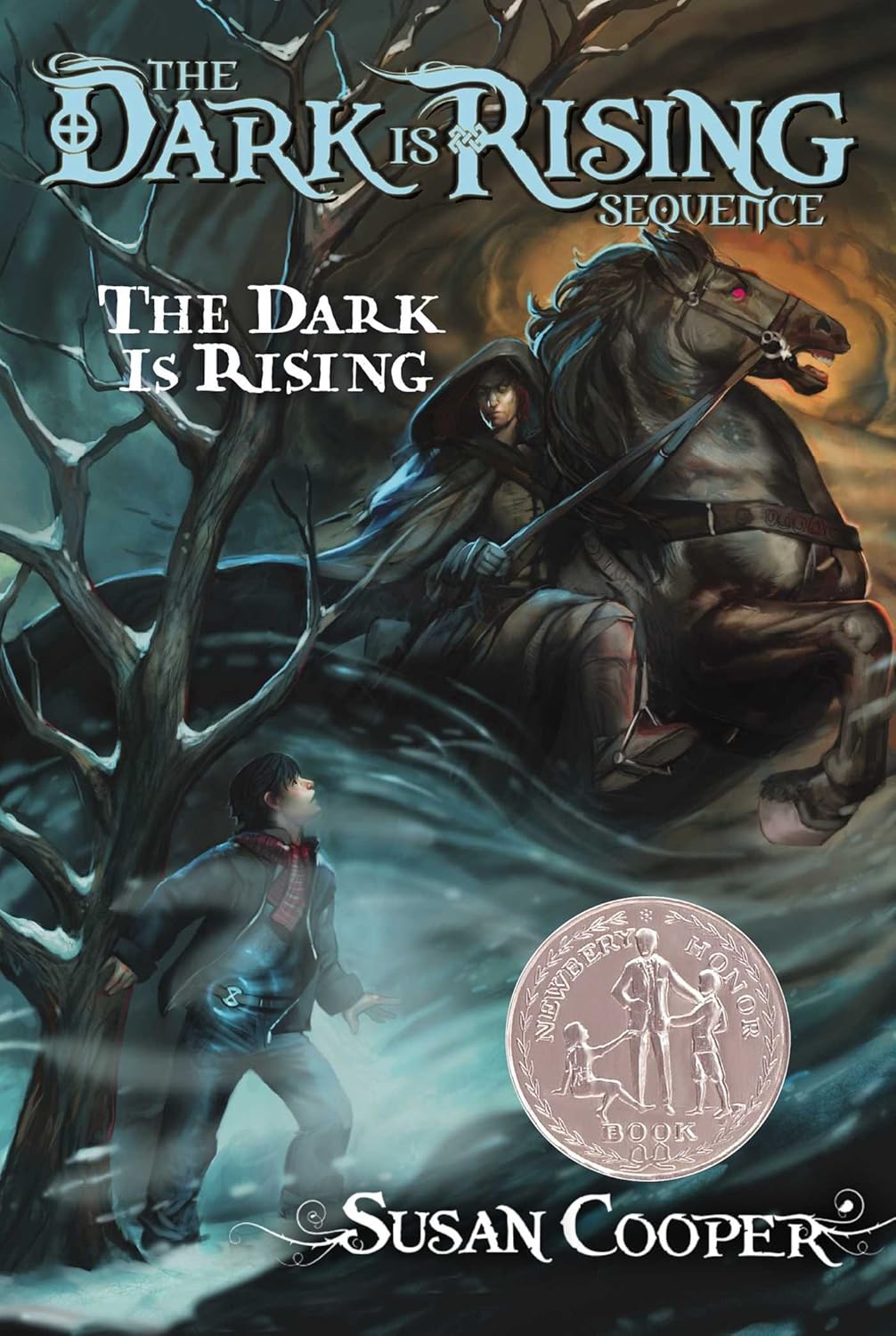
     The Dark is Rising introduces Will Stanton for the first time, probably my favorite character. The youngest of the Old Ones, beings who wield incredible powers, Will is the last of the Old Ones, the Sign Seeker. It is his task to find the six signs that will be the second of the important tools that the Light can use to defeat the Dark once and for all. The Hunter, a fearsome champion of the Dark, has been assigned to stop Will and steal the signs for the Dark, and Will will need all his wits about him, as well as the help of the first of the old ones, Merriman Lyon. This book was the most complicated of the books. Will goes from a completely ordinary boy to something entirely different, and his journey involves a lot of far-fetched stuff that Susan Cooper somehow makes completely believable under the circumstances. This would be the book I'd reread the most times, just because so much happens.

     Book three of this series, The Greenwitch, is where Will and the Drew children meet for the first time. There's some tension at first as the four of them figure out how to work together, but they've got a very important job to do. The grail has been stolen by the Dark and they have to get it back. Also, a being that belongs to neither the Light or the Dark has possession of a clue that will help strengthen the Light. The Greenwitch is a creature of wild Magic, reborn every year by the women of Tressiwick in a ritualistic ceremony. Together will Merriman Lyon, also known as Great-Uncle Merry, Will and the Drew's have to retrieve the grail and strike a bargain with the unpredictable Greenwitch. What I liked about this book was that this time around, the Old Ones didn't hold all the answers, and the Drews played a very important part in the story, even though they were basically ordinary human beings.

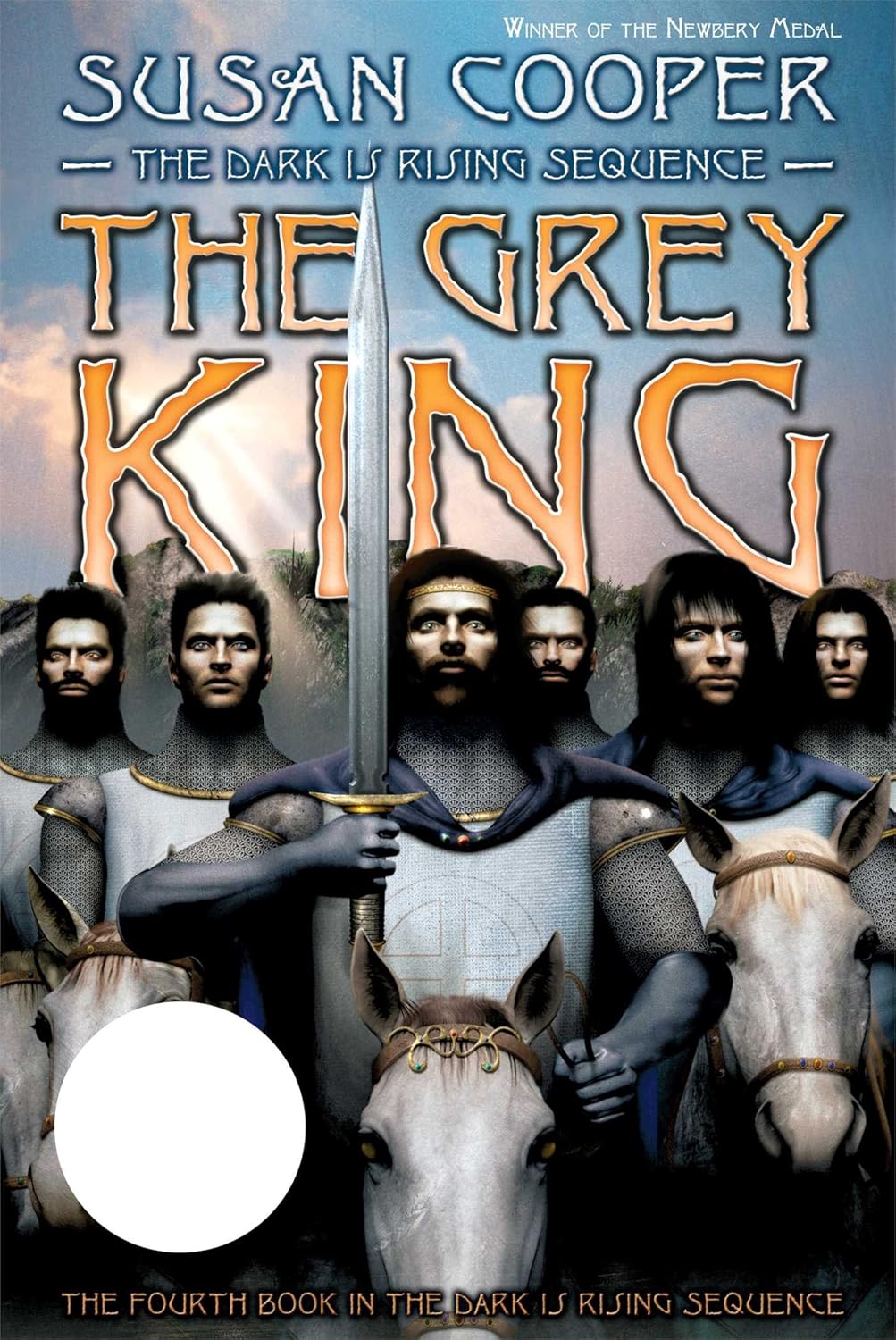
     A new character is added to the group in The Grey King, a Welsh boy called Bran. Will has been sent to Wales for the summer to recover from an illness, and together he and Bran will go on a quest of their own to find a golden harp which must be used to wake the six Sleepers. In this book we get an entirely new setting with its own forces of High Magic, Light, and Dark. There were plot twists here, too, such as Bran's mysterious mother and a dog who can see the wind. What I enjoyed here was getting to see Will working mostly on his own. Merriman was busy elsewhere and wasn't able to help Will directly, unlike in the previous three books. As much as I liked having Merriman show up to save the day, it was good to see Will taking charge in this one, and really learning how to be both an Old One and an (almost) ordinary boy.
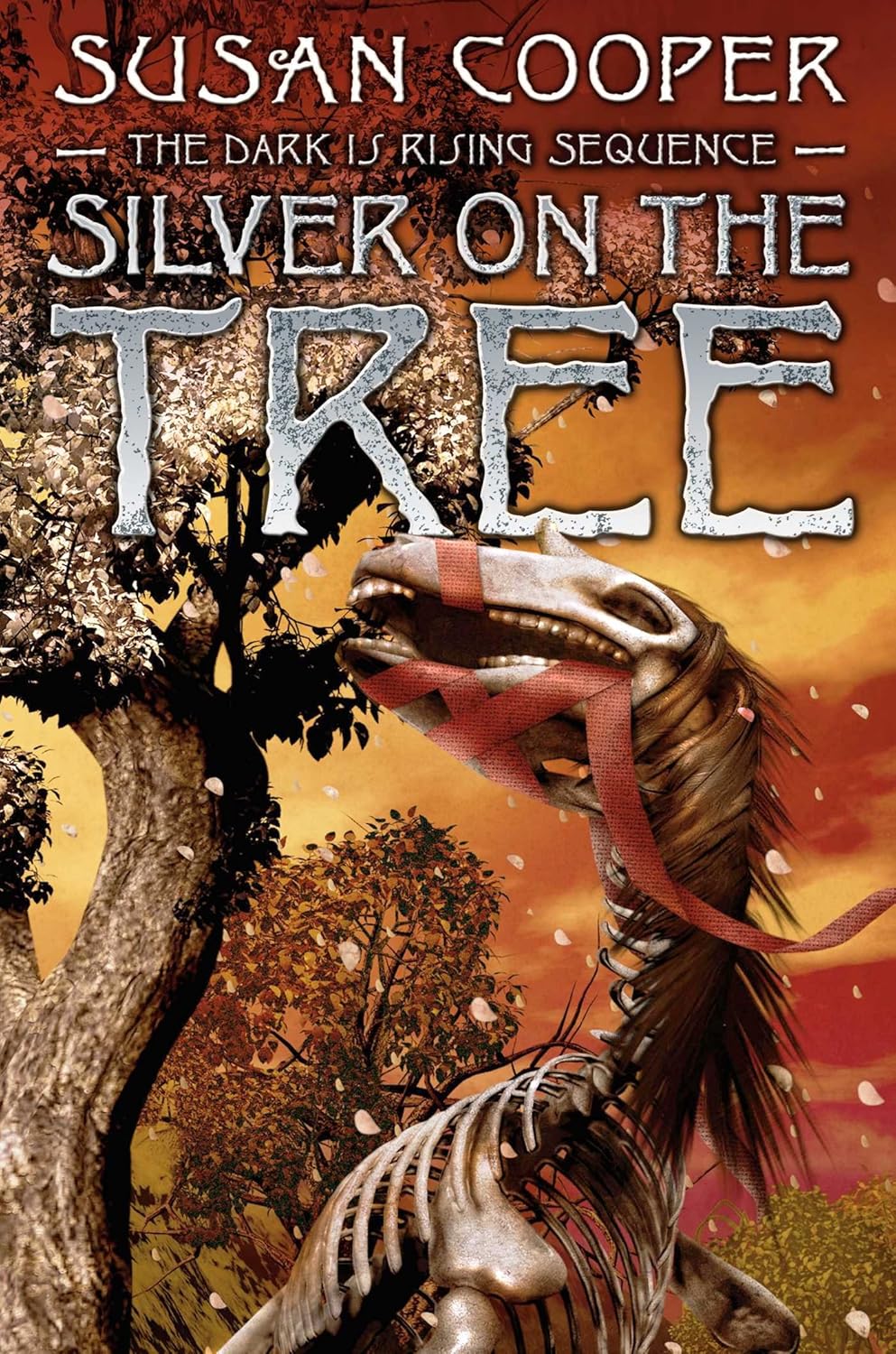
     The final installment of The Dark is Rising sequence is Silver on the Tree. In this book, the story takes a more fantastical turn as the allies of both Light and Dark start to gather. Will, Bran, and the three Drew's have a few final tasks to complete, but they are short on time and their enemies are everywhere. In this book, the adventures of Will and Bran are even more magical than before - not only are they stepping out of time, but they're also going to a new dimension in search of the crystal sword. Then the five of them, along with Merriman, have to finish what was started when the grail was found. The Dark is rising, but the Light has gathered everything they need to destroy it once and for all.

     The Dark is Rising sequence was a thoroughly interesting read. It was a pretty epic adventure, but didn't meander on for hundreds and hundreds of pages. It was to the point, which I appreciated because I could really get at the good parts of the story without having to read 2000 pages to get there. I also really liked Will, Bran, and the Drew's. Sometimes Merriman saved the day once too often, but he is the first of the Old Ones, so he has been around for basically forever and it would take a lot to defeat him. Also, the prominence of Arthurian legends and old folktales in the background of these stories was really intriguing. I've always loved mythology of any kind, and Scottish and Irish mythology isn't involved in stories as often as Greek mythology is, so it was a treat to find it here. And lets not even get started on Welsh folklore! After reading these books, I'd really like to see Wales and read some old Welsh stories.

     In other words, thank you, Katie! If you hadn't suggested this series I might never have picked it up on my own!

Link to author website: http://www.thelostland.com/works/yabooks/bk_dircollector.html

Monday, February 16, 2015

A Lantern In Her Hand ~ 4 stars

     A Lantern in Her Hand, by Bess Streeter Aldrich, is a book about pioneers and pioneer women. It reminded me of the Laura Ingalls Wilder books as well as A Bride Goes West, which are both books about pioneer women. A Lantern in Her Hand tells the story of Abbie Mackenzie Deal, daughter of an Irish peasant woman and a wealthy Scottish man, a girl who wanted to grow up to be a lovely lady. But sometimes dreams don't come true just the way we imagine.

     Abbie Deal has a beautiful voice and beautiful dreams. She thought she would become a lovely lady someday, a famous singer, but when the chance came, she married the man she loved instead and moved to Nebraska. She postpones her dreams and helps her husband to farm and tame the prairie. On the wild frontier with only a few neighbors for company and work for three men to be done, Abbie learns hard lessons about life. As the years pass, they begin to have small successes, life begins to have a certain rhythm and order, and Abbie holds onto her dreams and keeps singing. Then there are the five children, and Abbie postpones her dreams again so that she can save money to send them to school. She watches them get married and move away to start lives of their own as the hands of Time move steadily forward. Will dies, and Abbie is alone except for her children and now grandchildren. She grows older, frailer, she cannot sing, and she cannot travel anymore. At the end of her life, she didn't become the lovely lady that her hopeful six-year-old self dreamed of. But she is a lovely lady all the same - a lovely lady who has lived a long life of love and joy in the middle of a loving group of family and friends.

     I enjoyed A Lantern in Her Hand for a variety of reasons. First, it was a well-told story that covered a huge span of time - from very early in Abbie's life until the day she died. Reading this book was almost like reading a very interesting biography, especially since Bess Streeter Aldrich actually based the life of Abbie on her own mother. A Lantern in Her Hand is a good example of a pioneer book that really portrays the reality of what it was like for them to do what they did. This book also went a step further than most pioneer books and described the life of a pioneer woman in a time when the pioneers had become part of history instead of the cutting edge of history. That was a treat, and something I've been unable to find in other pioneer books I've read. Those pioneers didn't die once America was settled, but you don't often find a book that talks about what they did with the rest of their lives. A Lantern in Her Hand is definitely unique in that respect.

     The other thing that really impressed me in A Lantern in Her Hand was Abbie herself. It's hard not to relate to Abbie as you see her growing up, getting married, having a family, and gradually getting older and older until you suddenly find she's a great-grandmother. Pioneering wasn't the theme of A Lantern in Her Hand, even though it played a significant part. For Abbie, family and friendship was everything. Her strong, enduring pioneer spirit really shows in the entire book, but so does the vital importance of family to her. It was also eye-opening to read about a character who aged by decades over the course of the book, not months or a handful of years as you'll find in most other books. Experiencing a character on that many levels and at that many stages in a life was eye-opening. In that respect, A Lantern in Her Hand was very much like a biography.

     To close, I'd suggest A Lantern in Her Hand to anyone. It was great material, and though the story was long and detailed, the language wasn't complicated. Just the experience of having read the book was rewarding to me, and it was a book that really made me think about life - not just Abbie's but mine and my family's. A book that can do that to you is one worth spending a few evening's reading, and A Lantern in Her Hand, despite being someone's life story, isn't a very big book. It could easily fit into two or three afternoons. So get it, read it. It's a little gem of a book that I'm very glad to have picked up.

Link to Bess Streeter Aldrich Foundation website: http://www.bessstreeteraldrich.org/
     You know the book was written a long time ago when the author has her own museum. Sometimes the old books are the best.

Tuesday, December 30, 2014

Snow White and Rose Red ~ 4 stars

I’ve been a Patricia C. Wrede reader for several years now. She wrote a few Star Wars novels and I've also enjoyed her Enchanted Forest Chronicles. I’ve always liked the spicy, distinct characters in her books, so when I saw she had also written a retelling of the old fairy tale about Snow White and Rose Red, I thought I’d give it a go.

It wasn't quite what I expected from Patricia C. Wrede. I was used to reading her more recent publications, but Snow White and Rose Red was one of the first stories she had published, and her writing has changed a lot since then. Snow White and Rose Red follows the original fairy tale closely enough that I could see where the parallels were, but the characters had changed enough that the story was obviously "wearing new clothes" as I like to put it. It had been fleshed out and made more intricate. All the leaps of logic, typical of old fairy tales, had been ironed out and explained.

Patricia C. Wrede's Snow White and Rose Red is the story of two beautiful sisters, Blanche and Rosamund, who live with their widowed mother near the border of the world of the fay. When a half-fay, half-mortal man called Hugh is subjected to human magic and forced to take the shape of a bear, kind Blanche and Rosamund try to do everything they can to return him to his original shape. This means taking the considerable risk of being discovered and tried as witches by suspicious neighbors. In the end, they need the help of Hugh's brother John, another half-fay, to break the spell. In so doing, they discover that Hugh's transformation was the result of a plot to tear the human world and the world of the fay apart. 

The story concludes with the classic fairy tale ending: the fair maidens wed their new sweethearts, the half-fay Hugh and John. Usually I don't like these kinds of endings, because it makes the romances very unrealistic, but Patricia C. Wrede did an admirable job of making the relationships between the characters real enough that I could see them getting married.

I found Snow White and Rose Red to be a fairly entertaining story. It was written with a more reserved, strict style than other fairy tale retellings that I’ve read. It doesn't have the very personal style that most novels published in the past 5 or 6 years have, but this is mainly because Snow White and Rose Red was published in 1989, before that style of writing became popular. In fact, the style of Snow White and Rose Red is great for that story, because it makes it read more like a fairy tale and adds grace and elegance to it. I also enjoyed the way the original fairy tale was restructured for Wrede’s retelling, and I think that her revision of it added a lot of appeal to the story.

The biggest thing that I noticed about Snow White and Rose Red was the language. Wrede uses ‘thee’ and ‘thou’, in addition to the usual ‘you.’ Other changes to the language, such as some of the more archaic forms of words (forsooth, seemth), and even the use of ‘an’ in the place of 'if' in some cases, all make the language a little more challenging to less experienced readers. To me, these things just added to the unique style of the book, since it hearkens back to an older way of speaking. But for other, less patient readers, this might make it too difficult to be interesting. My twelve-year-old sister Jo also read Snow White and Rose Red, and although she enjoyed it, she did say that the language was sometimes an impediment.

So, in the end, I would just say this.


"An thou can read and understand it, thou’lt know why I sayeth that it seems a goodly book."

Link to author website: http://pcwrede.com/

Tuesday, October 28, 2014

Agnes Grey - 3 stars (guest review)

Guest post by jayden robyn


     Agnes Grey, Anne Bronte's first of two novels, is a quick, easy read. I liked it, but I found the overall plot to be somewhat lacking, which is why I settled on three stars for my rating.

     Agnes Grey focuses on the story of a young woman who becomes a governess in an attempt to earn her own living. The book opens with a brief overview of her childhood and relations with her parents and older sister, before moving on to Agnes taking up a position as governess at Wellwood House. Agnes struggles to handle her pupils, who are cruel and unmanageable. She is relieved of her position after a year, and after returning home, Agnes then takes up another post as governess to the Murray girls, who are older than her previous charges. She has a much better time with them, even if they are still troublesome, and she also meets the curate Edward Weston, with whom she falls in love.

     Anne Bronte is a very good writer, with prose that is clear and easy to read. She is my favorite of the Bronte sisters. However, I found Agnes Grey to "get going" almost immediately without much introduction to the characters, so I wasn't fully drawn into the story for several chapters. It is a very quiet story without much, if any, action; basically it is a snapshot of the story of a young woman making her place in the world in 19th century England.

     Agnes does not really grow much throughout the story, but Bronte does a good job of portraying the people surrounding her main character (who narrates in the first-person), from the cruel Bloomfield children and their parents to the somewhat shallow Murray girls and their mother, as well as the kind Edward Weston. The romance between Agnes and Weston is very understated and (again) quiet, but I liked that Bronte wrote it that way. Bronte honestly portrays the governess' lot of the times, and she ends the novel well, giving us a glimpse into her characters' futures without stifling the sense of completion.

     Overall, I liked Agnes Grey, but the fact that it took me several chapters to get into the story, as well as the overall tameness of the plot, lowered my rating. I prefer Anne's other work, The Tenant of Wildfell Hall, but Agnes Grey was still worth a read.

Tuesday, August 12, 2014

Imager - 4 stars

     Imager by L.E.Modesitt, Jr. is the first book in the Imager Portfolio, a series of books revolving around the imagers of Solidar. It's set in a world that could be classified as steampunk (a blend of magic and Victorian age technology), but has a far more complicated plot than most steampunk novels I've read. While they are generally full of fast-moving action and brilliant clashes between opposing sides, Imager takes a different route. It has vibrant and unique characters, but not conspicuous ones. It has action, but that action takes time to wind itself up to its full strength and speed. I found the change refreshing and highly entertaining. Imager was another book I had difficulty tearing myself away from to get jobs done.

     Rhennthyl, the eldest son of a wool merchant, was a very talented journeyman painter until his master was killed in an explosion. Out of a job and with no way to support himself, he realizes that he has the ability to image - he can visualize things and make them real. The Collegium, a school, home, and workplace for people with talents like his takes him in and he begins learning how to image. It doesn't take Rhennthyl long to learn two things: he is a very talented and very strong imager, and he is the target of several assassination attempts. Although he doesn't know why someone is trying to take his life, or who that someone is, he has no choice but to try and find out as much as he can. With the help of his lady friend Seliora, his tutor Master Dichartyn, and his own intuition and skills, he gradually uncovers more of the mystery and finds that its more complex that he could ever have imagined.

     The first book ends in a cliffhanger - thankfully Rhennthyl isn't in any immediate danger, but I know it's just around the corner. I found the story to be engaging, especially as the plot picks up pace with more assassination attempts. Rhennthyl was an interesting character and quite unique. Unlike many characters that could be considered interesting, he has no noticeable major flaws and is a strong, determined, and practical young man. To make up for that, however, he spends most of the book struggling with the fact that he doesn't have enough information - and some of that information is being withheld from him by his instructor, Master Dichartyn. I had to sympathize with his repeated frustrations. 

     The world of the Imager Portfolio is complex and detailed - the names of decidedly foreign and suggest some sort of European culture. The design of the world extends to even the little things like the days of the week and the months of the year. There are names for wines, places to eat out, foods, even the method for measuring time is different! In some books this would be too much to remember and would make things too confusing for a good story, but Modesitt does a very good job of balancing those details and actually uses them to make the sense of complex intrigue even more obvious throughout the book. Complex worlds are something I admire, and I definitely admire Modesitt's way of handling the world he created and making it fit with the story he was telling. 

     Imager was a fairly slow-paced book to start out with, and it never really achieves the breakneck speed of some steampunk novels, but what it lacked in fast-moving action scenes it made of up for in a plot that has more twists and turns that I can count. For those who are interested in a thought-provoking story, the Imager Portfolio is one I'd recommend. It will require digestion and thorough reading, but the story was highly rewarding and entertaining. I'm looking forward to reading the next several books.

     Another thing I have to say about Imager is that although I label it as "teen", "adult", and "epic" this is only mean to convey the language level and the length. There's nothing inappropriate in these stories - in fact, they're cleaner than some books for 8-12 year-old's that I've read. So although my labels may indicate otherwise, Imager is a good, clean book that younger readers could enjoy safely - as long as they were willing to stick with a slow moving, complicated story.

Link to author website: http://www.lemodesittjr.com/

Tuesday, May 13, 2014

Mariel of Redwall - 4.5 stars

     Mariel of Redwall, by Brian Jacques, is one of the Redwall novels. It's a story of a mouse called Mariel who escapes from a tryannical sea-rat king called Gabool the Wild and finds her way to the Abbey of Redwall. But her father is still a prisoner of the evil sea-rat, and Mariel is determined to rescue him. With three companions: Tarquin, Dandin, and Durry Quill, she sets out to return to Bladegirt, Gabool's fortress on the isle of Terramort. But it's a long voyage, and Gabool the Wild has hordes of other sea-rats at his command. Welcome to a riveting novel by Brian Jacques.

     In Mariel of Redwall, Mariel has an adventure which takes her from the great forest of Mossflower on a hair-raising voyage in a sea-rat ship. She meets the gentle abbeydwellers of Redwall Abbey, the fighting hares of Salamandastron, and the villainous sea-rats who serve Gabool the Wild. Only a young mousemaid, Mariel is a mouse with a thirst for revenge. Armed only a knotted rope called Gullwhacker, and her three trusty companions, she sets out to rescue her father: Joseph the Bellmaker. Guided by a vision from the founder of Redwall Abbey, Martin the Warrior, she seeks to find a way back to Terramort so that she can slay the sea-rat who made her a slave.

     Mariel isn't the only one who intends to kill Gabool, however. Rawnblade, the great badger lord of Salamandastron, the mountain fortress filled with fighting hares, is having visions of Gabool. His destiny is driving him toward Terramort. But one badger and one mousemaid may not be enough to slay Gabool and his rat horde. And Joseph the Bellmaker has escaped from Gabool, and he too seeks revenge. 

     This thick little book by Brian Jacques is quite a thriller. It may take guts to stick with it, since it starts a little slowly, but you'll be pleased with what you find later on in the story. The animals that people the world of the Redwall novels are creatures I have come to know and love. The gentle Redwallers in particular are very endearing, but the courageous hares of Salamandastron are my very favorite. Brian Jacques also sprinkles in plenty of marvelous riddles and songs into his stories - now that's something you won't see in many books! This story is well worth the read, and I advise you to give it a try.

Link to Redwall website: http://www.redwallabbey.com/