Showing posts with label historical fiction. Show all posts

Tuesday, August 4, 2015

The Seer of Shadows — 5 stars!

I’m not usually a horror type of person. I don’t like read or watch things that are bound to give me nightmares. But I have to admit that I do read some scary stuff. For instance, The Spook’s Apprentice series has some pretty frightening imagery in it, and The Screaming Staircase by Johnathan Stroud was a poor choice of reading material right before I went to bed. But I liked both of those series despite that, because although they scared me, they didn’t deliberately set out to terrify me permanently right from the beginning. A good scare was just part of the story.

I say this because recently I read another book that was good, but at the same time a little scary. The Seer of Shadows, written by award-winning children/YA author Avi, was a book I picked up for totally casual reading. It’s under 200 pages in hardcover, and I fully expected it to be a quick read on a rainy afternoon that would be forgotten in a few weeks.

Not so. The Seer of Shadows is a story told by Horace Carpentine, and despite his (I think) disastrous name, he’s actually a really good guy. Horace is apprenticed to a little-known photographer who thinks very highly of himself, Enoch Middleditch. One day, Middleditch is approached by a wealthy woman called Mrs. Von Macht who requests a photograph to be taken of her, and for some very curious reasons. Her claim is that she wishes to comfort the spirit of her dead daughter Eleanora by placing the photograph upon her tombstone. But the Von Macht’s black servant girl, Pegg, tells Horace just enough to make him wonder if her story is entirely true.

Strange things begin happening to Horace as soon as Mr. Middleditch is employed to take Mrs. Von Macht’s photograph. Horace is allowed to take his first photographs while at the Von Macht’s lavish home, and when he develops them, a frightening figure is revealed—Eleanora’s ghost! The more photographs he takes, the clearer her figure becomes. Worried, he seeks out Pegg to find out more about Eleanora, and too late they realize that his photographs are evoking Eleanora, allowing her to return as a spirit. And Eleanora’s spirit is bent on one thing—revenge upon the Von Macht’s! If she goes unstopped, she will murder them both. Horace may be the only one who can save them, if he can just find a way to send Eleanora back.

This story is set in New York during the year 1872, a time when photography was still a pretty young art. I really liked how Avi captured the mechanics of early photography in this story, right down to the chemicals that were used to develop the pictures, and even how those early cameras were put together. It was very impressive and very authentic to the time period, which is part of what made the story so easy to get sucked into. Photography was very important to the story, and by getting it right, Avi makes you feel like you’re there, in the story.

As for the scare factor, here’s what I have to say. Obviously, The Seer of Shadows is a ghost story, and some people are scared by that kind of thing. I didn’t think ghost stories could really get to me (then again, I don’t read many) but the last fifty pages of The Seer of Shadows were definitely scary. I can’t lie about that. There actually was a point where I had to shut the book and do something else for about five minutes before I could bear to go back to it. So, yes, I would say The Seer of Shadows definitely had some horror elements in it. Words are powerful. There are some books you just can’t read before bed.

But I still liked it—and I mean, really liked it. I think that has to do with the fact that Avi could scare me, using nothing more than words on a page and my own imagination. The fact that he could do that, and do it to the point where I had to remove myself from the story before I went on, is really a testimony to the quality of his writing and story-telling. Not many books can get you emotionally involved in the lives of completely fictional characters in completely fictional events. The ones that do are the ones that you’re not going to forget, and that you’re going to read and reread over and over again. And to me, The Seer of Shadows is one of those books.

That said, I will admit that The Seer of Shadows is probably not for everyone. The scare factor is very real, and for some people it would be overwhelming. It’s taken me a while to get over being scared enough that I could admire the fact that I was scared. It’s probably not the best book to give your twelve-year-old right before bedtime unless you want to give them nightmares. But for a mature reader who can handle it, I’d say: “Go for it. It’s worth it.” Horace and Pegg are great characters, and the mystery of who Eleanora really was and what happened to her adds a lot of depth to the story.

Link to Avi’s website: http://www.avi-writer.com/
Link to Avi’s blog (I’ve read it—great stuff for fans and writers): http://www.avi-writer.com/blog/

Monday, March 23, 2015

The True Confessions of Charlotte Doyle ~ 5 stars!

I loved this book when I was 12. I had forgotten about it until just recently, and I fell back in love. This one is a real gem.
     The True Confessions of Charlotte Doyle by Avi is a real treasure of a book. This is the story of Charlotte Doyle, a proper, ladylike girl of thirteen who is sailing the Atlantic to be reunited with her family in America after several years of schooling in England. The voyage does not go as planned, because the crew of the ship she has boarded, the Seahawk, plans to mutiny against the cruel Captain Jaggery. Charlotte must decide who she sides with, the unwashed, uncivilized men of the crew, some of whom have become her friends, or the gentlemanly Captain Jaggery, who seems to praise her for her ladylike behavior. In the end, the girl who boarded the ship in England will be nothing like the girl who gets off in America.

     Because the crew will mutiny, and Charlotte will be forced to choose a side. And though she has been basking in the warm glow of Captain Jaggery's favor, he will turn on her in an instant if it suits him. Charlotte has to learn who her real friends are: is it the wrinkled old black man Zachariah, or the well-dressed and refined Captain Jaggery? And once she's made her choice, will she be brave enough and strong enough to stick with it - even if it means hanging?

     The True Confessions of Charlotte Doyle is a book that represents a lot of things to me. It's a real transformation story, with Charlotte becoming a very different person. She goes from the proper lady to a girl who has climbed the rigging of a ship in a hurricane to cut free the sails. The Charlotte who boarded the Seahawk would never have been able to do that. Another thing I liked about The True Confessions is that Avi really did his research. He really figured out how a ship is put together, what the things are called, and what would be necessary during a voyage and during a storm. And then he presented it in a very gradual unfolding, so that I always knew enough but never got a load of disconnected sailing ship information dumped in my lap. That's how that sort of thing should be done, and it really made this book stand out among the list of other books where everything takes place aboard a ship at sea. 

     The other thing I love is the characters. Characters say a lot about a book, and The True Confessions has so many good ones. To be honest, the cast of characters is fairly small - just the crew, the captain, and Charlotte, and then a handful of family and servants who crop up in the last chapter or so after she reaches land. But no more than a dozen are important and present for 90% of the book, and those dozen were very good. I wanted to know more about Zachariah from the first time he tried to befriend Charlotte. I also despise Captain Jaggery with a deep and profound loathing, and I have my particular favorites among the crew. Mostly Fisk...I really love Fisk. 

     But the character who was the absolute best was Charlotte herself. She narrates the entire story, and I really like her voice, which has the right blend of humor and reality. But the thing about her I want to highlight is the way Avi handled that pivotal moment when Charlotte turns from her upbringing to join the crew.That's a pretty drastic choice, but the way the story flows, there's been plenty of soul-searching, regret, remorse, and plenty of tears as well. It's not a snap decision. When you begin the book, making that choice seems completely out of character for Charlotte, but by the time it happens, it fits. Charlotte has changed, but it happened so gradually and fit so well with everything that was happening that you never notice it. And when Charlotte makes that choice there's the right amount of reluctance and just plain guts behind her actions. It was superbly done.

     It should be fairly obvious now that this book is one I highly recommend. It's not a girly book, though it's about a girl, and there's adventure and action, but also powerful character moments going on. There's something for everyone, and to my opinion, it's a book that's very easy to read and easy to love. This is another book I think everyone should read, particularly if you enjoy books about sailing and being at sea and pirates.

     I actually have a personal story to go with this book. The True Confessions was something I read and liked when I was 12 and 13, but I haven't read it in two years, and I actually thought I had outgrown the story. In a moment of boredom the other day I picked it up, and was surprised. This book is so good, I couldn't believe I hadn't read it in so long! It's definitely reminded me I need to go back and reread books I liked when I was 13. Some of them are probably books I will still love.

Link to author website: http://www.avi-writer.com/books/books/true.html

Saturday, March 14, 2015

Boston Jane ~ 4.5 stars

     Boston Jane: An Adventure, by Jennifer L. Holm, is a historical fiction story which revolves around the realities of frontier life in 1854 and the inexperience of a young woman fresh from the civilized city of Philadelphia.

     Jane Peck is not what anyone would call a 'proper lady.' As a girl she was a complete tomboy and too fond of eating cherry pies. As a young woman of sixteen, though she has learned everything that Miss Hepplewhite's Young Ladies Academy can teach, she still seems incapable of becoming one of those women who hold an esteemed place in Society. But what she doesn't at first see is that the very things that prevent her from becoming a 'proper lady' are the things that enable her to survive and endure the challenges that the Northwest Territory hold for her. Without her strong, irrepressible nature and the stubborn will to succeed that she got from her father, she'd never have decided to travel to the untamed frontier of Shoalwater Bay to marry a man she has admired since childhood.

     These happy plans doesn't go as expected. When she reaches Shoalwater Bay where her fiance was supposed to be waiting for her, he has gone far away to work for the Governor of the territory, and has already married to a Chinook Indian woman. Friendless, without family or money, and with no way to get back home, Jane must find a way to survive in the primitive settlement. Everything she learned at Miss Hepplewhite's proves utterly useless as she rubs shoulders with the smoking, drinking, tobacco-spitting frontiersmen of the settlement and the Chinook Indians living nearby. But as she mends clothing, bakes pies,and begins make a place for herself at Shoalwater Bay, Jane discovers that what it takes to be a lady is not fine embroidery and fine clothing, but a stout heart and a refusal to give up.

     Boston Jane is a book that I enjoyed very, very much when I first read it about two or three years ago. Jane was a girl who I liked from the first page. She had an ironic view of life, and bold, forthright attitude. She was funny, she was brave, she didn't hesitate to screech at the frontier men when they starting getting on her nerves. And although she ended up in some of the most ridiculous situations, she somehow manages to make the best of everything that happens, including a smallpox epidemic that kills many of the native Indians. Jane isn't a dainty lady, she's far from perfect, and she's not always grateful for what she does have. It was those things that made me like her so much. She was just like me, except she could bake pies much better than I can.


     I liked many of the other characters in Boston Jane: An Adventure, and they all added to the distinct flavor of the book. Mr. Russell, the dirtiest, most flea-bitten man on the settlement, seems to have a low opinion of Jane, but beneath his gruff and grubby exterior is a heart of gold. Other new friends are Mr. Swan, an eccentric gentleman, and Handsome Jim, a Chinook Indian. Besides these, she also forms an unlikely friendship with a sailor called Jehu Schudder which may eventually bloom into something more. All these characters and more are found in Boston Jane, a collection of people with varied personalities that together this an entertaining, memorable read.

     And did I mention that this is actually a trilogy? So after Boston Jane: An Adventure,  there are two more books of Jane, Jehu, Mr. Swan, and Mr. Russell, along with new characters and new adventures/dilemmas for Jane to face. What's not to like? Be sure to check these both out of you like the first book.
Boston Jane: Wilderness Days
Boston Jane: The Claim
     By the way, my pet peeve about these books? They changed the cover art. My copies have interesting covers of Jane doing something she does in the book, and they're very inviting covers. Here you just get a girl in a dress standing. Pretty, but not very interesting, at least in my opinion. But that's just my pet peeve. The books are still good, regardless of what covers they have, and I highly suggest you read them. 

Link to author website: http://www.jenniferholm.com/p/novels.html

Monday, February 16, 2015

A Lantern In Her Hand ~ 4 stars

     A Lantern in Her Hand, by Bess Streeter Aldrich, is a book about pioneers and pioneer women. It reminded me of the Laura Ingalls Wilder books as well as A Bride Goes West, which are both books about pioneer women. A Lantern in Her Hand tells the story of Abbie Mackenzie Deal, daughter of an Irish peasant woman and a wealthy Scottish man, a girl who wanted to grow up to be a lovely lady. But sometimes dreams don't come true just the way we imagine.

     Abbie Deal has a beautiful voice and beautiful dreams. She thought she would become a lovely lady someday, a famous singer, but when the chance came, she married the man she loved instead and moved to Nebraska. She postpones her dreams and helps her husband to farm and tame the prairie. On the wild frontier with only a few neighbors for company and work for three men to be done, Abbie learns hard lessons about life. As the years pass, they begin to have small successes, life begins to have a certain rhythm and order, and Abbie holds onto her dreams and keeps singing. Then there are the five children, and Abbie postpones her dreams again so that she can save money to send them to school. She watches them get married and move away to start lives of their own as the hands of Time move steadily forward. Will dies, and Abbie is alone except for her children and now grandchildren. She grows older, frailer, she cannot sing, and she cannot travel anymore. At the end of her life, she didn't become the lovely lady that her hopeful six-year-old self dreamed of. But she is a lovely lady all the same - a lovely lady who has lived a long life of love and joy in the middle of a loving group of family and friends.

     I enjoyed A Lantern in Her Hand for a variety of reasons. First, it was a well-told story that covered a huge span of time - from very early in Abbie's life until the day she died. Reading this book was almost like reading a very interesting biography, especially since Bess Streeter Aldrich actually based the life of Abbie on her own mother. A Lantern in Her Hand is a good example of a pioneer book that really portrays the reality of what it was like for them to do what they did. This book also went a step further than most pioneer books and described the life of a pioneer woman in a time when the pioneers had become part of history instead of the cutting edge of history. That was a treat, and something I've been unable to find in other pioneer books I've read. Those pioneers didn't die once America was settled, but you don't often find a book that talks about what they did with the rest of their lives. A Lantern in Her Hand is definitely unique in that respect.

     The other thing that really impressed me in A Lantern in Her Hand was Abbie herself. It's hard not to relate to Abbie as you see her growing up, getting married, having a family, and gradually getting older and older until you suddenly find she's a great-grandmother. Pioneering wasn't the theme of A Lantern in Her Hand, even though it played a significant part. For Abbie, family and friendship was everything. Her strong, enduring pioneer spirit really shows in the entire book, but so does the vital importance of family to her. It was also eye-opening to read about a character who aged by decades over the course of the book, not months or a handful of years as you'll find in most other books. Experiencing a character on that many levels and at that many stages in a life was eye-opening. In that respect, A Lantern in Her Hand was very much like a biography.

     To close, I'd suggest A Lantern in Her Hand to anyone. It was great material, and though the story was long and detailed, the language wasn't complicated. Just the experience of having read the book was rewarding to me, and it was a book that really made me think about life - not just Abbie's but mine and my family's. A book that can do that to you is one worth spending a few evening's reading, and A Lantern in Her Hand, despite being someone's life story, isn't a very big book. It could easily fit into two or three afternoons. So get it, read it. It's a little gem of a book that I'm very glad to have picked up.

Link to Bess Streeter Aldrich Foundation website: http://www.bessstreeteraldrich.org/
     You know the book was written a long time ago when the author has her own museum. Sometimes the old books are the best.

Wednesday, January 7, 2015

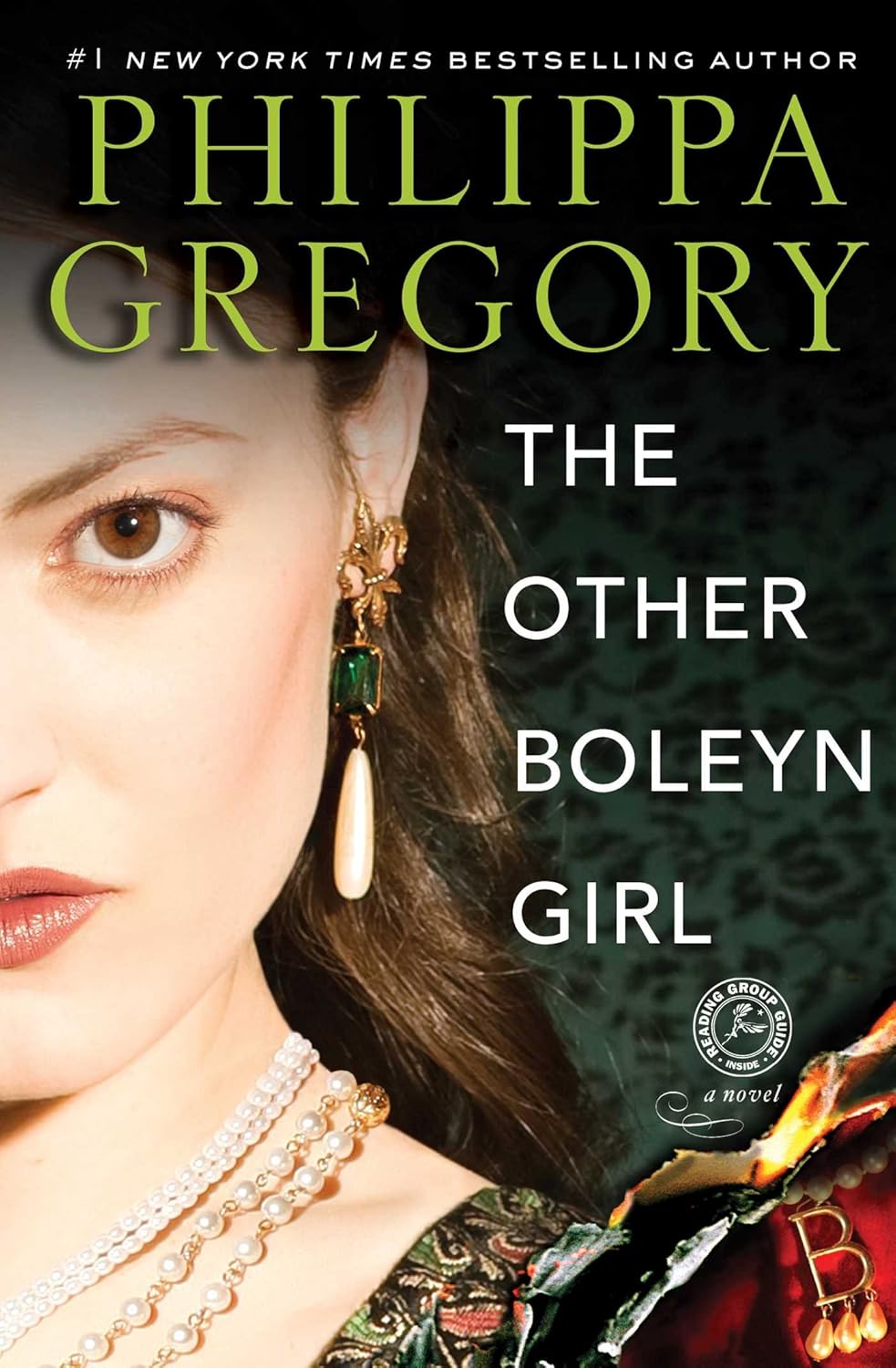
The Other Boleyn Girl ~ 1.5 stars


The Other Boleyn Girl, by Phillipa Gregory, is a book I picked up at a friend’s house. It’s a historical fiction set in England during the time of King Henry the VIII, the English king who is known for having six wives. The Other Boleyn Girl is the story of Mary Boleyn, the sister of King Henry's second wife, Anne Boleyn.

Note: This book is what I would consider an adult level book, so while I will try and be discreet in my word-choice, I don't intend to beat around the bush in stating the facts of what this book contains.

I won't go into much detail describing the incredibly complicated plot, which is full of surprising twists and turns and a great deal of intrigue. I thought the plot was pretty good, with a very human main character with human feelings - although her moral code wasn't quite up scratch, according to me. Basically, this book is set in a time period when people behaved very immorally, and any historical book written about King Henry VIII’s court would have to at least mention a few of these immoral practices. The Other Boleyn Girl, narrated by the sister of the second wife of the king, does more than mention - the plot of the book revolves around them. The Other Boleyn Girl is also a very character driven. Most, if not all, of the characters in the story participate in highly immoral practices, and so these get a fair amount of pages dedicated to describing them.

For these reasons, I didn’t find it to be a very pleasant story. I have never been fond of stories that contain much of this sort of material because to me it's highly inappropriate and distasteful to read about. I can tolerate a certain extent of the kinds of immoral material I found in The Other Boleyn Girl, as long as the story itself is still interesting and entertaining. But because The Other Boleyn Girl was, at least the way I see it, entirely about sinful people and their sinful actions, I didn’t enjoy it very much at all.

In other aspects, such as how well it was written and how well the characters were developed, I’m sure the author did a very good job. Mary Boleyn was a very human character, and very well-developed - I just didn't approve of the things she did. In other respects, it seemed to be a very historically accurate book. I'm no expert of 16th century England, but if she was faking the details, she did a very impressive job of it. If it hadn’t been for the central role that unappealing immoral and improper behaviors played in the story, I might have given it a higher rating that 1.5 stars. This is a book I’d only advise to people who enjoy that sort of material or are very interested in that historical period, and it’s certainly not a book I’d suggest to readers younger than seventeen or eighteen.

Tuesday, October 28, 2014

Agnes Grey - 3 stars (guest review)

Guest post by jayden robyn


     Agnes Grey, Anne Bronte's first of two novels, is a quick, easy read. I liked it, but I found the overall plot to be somewhat lacking, which is why I settled on three stars for my rating.

     Agnes Grey focuses on the story of a young woman who becomes a governess in an attempt to earn her own living. The book opens with a brief overview of her childhood and relations with her parents and older sister, before moving on to Agnes taking up a position as governess at Wellwood House. Agnes struggles to handle her pupils, who are cruel and unmanageable. She is relieved of her position after a year, and after returning home, Agnes then takes up another post as governess to the Murray girls, who are older than her previous charges. She has a much better time with them, even if they are still troublesome, and she also meets the curate Edward Weston, with whom she falls in love.

     Anne Bronte is a very good writer, with prose that is clear and easy to read. She is my favorite of the Bronte sisters. However, I found Agnes Grey to "get going" almost immediately without much introduction to the characters, so I wasn't fully drawn into the story for several chapters. It is a very quiet story without much, if any, action; basically it is a snapshot of the story of a young woman making her place in the world in 19th century England.

     Agnes does not really grow much throughout the story, but Bronte does a good job of portraying the people surrounding her main character (who narrates in the first-person), from the cruel Bloomfield children and their parents to the somewhat shallow Murray girls and their mother, as well as the kind Edward Weston. The romance between Agnes and Weston is very understated and (again) quiet, but I liked that Bronte wrote it that way. Bronte honestly portrays the governess' lot of the times, and she ends the novel well, giving us a glimpse into her characters' futures without stifling the sense of completion.

     Overall, I liked Agnes Grey, but the fact that it took me several chapters to get into the story, as well as the overall tameness of the plot, lowered my rating. I prefer Anne's other work, The Tenant of Wildfell Hall, but Agnes Grey was still worth a read.