Showing posts with label magicians. Show all posts

Thursday, April 2, 2015

The Books of Umber: Happenstance Found ~ 4 stars

I found P.W. Catanese's first book of The Books of Umber by chance. Part of the reason I checked it out from the library was the fact that Brandon Mull, the author of the Fablehaven series and The Beyonders series, had reviewed it. Our blog's motto is 'Never judge books-or people-by their covers', and I often stick to that rule. But this time I broke it. It just looks so cool!
I know I stay within my book genre preferences. I rarely ever venture out for something new. But going from author to similar author hasn't disappointed me yet, and Brandon Mull's name on this book's cover gained it access to my bookshelf. And gladly so! I was thoroughly pleased by this book. The characters were believable and relatable, though there was some tough love thrown in the mix.

Literally.

On the subject of romance, there is only about 5% out of the 100% goodness in here, and what is mentioned leaves you wanting to hear more. Yes, I said it. More romance. More details, specifically. I love the way Catanese adds mystery to the story. Every hint is subtle, but has a nuclear bomb impact on the reader. That, in my experience, is hard to pull off.

The book begins with a young boy, just awaking, blindfolded, and seemingly alone in a dark environment. As he searches his mind he finds that he has no memory of his past, nor his present, and then someone speaks. And Catanese whisks you away into a world full of mystery and adventure! The boy Happenstance (nicknamed Hap) meets Lord Umber, Sophie, and Oates first thing after he wakes and starts a voyage across the sea on a giant whale-like friend, Boroon, captained by Nima, a part fish, part human young lady. The best bits of the book are the tiny details, and so without giving way and telling the whole story, I cannot say much else.

I will say that Umber is easily my favorite character. His boisterous mood swings, playful attitude, and fun-loving nature catch my attention. But then there are also Sophie, Lady Truden, Happenstance, Balfour...And so the rest are all equals.
I rated this book a four because it held all I was looking for, but it added a sort of cliffhanger at the end, and I know that the next books will continue the mystery. I am trying to leave higher ratings for the future, in other words.

Thursday, March 5, 2015

Beyonders trilogy ~ 3 stars


     The Beyonders trilogy, by Brandon Mull, is a story of action, adventure, and courage set in a fantastical world pulled straight from the imagination of the author of the wonderful Fablehaven series. It's one of those books where a kid from our world travels to another place and finds himself the answer to prophecy. That's what Jason is: the answer to a prophecy, the hero who could save the world of Lyrian or destroy it. But he's also just an ordinary, baseball-loving teenager and at heart he's just like every one else.

     Jason comes from the Beyond - that would be our world - and his sudden arrival in a place nothing like Earth couldn't be more startling to him. Lyrian is a place like no other - you won't find another book with a world like Lyrian, and around every corner you're discovering something new about it. It's populated by humans, yes, but there are strange races living there, too, races created years ago by wizards. The food is exotic and varied, and the places Jason adventures to are as diverse as a swampy jungle full of huge frogs to the Tavern-Go-Round, a spinning tavern. All these things provide the backdrop for the story Brandon Mull has prepared.

     Jason, together with Rachel, another teen who has traveled from our world to Lyrian, are set on a quest by the Blind King to find the syllables to a magical world that can destroy the evil, tyrannical wizard Maldor, who seeks to conquer and control the entire world of Lyrian and everyone and everything in it. This quest will be dangerous enough, but no less dangerous than confronting Maldor in his fortress and speaking the word that will save Lyrian. And because of the nature of this series, I can't tell you what happens beyond that. You'll have to read them to find out.

     Now, with this fairly glowing description, maybe you're wondering why I'm only giving this series 3 stars. Here's why.

     In Lyrian, Brandon Mull created an amazingly detailed, intricate, unique world, filled with things and creatures I'd never heard of before, including wizard-born races that you will not find the like of in any fantasy novel you've ever read. Usually that's a good thing. I like to find unique worlds in books, but in Beyonders there was just too much for me to handle. I got lost in all the imagery - and not in a good way. There was so much going on in the background that I had a difficult time following the thread of the story with all these strange names of creatures and things popping up every few pages.

     Secondly, I had problems with the cast of characters in the Beyonders. As far as creating unique characters, Brandon Mull did well, especially with his wizard-born races to draw from. I do have a certain attachment to Ferrin the displacer, and I dare you to read the whole trilogy and hate him. Jason and Rachel were also great people, and the Blind King was...blind, of course, but pretty awesome. The problem for me was that there were other people who would join Jason and Rachel as they set off on each new quest, not so much in the first book, but definitely in the other two. And there were SO MANY of them, each with such a special skill-set that whenever they ran into trouble - and they did - there was always someone perfectly equipped to save their necks.

     Now, having a large cast of characters meant that Brandon Mull could regularly kill a few to remind Jason and Rachel to keep moving, but I find that creating characters and adding them to the story for a bit-part before killing them as a casual reminder isn't a mark of good writing. So between the jack-of-all-trades aspect of Jason and Rachel's ever-growing group of questers and their frequent, sudden deaths just to prove a point, I found the story lacking something. I couldn't get genuinely attached to the characters when I knew they'd be dead in 150 pages or so, only to be replaced by someone just as good or better. 

     Those are my reasons for rating the Beyonders the way I do. Despite having a brilliantly imagined world and a story premise that I loved, technicalities in how the author executed the story just didn't live up to my standards. However, there are lots and lots of people who had loved these books to an insane degree. I've read the reviews on Amazon, and there are fans out there as diehard as any fans of Harry Potter. So if you did like Fablehaven, I think the Beyonders might be worth looking into. It just didn't work for me.

     To sum up my somewhat extended review, let me just say that the first book of this trilogy has already been reviewed on Under Cover Agents by Mountain Gal, my blogging buddy. Check out her review HERE, and hopefully between us we can give a less biased assessment of these books.

Link to author website: http://brandonmull.com/site/beyonders-books

Sunday, February 8, 2015

Rebellion Under the Stars ~ 3 stars

Review requested by Copper Dirt.


     Rebellion Under the Stars, by Katherine Marie, is another recent read for me. It's a story of adventure, rebellion, loyalty, and perseverance. The kingdom of Zaracor is about to be attacked by a mysterious and relentless force, led by a man driven by ambition and greed. Help must come if Zaracor is to survive the rebellion - and help is far away. An attack will soon be launched on the City, the home of the King of Zaracor.

     A varied cast of characters find themselves burdened with the task of saving the kingdom. Selena, a commoner girl, and her close friend, Prince Johnathan of Zaracor. Master Jolan, a man with many secrets, but still the closest and wisest advisor of King Charles of Zaracor. MacKenna, the daughter of a blacksmith, who has strange and frightening visions of the future. And Marzena, a powerful and mysterious woman who lives in the forest just outside the City. Working together and separately, its up to them to find out how Zaracor can be saved - or if that's even possible.

     Rebellion Under the Stars is a brand new book that was just published in December of 2014. In fact, it was self-published by Katherine Marie, a blogger and writer and now new author that I follow. The fact that Rebellion Under the Stars is a self-published book, and also the first book Katherine Marie has ever had published makes it more of a challenge to review than other books I've done, but I'll give it my best shot.

     First of all, as a self-published book, it was better than some I've seen. Often I find self-published authors to have poor spelling and punctuation or tons of typos which aren't in books published and edited by big companies. Also, I've read books where the self-published author was too lazy to make sure their formatting was consistent throughout the book - sometimes words are spaced widely in one place and indented from the page in another place. This is just confusing to read and jolts the reader out of the story. Rebellion Under the Stars had none of these problems - there were two or three typos, but formatting was consistent. 

     One other thing I noticed is that there were no chapter breaks. Instead, there would be a bit of a page break when the story switched narrators or an important event was completed. This was a bit exhausting to read after a while. I found that when I didn't have chapter breaks to mark my progress, the story would drag a little bit. Still, it was an interesting choice and gives the book a distinctive voice. But as self-published authors go, Katherine Marie did a good job making sure the outward appearance of Rebellion Under the Stars wasn't disruptive to the story.

     As for the story, I have a few comments to make about that, both positive and negative. The things that bugged me about Rebellion Under the Stars was partly the big cast of characters. In most books, there are lots of named characters, and sometimes more than one narrator. I've read books with as many as four narrators, and that can be hard to cope with. Rebellion Under the Stars had seven or more narrators, I may have forgotten one or two. With that many narrators, you have to use a somewhat omniscient style of writing, otherwise you risk blending the characters together in the story. Unfortunately, in a story the length of Rebellion, I wasn't able to connect with any of the characters very well, which is important. Primarily, though, my difficulty was that I couldn't decide who the main character was out of so many narrators.

     Also, each of these characters has their own story, and with seven or more to deal with, I as a reader wasn't able to discover much about their histories. By the end of the book, I was left with tantalizing hints of secrets and hidden pasts for several of the characters, but nothing concrete. However, Katherine Marie has talked about a sequel/prequel for Rebellion, so maybe another book will clear that up.

     The positive things I have to say about Rebellion Under the Stars have to do with the writing style of Katherine Marie herself, not specifically Rebellion. I enjoyed the story, don't get me wrong, but I just felt like there wasn't enough for it to be special to me. Her writing style and grasp of story mechanics: characters, scenes, dialogue, action - all the stuff that make a story stick with you - were good. She wrote scenes that made sense, she knew what her setting was and could describe it and the characters inside it. And although I doubt she had a professional editor paid to edit her story, Rebellion shows that she put the time and effort into editing herself and did a good job. If she writes more stories, which I hope she does, I'd definitely be willing to try them.

     In the end, Rebellion was a pretty good book from a first-time self-published author. It shows bravery from the author to be willing to make herself the face of her book, and not some publishing company, since she'll have to do all the footwork to get her book known (though maybe my reviews and other reader responses will help). I thought the story was interesting, and though it could have used a bit of tightening to clearly bring the plot together and showcase the characters ideally, it was a nice debut novel. Good job, Katherine Marie!

Link to author website: https://kmariecreativity.wordpress.com/
Links to Rebellion Under the Stars page: https://kmariecreativity.wordpress.com/rebellion/

Sunday, January 25, 2015

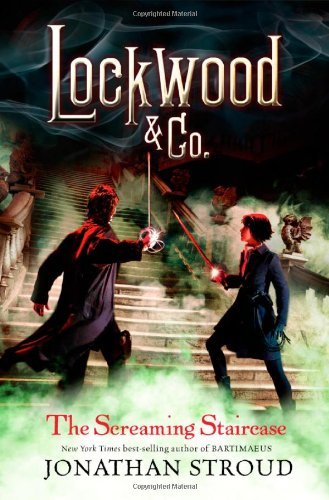
The Screaming Staircase - 4.5 stars

Second edition cover
     The Screaming Staircase by Johnathan Stroud is another new book I picked up recently. Johnathan Stroud wrote the Bartimeaus Sequence - I reviewed the first book in that series earlier. I've liked most of what I've read from Stroud. A few of his stand-alone novels didn't appeal to me much, but I've always liked the Bartimeaus Sequence, so when I saw he was writing another series, I gave it a go.

     The Screaming Staircase is the first book in the Lockwood and Co. series. It could be only a trilogy, which would be a shame, but since it's not finished yet - the second book in the series, The Whispering Skull, only came out September 2014 - I don't know. But so far, I've really enjoyed the first two books, so I'm probably going to be getting myself any sequels he comes up with.

     This story is set in London. A sinister Problem has been troubling the world for nearly fifty years now. All manner of ghosts and spirits have begun to appear in rapidly increasing numbers, and they don't appear to be friendly. Unfortunately, only young people have the ability to perceive these spirits. Many different agencies have sprung up, employing hundreds of adolescents and children to find and destroy these Visitors, as the spirits are called.. Lucy Carlyle is a brave and talented young agent with the ability to hear the Visitors. When she teams up with clever, charismatic Anthony Lockwood and his mildly repulsive assistant George, they all have hopes that the agency is about to make its mark on the world.

     Unfortunately this is not to be, and after their latest case ends disastrously with a house going up in flames, Lockwood and Co. face the possible end of their new agency. To save it, they must brave the most dangerous haunted house in London, perhaps in all of England. Combe Carey Hall has a reputation of spirits and hauntings that stretches back several centuries - long before the Problem really began. Can the three intrepid agents survive the horrors of the Screaming Staircase and the Red Room? Can they put an end to the haunting of Combe Carey Hall, or will they be the next three lives the forces of that house have taken?

     The Screaming Staircase was definitely a page-turner. Stroud balanced the comfy relationship of the three-person agency with a lot of fast-paced action and really dangerous situations. I was also really captivated by the originality of the plot. The story is set in slightly post-modern London, but it wasn't sci-fi at all. Something else that I found was interesting was the fact that agents use rapiers to fight Visitors - what's not to like about some dashing teens with flashing, silver-coated blades? Furthermore, there was definitely a mystery element to this story, and although the clues were there, I was kept deliciously guessing the entire time. I think you can agree that that's a mark of very good story-telling.

First edition cover
     As for the characters of The Screaming Staircase, they display Stroud's trademark sarcasm and humor. If you're like me and couldn't get enough of Bartimeaus in the Bartimeaus Sequence then the characters in Lockwood and Co. have a taste of that same sharp wit and irresistible, careless charm. Lucy is a very plucky and extremely admirable young lady. I didn't expect her to be my favorite, but she is, hand's down. It's also hard not to be charmed into liking the irrepressible Lockwood, and though I still have my doubts about George, he turned out to be a good egg after all. 

     Another mark of Stroud's ability to write very, very good stories is the Visitors. The descriptions of ghosts, spirits, and other things not quite of this world that stem from the Problem are incredibly riveting, and though I really should say 'realistic' that's what I'm going to go with. I honestly wished I hadn't started to read the climax after dark, because what they encountered in the Red Room was actually pretty scary stuff. If you've got a problem with getting emotionally involved with a book and getting as freaked out as the characters are, then you'll probably want to save The Screaming Staircase for strictly daytime reading.

     Other than that, The Screaming Staircase was a captivating and fun read from an author I know and trust to write good, high-quality material and tell intriguing stories. I'm actually really impatient for the next book to be published.

Link to series website: http://www.lockwoodandco.com/

Saturday, January 17, 2015

Memory, Sorrow, and Thorn trilogy (guest review) ~ 5 stars

Guest review by Eli Hansen


     Memory, Sorrow, and Thorn is the title of an epic fantasy series by Tad Williams. The title is deceptive, since the name of the trilogy is not the name of the three books, which are titled The Dragonbone Chair, The Stone of Farewell, and To Green Angel Tower. My name is Eli Hansen, and epic fantasy is definitely my cup of tea – perfect for my guest review on my sister's blog.

     One thing we can all agree on is that this is an exceptionally long story. Altogether, the edition of the series that I own was about 2600 pages long. That's close to even the Harry Potter series, and I can assure you that Tad Williams' writing is much more complex than J. K. Rowling's early work. 

     In fair warning, this series was also one of the slowest series to "get in to" that I've ever read. Some reviewers say it takes 100 pages in to the first book to really get moving, others say 200 pages, and others say it takes half of the book before the story really get started. In my opinion the story really didn't get so exciting that I didn't want to put the book down until I was 600 pages in, almost all the way through the first book! Even for a seasoned reader, that's a long time to stick with a book that just doesn't seem all that great at first glance before you get to the good part. I would almost have to say it was poor writing. To me, the set up for the rest of the story was worth it, but I've had a hard time getting other readers (like my sister!) past the long intro to the rest of the trilogy without losing their interest. 

     Once you do get past the intro, however, you get to all the good things that I enjoy about Tad Williams' writing. For one thing, he keeps it real. The protagonist of his story starts out as a servant boy at the castle and over the course of 2600 pages, he develops from a simple adolescent who dreams of achieving great things, but would rather avoid responsibility, to being a strong leader and actually becoming the ruler of the human kingdom. But the development of this young man's character is never as if the author waved a magic wand and suddenly made him into a saint with all the virtues of a fairytale hero. Through the experiences he faces, the character actually comes to adulthood. I don't know any better example of character development in a piece of fictional writing.

     The other fantasy races that Tad Williams uses in his story also help to keep it real. He takes races like elves and dwarves and succeeds in making them really unique and distinct. Their motivations, their thoughts, and their culture are different and much stronger than the stereotypes that are typically portrayed for those races. 

     Another characteristic of Tad Williams' writing is that it's very dark. The situations his characters encounter can be very desperate, and you never actually know which ones will survive to see "happily ever after." Personally, I enjoyed the dark style of writing in the series; however, I know it can be offputting to some. Who wants to read about more suffering when there's already plenty of it to go around in the real world? As a sidenote, of all the books that Tad Williams has written, this is actually the least dark and grim.

     The plot of the series is definitely archetypical of the classic fantasy or fairytale type of story. It has some elements of mystery mixed in as well. I guess the reason I like it so much is that it is such an epic fantasy tale, but it does not resort to the kinds ofdeus ex machina and implausibilities that are so common in the genre, like waving the author's magic wand to change a formerly shallow and selfish character into a brave and self-sacrificing hero with no explanation for his change of heart. The characters, though, are the best part of the story – all very realistic in their choices and their motivations.

     The length of the story and the dark style of writing definitely make it a series for an experienced reader. There is some adult content; while it's not too overt, nor is it the focus of the story, it's there, so beware. The best thing I can say about the Memory, Sorrow, and Thorn series is that it will blow you away with its depth. It takes a plotline that really is a classic example of fantasy and makes it so much more than its stereotype. A piece of "easy reading" it is not, but if you like writing that challenges you and really makes you think to keep up with the author, you will really enjoy Memory, Sorrow, and Thorn. I encourage you to give it a read!

     Noodle: Thanks, Eli! He has is own website and blog over at www.elihansenart.com which you should really check out. Eli asked me to review this series, but I really think we can all agree he did a better job of it than it than I would have.


Tuesday, December 30, 2014

Snow White and Rose Red ~ 4 stars

I’ve been a Patricia C. Wrede reader for several years now. She wrote a few Star Wars novels and I've also enjoyed her Enchanted Forest Chronicles. I’ve always liked the spicy, distinct characters in her books, so when I saw she had also written a retelling of the old fairy tale about Snow White and Rose Red, I thought I’d give it a go.

It wasn't quite what I expected from Patricia C. Wrede. I was used to reading her more recent publications, but Snow White and Rose Red was one of the first stories she had published, and her writing has changed a lot since then. Snow White and Rose Red follows the original fairy tale closely enough that I could see where the parallels were, but the characters had changed enough that the story was obviously "wearing new clothes" as I like to put it. It had been fleshed out and made more intricate. All the leaps of logic, typical of old fairy tales, had been ironed out and explained.

Patricia C. Wrede's Snow White and Rose Red is the story of two beautiful sisters, Blanche and Rosamund, who live with their widowed mother near the border of the world of the fay. When a half-fay, half-mortal man called Hugh is subjected to human magic and forced to take the shape of a bear, kind Blanche and Rosamund try to do everything they can to return him to his original shape. This means taking the considerable risk of being discovered and tried as witches by suspicious neighbors. In the end, they need the help of Hugh's brother John, another half-fay, to break the spell. In so doing, they discover that Hugh's transformation was the result of a plot to tear the human world and the world of the fay apart. 

The story concludes with the classic fairy tale ending: the fair maidens wed their new sweethearts, the half-fay Hugh and John. Usually I don't like these kinds of endings, because it makes the romances very unrealistic, but Patricia C. Wrede did an admirable job of making the relationships between the characters real enough that I could see them getting married.

I found Snow White and Rose Red to be a fairly entertaining story. It was written with a more reserved, strict style than other fairy tale retellings that I’ve read. It doesn't have the very personal style that most novels published in the past 5 or 6 years have, but this is mainly because Snow White and Rose Red was published in 1989, before that style of writing became popular. In fact, the style of Snow White and Rose Red is great for that story, because it makes it read more like a fairy tale and adds grace and elegance to it. I also enjoyed the way the original fairy tale was restructured for Wrede’s retelling, and I think that her revision of it added a lot of appeal to the story.

The biggest thing that I noticed about Snow White and Rose Red was the language. Wrede uses ‘thee’ and ‘thou’, in addition to the usual ‘you.’ Other changes to the language, such as some of the more archaic forms of words (forsooth, seemth), and even the use of ‘an’ in the place of 'if' in some cases, all make the language a little more challenging to less experienced readers. To me, these things just added to the unique style of the book, since it hearkens back to an older way of speaking. But for other, less patient readers, this might make it too difficult to be interesting. My twelve-year-old sister Jo also read Snow White and Rose Red, and although she enjoyed it, she did say that the language was sometimes an impediment.

So, in the end, I would just say this.


"An thou can read and understand it, thou’lt know why I sayeth that it seems a goodly book."

Link to author website: http://pcwrede.com/

Thursday, December 11, 2014

Castle Glower series - 4 stars

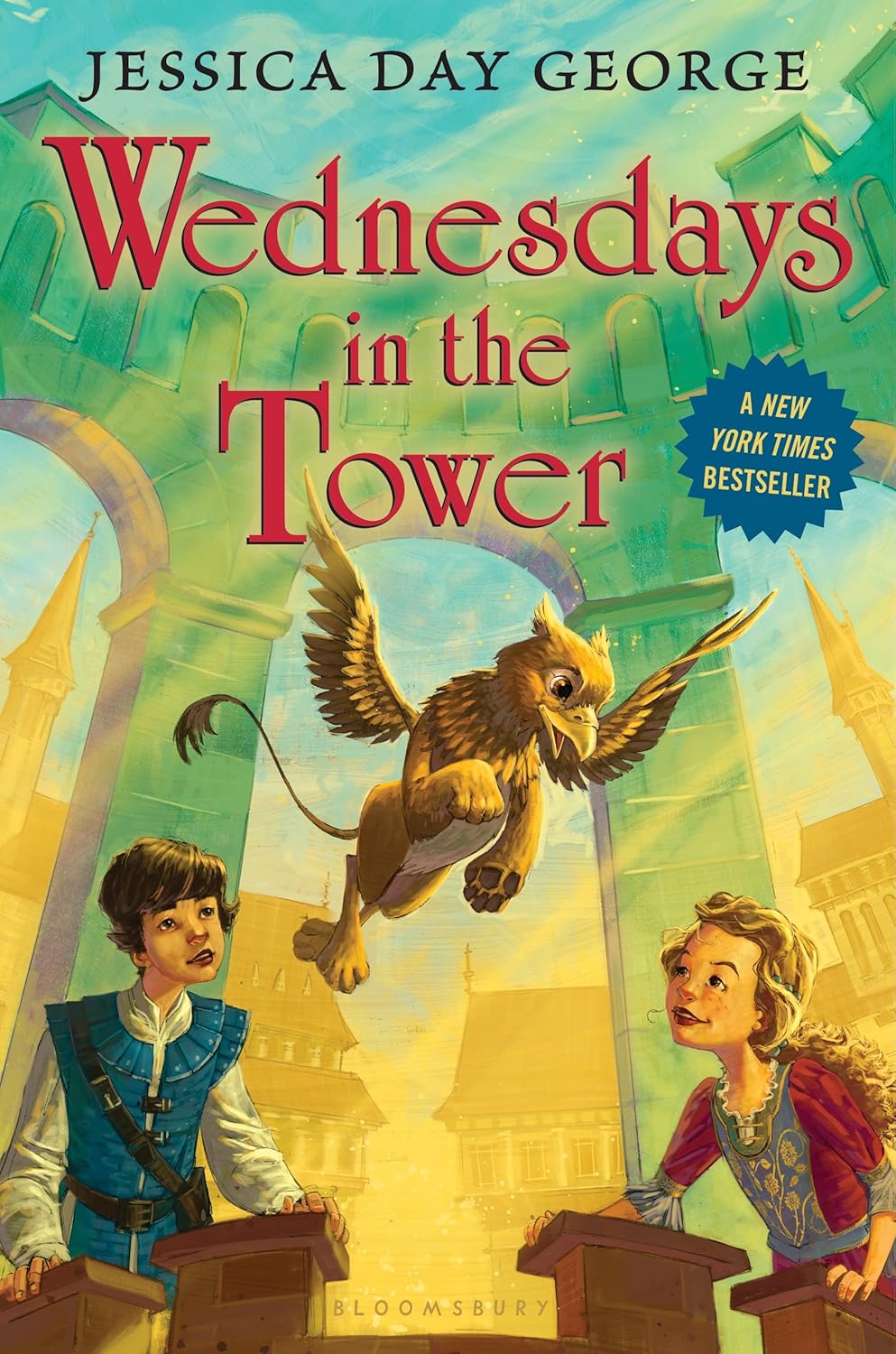
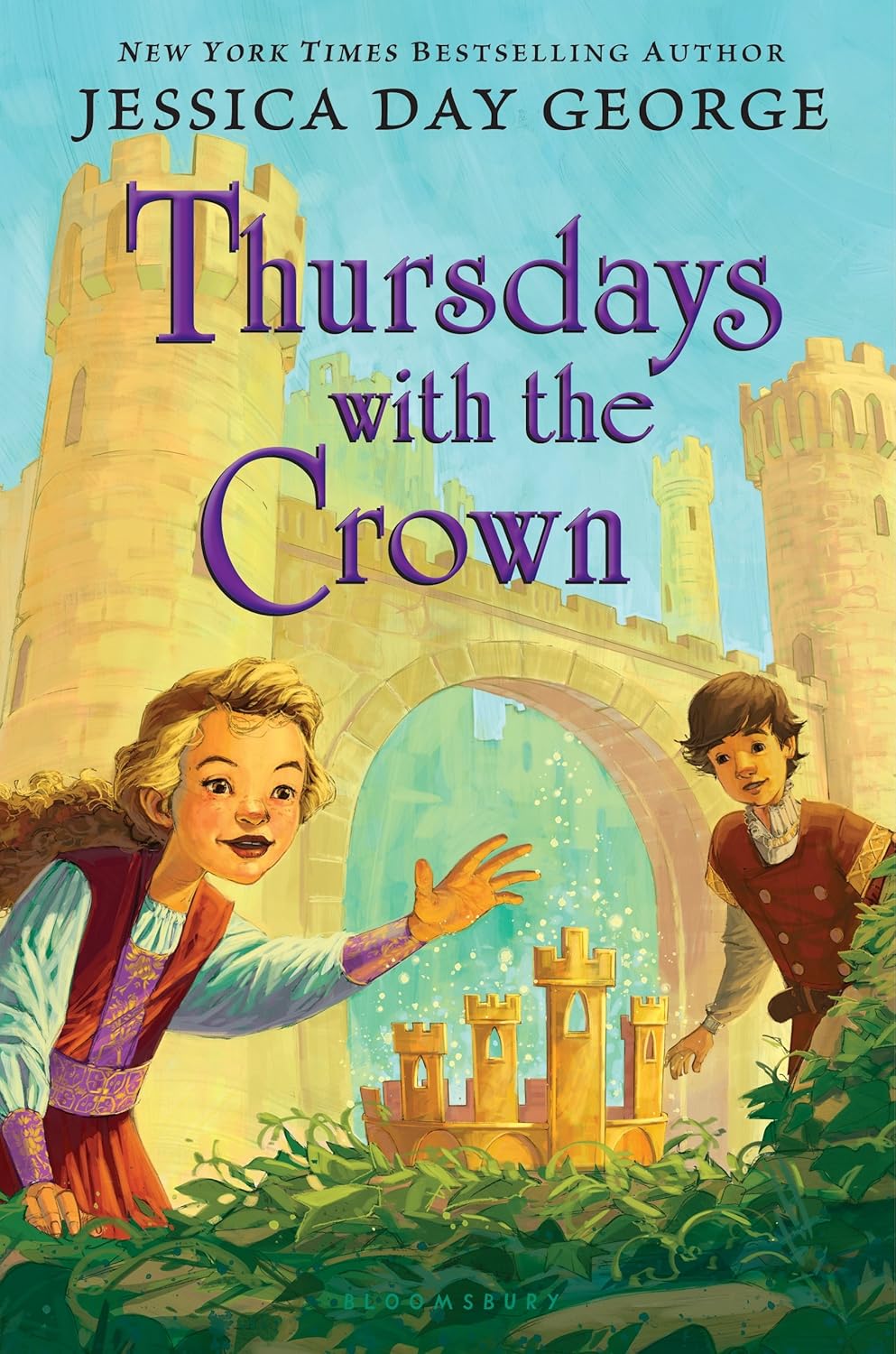
     The Castle Glower series by Jessica Day George is a very charming story about a girl, a griffin, and a castle that is constantly changing. I wouldn't normally describe a series with the word 'charming', since that might give you the idea that it's just another 100 page kid story. But this series really is charming: pleasant, agreeable, and even lovable.

     The story throughout the three published books in this unfinished series is interesting in itself - first the Castle in ambushed, then Celie, the princess of Sleynth, secretly hatches a griffin, and finally she and her siblings are transported to the original home of Castle Glower. I always enjoy a good story about children solving problems bigger than themselves, and Princess Celie does a very good job of that in every book of the series. Also, I was intrigued by the concept the series is built around: the mysterious Castle Glower. It almost seems to be alive, creating new rooms every few days or taking away old ones. No one is sure why or where the rooms come from or where they go to when they disappear. 

     Besides the interest of Castle Glower, the characters are also fun. First of all is Princess Celie, who is a plucky girl of twelve years. She's a fairly practical princess, and she's mapped most of Castle Glower, and is always adding the new rooms to her map. Also, she's Castle Glower's favorite person, and she can count on it to help her in it's own way when she really needs it. When the Castle is under attack, Celie is the best person to help save it. And when the Castle starts to fall apart and no one knows why, Celie is the one who understands the clues the Castle is leaving for them. Besides her special connection to the Castle, Celie is also smart and cheerful even when things get bad.

     Her brother Rolf and sister Lilah are also enjoyable characters, and they're both sweet and act just like family would. Then there's the quaint, dog-loving Prince Lulath and Lilah's sweetheart, Pogue. And there's even a griffin that Celie names Rufus, which is a cute name for a griffin.

     Besides having a great story premise and fun characters, the Castle Glower series is a nice series in other ways. One thing I really enjoyed was that when Celie is in big trouble, she goes to her family for help. In lots of stories, this doesn't happen and the character has to rough it out on their own for various reasons. While there's no problem with this - and in fact, I enjoy it a lot - there's something refreshing and appealing about a character who gets some help for once. Another thing I enjoyed was Celie's sassy sense of humor. I always enjoy characters with a sense of humor.

     I bet the Castle Glower series won't build up a fan base like the Harry Potter series or Lord of the Rings, but they're still a fun, enjoyable read. Not every book has to be a hit series to be good, or even to be someone's favorite. The Castle Glower series isn't my favorite series, but it's one that I have had a good time reading. I'd definitely recommend it, especially to kids. It's about that reading level, is completely clean, and is a very fun series. It might not be entertaining to more advanced readers, but I found it worth reading and definitely worthy of four stars.

Link to author website: http://www.jessicadaygeorge.com/

Wednesday, October 1, 2014

The Spook's Apprentice ~ 3 stars

Book 1
     I don't like lots of horror and gore in books. The Spook's Apprentice series by Joseph Delany has both, so I actually didn't expect to find them at all appealing, but I was surprised by how much I enjoyed them. I would classify this series as being a thorough blend of some of the most frightening, bloody writing I've found in non-adult literature and some great characters and themes.

     The Spook's Apprentice books center around Thomas Ward, the apprentice of the local Spook, Old Gregory. As an apprentice Spook, it's Tom's job to deal with the things that go bump in the dark: ghasts, ghosts, boggarts, witches, and other denizens of the dark. They're a terrifying bunch of villanious creatures, and it takes a special kind of person to be brave enough to face them. Tom is a seventh son of a seventh son, and this makes him specially suited to fighting the dark, but even so its not an easy job. He regularly depends on the experience and skill of his master, Gregory, to help him, as well as the abilities of his friend Alice, the daughter of a witch.

Book 2
     Without spoiling the story too much, since there are many unexpected twists and turns in the plot, here's a summary of the series. Throughout the books, the dark is gradually growing strong, and it's almost more than a Spook and his apprentice can keep at bay. To make things worse, the Fiend, who is said to be 'the dark made flesh', has been summoned to the world. The only thing that is keeping him from destroying the world utterly is the fact that Tom's mother has hobbled him, binding him to several conditions. If he kills Tom, he will only be able to remain in the world for a hundred years – a mere blink to a powerful being like the Fiend. But if he can convert Tom to the dark or get one of his children to kill him, his reign can go on forever, unbroken and unhindered. To banish the Fiend back to the dark forever, Tom, Gregory, Alice, and other allies they make along the way are going to have to find a way to kill him. And a being like the Fiend isn't going to be easy to kill.

Book 6
     Hopefully that little summary doesn't give away too much of the story, but did tell you enough to possibly interest you in giving this series a try. Beyond just hinting at the plot, however, I have several things to say about the books themselves.

     Like I said, this story has a lot of elements in it which I would classify as horror. Delaney never lets you forget how close many of the characters are to a really horrible death for extended periods of time. He also describes things in vivid detail, and combining that with plenty of heart-pounding moments for the characters can give readers a shock if they don't have nerves of steel. This is not a comfy story where the heroes eventually win – it's a story where the heroes are going to win in the long run, but lots of them are going to die along the way. And that's not always appealing to every reader.
Book 8

     Also, the gore level of the Last Apprentice is very, very high. I'm not joking when I say that blood, bones, and death is mentioned on every three pages, at least. In particular, the witches of Delaney's story are quite gory and disturbing. It takes a reader who isn't easily disgusted to hang on during the first few descriptions of dead witches and blood-drinking boggarts. You'll have to be the judge of the blood and guts aspect of The Spook's Apprentice yourself. My advice is to at least read the first book and give it a try. You might find it extremely disturbing, or it could be appealing to you. Or you might be like me and enjoy the extra layer it adds to the story while not trying to imagine how incredibly disturbing the story would be in real life.

Book 10
     But just because The Spook's Apprentice can be horrific and bloody in places didn't turn me off. I actually found that although it was a gory story with creatures that wouldn't be out of place in a horror film, it was still a good story. Delaney handles horror and gore without becoming repulsive and revolting. Also, his characters have heart and substance – Tom in particular. Really bad things happen to them, and they get more of a fright than I do, but they're still great, three-dimmensional, extremely unique characters. The books wouldn't be the same without them. Also, Delaney has a wonderful narrative voice. The flow of the story is very natural, even in the most disturbing passages.

Book 13
     In the end I find myself two minds about The Spook's Apprentice. On the one hand, it's got great characters and Delaney is a very good writer. But on the other hand, the series currently contains thirteen books, and Delaney hasn't finished his story yet. And in my opinion, he's sacrificed some of the aspects of his story that I liked along the way to getting to thirteen books. I'll finish the series, but I was not pleased with the turn the series took. So in a few days, I'll follow this review with a breakdown of what I thought of Delaney's continuation of The Spook's Apprentice story. It's going to be full of spoilers, so don't read it until you've gotten to book thirteen. Please don't. It'll ruin half the surprises in store for you.

Link to author website: http://www.spooksbooks.com/

Tuesday, August 12, 2014

Imager - 4 stars

     Imager by L.E.Modesitt, Jr. is the first book in the Imager Portfolio, a series of books revolving around the imagers of Solidar. It's set in a world that could be classified as steampunk (a blend of magic and Victorian age technology), but has a far more complicated plot than most steampunk novels I've read. While they are generally full of fast-moving action and brilliant clashes between opposing sides, Imager takes a different route. It has vibrant and unique characters, but not conspicuous ones. It has action, but that action takes time to wind itself up to its full strength and speed. I found the change refreshing and highly entertaining. Imager was another book I had difficulty tearing myself away from to get jobs done.

     Rhennthyl, the eldest son of a wool merchant, was a very talented journeyman painter until his master was killed in an explosion. Out of a job and with no way to support himself, he realizes that he has the ability to image - he can visualize things and make them real. The Collegium, a school, home, and workplace for people with talents like his takes him in and he begins learning how to image. It doesn't take Rhennthyl long to learn two things: he is a very talented and very strong imager, and he is the target of several assassination attempts. Although he doesn't know why someone is trying to take his life, or who that someone is, he has no choice but to try and find out as much as he can. With the help of his lady friend Seliora, his tutor Master Dichartyn, and his own intuition and skills, he gradually uncovers more of the mystery and finds that its more complex that he could ever have imagined.

     The first book ends in a cliffhanger - thankfully Rhennthyl isn't in any immediate danger, but I know it's just around the corner. I found the story to be engaging, especially as the plot picks up pace with more assassination attempts. Rhennthyl was an interesting character and quite unique. Unlike many characters that could be considered interesting, he has no noticeable major flaws and is a strong, determined, and practical young man. To make up for that, however, he spends most of the book struggling with the fact that he doesn't have enough information - and some of that information is being withheld from him by his instructor, Master Dichartyn. I had to sympathize with his repeated frustrations. 

     The world of the Imager Portfolio is complex and detailed - the names of decidedly foreign and suggest some sort of European culture. The design of the world extends to even the little things like the days of the week and the months of the year. There are names for wines, places to eat out, foods, even the method for measuring time is different! In some books this would be too much to remember and would make things too confusing for a good story, but Modesitt does a very good job of balancing those details and actually uses them to make the sense of complex intrigue even more obvious throughout the book. Complex worlds are something I admire, and I definitely admire Modesitt's way of handling the world he created and making it fit with the story he was telling. 

     Imager was a fairly slow-paced book to start out with, and it never really achieves the breakneck speed of some steampunk novels, but what it lacked in fast-moving action scenes it made of up for in a plot that has more twists and turns that I can count. For those who are interested in a thought-provoking story, the Imager Portfolio is one I'd recommend. It will require digestion and thorough reading, but the story was highly rewarding and entertaining. I'm looking forward to reading the next several books.

     Another thing I have to say about Imager is that although I label it as "teen", "adult", and "epic" this is only mean to convey the language level and the length. There's nothing inappropriate in these stories - in fact, they're cleaner than some books for 8-12 year-old's that I've read. So although my labels may indicate otherwise, Imager is a good, clean book that younger readers could enjoy safely - as long as they were willing to stick with a slow moving, complicated story.

Link to author website: http://www.lemodesittjr.com/

Tuesday, July 15, 2014

The Hero and The Crown - 5 stars!

     The Hero and The Crown is one of many amazing stories Robin McKinley has written, and is my favorite of her books. It is set in Damar, a country not unlike medival Europe, and follows the journey of Aerin, the eighteen-year-old first-sol of Damar.

     Aerin is the only child of Damar's king, but because her mother was a witchwoman from the North, the palace folk distrust her. Her only real friends are her cousin Tor, her nurse-maid, Teka, and her father's lamed war stallion, Talat. But she rises beyond everything Damar expects of her when she slays the Black Dragon Maur and brings the Hero's Crown back to Damar in time to save her country from destruction. 

     Aerin is a memorable character, a stubborn and sometimes awkward girl who grows up to become a stubborn and sometimes awkward young woman. She is loyal to those she loves, but prefers to hide from trouble rather than face it, a trait that I can only sympathize with. From her fiery red hair to her surprising discovery of a fireproof ointment called kenet, Aerin proves herself to be resourceful when she must be, and more determined that anyone gives her credit for. In Aerin Robin McKinley has crafted a unique and memorable heroine, and that's the most we can ask for.

     In The Hero and The Crown, McKinley writes a captivating story in a very down-to-earth style that is distinctly her own. Her characters are well-crafted and well-written, from Aerin and Tor to Aerin's childhood enemy Galanna and the mysterious mage Luthe. The story was full of vivid detail and feeling, and McKinley put in plenty of surprising plot twists that sprinkle most of her writing: surprises that are interesting, magical, and at the same time very human.

     In my opinion, The Hero and the Crown is a good book on every level. It had memorable and multi-dimensional characters, an amazingly detailed world, and a well-crafted story. The narrative never dragged, despite several chapters of flashback into Aerin's childhood - that part of the story fit in smoothly with the rest. I would recommend The Hero and the Crown by Robin McKinley to fantasy readers of all ages. 

Link to author website: http://www.robinmckinley.com/

Thursday, May 22, 2014

The Amulet of Samarkand - 5 stars

     The Amulet of Samarkand, the first book in the Bartimaeus Sequence by Johnathan Stroud is a story of djinni and magicians, set in 20th century England. The entire Parliament is composed of magicians, men who have learned the art of summoning magical beings from another dimension to serve them. Meet Nathaniel, a magician-in-training with great talent, and his powerful djinni servant, Bartimaeus. Prepare to be amazed by the breadth of the story Stroud has to tell in this book.

     The book centers upon Nathaniel's quest for revenge. After he was publicly shamed by a powerful magician called Simon Lovelace, he acquires a powerful thirst for revenge. Bartimaeus is summoned, and ordered to steal a powerful protective charm from Lovelace: the Amulet of Samarkand. Bartimaeus is a djinni with a reputation that is outshone by his own ego, but he has an entertaining sense of humor. The interplay before the somewhat stiff-necked and stubborn Nathaniel and quick-tongued, sarcastic Bartimaeus is part of what makes the story so special. 

     Bartimaeus isn't too pleased to find himself summoned by a kid, but he has no choice but to do what Nathaniel says. Unfortunately, after he steals the Amulet, he accidentally leads Lovelace and his demons to the home of Nathaniel's master. It's only because of Bartimaeus that Nathaniel escapes certain death at the hands of a vengeful Lovelace. But the two of them are now adrift in London, and Bartimaeus is itching to be released from the human world. However, Nathaniel is both patriotic and ambitious, and when he learns that Lovelace is at the center of a clever plot to overthrow the Prime Minister, he is determined to see the plan foiled and Lovelace's reputation destroyed. I know: big plans for a twelve-year-old. That's what Bartimaeus thinks as well. How are they, a young, half-trained magician and one demon (no matter how clever) going to defeat some of the best magicians in Parliament? Read and find out.

     The Amulet of Samarkand was a very enjoyable read for me. I think a pattern is developing in my reviews - I really enjoy books with a bit of humor. Bartimaeus brings it to this story, and I really enjoyed him. The story starts a little bit slow, but speeds up toward the middle if you stick with it. I can't really decide what age range I would think The Amulet of Samarkand is specifically targeted at, but any reader who isn't daunted by the size of the book (+300 pages) should like it. This book is also totally unlike any other stories I've read. Johnathan Stroud's writing style is quite different as well, and the Bartimaeus Sequence mixes 20th century England with djinni and magicians in an entertaining and unusual way. Take it from me: if you're looking for something different and interesting to read some afternoon, The Amulet of Samarkand is a good choice. 

     One thing about The Amulet of Samarkand that might not be worthy of 5 stars, at least to some people, is that it was full of footnotes. Mostly they're just information which is necessary for understanding Bartimaeus's powers, or sarcastic backchat. Some hint at Bartimaeus's long and glorious past and all the things he's done the various other times he was summoned into our world. But unless you're a dedicated reader, the footnotes can be distracting and detract from the rest of the story. Other friends of mine who have read this book skipped over the footnotes and still enjoyed the story, so reading them is entirely up to you. I thought they were fun and interesting, but others have found them annoying. But footnotes aside, The Amulet of Samarkand was still an highly entertaining read.

Link to Bartimaeus Sequence website: http://www.bartimaeusbooks.com/index.html