Showing posts with label comedy. Show all posts

Friday, August 14, 2015

Hank the Cowdog (series review) ~ 4.5 stars

Time for a fun review of a very fun series that’s great for just about any person of any age. I haven’t met anyone so far who doesn’t like these books, and since I love them so much, it’s high time I wrote a review.

John R. Erickson is a author from Texas who has written 65 books (and counting) about a fictional dog called Hank the Cowdog. Since I have yet to read a Hank the Cowdog book that isn’t worthy of at least 4 stars, this review will be a general one that can apply to any one of the books.

Hank the Cowdog, the narrating character, is the Head of Ranch Security on a ranch in the Texas Panhandle. Basically, his job is to keep the entire ranch running and safe from coyotes, monsters, and whatever else might pose a threat. He also barks the sun up every morning, herds cattle, helps the cowboys bale hay, and keeps his screwball assistant Drover from causing too much trouble.

Hank is a real character—you can’t always trust everything he says. Half it is exaggerated or completely made up, and the other half is the result of a garbled conversation with Drover. According to Hank, he’s a blue-ribbon, papered, pedigreed cowdog—the truth is that he’s just a ranch mutt with an inflated opinion of himself. But Hank’s adventures are not exaggerated—while he may not fight Laundry Monsters in Sally May’s front yard, he does have some narrow shaves with cannibal coyote brothers Rip and Snort. And there’s the time when he ends up in the dog pound, and the time when he’s stranded in town, and, well, you get the idea. Plus Hank thinks he’s a big favorite with the lady dogs, which adds another level of hilarity to every encounter he has with them.

Drover, Hank’s assistant, is the source of a lot of the humor in the Hank the Cowdog books. He spends most of his time daydreaming, watching the clouds, and otherwise behaving in what Hank would call a “frivolous manner.” Drover has a hard time dealing with reality, and his preferred response is to run to the safety of the machine shed until things blow over. He spends most of his time confused, and this has led to a lot of misleading conversations with Hank that have caused some pretty spectacular mix-ups. Take, for instance, the time Drover thought the world was coming to an end after Sally May went to a clearance sale in town.

There’s a mixed bag of other recurring characters in the Hank the Cowdog books that are just as important as Hank and Drover. There’s Slim, the bachelor ranchhand and Loper, his boss. There’s Sally May, Loper’s wife, and Pete the Barncat, Sally May’s pet. There’s also the buzzards, Wallace and Junior, a tribe of wild coyotes, J.T. Cluck the rooster, and a whole bunch of others. They all add up to make the Hank the Cowdog books some of the funniest books I’ve ever read. Hands down.

Why are they funny? It’s hard to explain, but John R. Erickson takes full advantage of all the screwy characters in his books and uses them to create situations that are funny in a way that makes you laugh out loud. It’s not slapstick humor, and it’s not a dumb kind of funny. Hank the Cowdog is always hilarious in new ways every time, and it’s good, clean humor that everyone can laugh at because it really is funny. Hank’s adventure’s are also just plain entertaining, and they’re just as fun to read the eighth time as they were the first time. Basically, I’d suggest you get the first five of these and start reading them. We bring them along to read aloud in the car. If you’re that kind of person, I bet you could read them to the kids before bed. And if you’ve got kids who are starting to get interested in reading, these are definitely good books to put into their hands. I really can’t recommend the Hank the Cowdog series highly enough.

This isn’t the first Hank the Cowdog review I’ve written either. I had one published in my local newspaper, and also posted a short review on my other blog, Too Hick To Be Square. But trust me, they all say the same thing. Hank the Cowdog is a great series. They’re fun, they’re funny, they are really, really good books. Enough said. Now get yourself to a library and check one out.

Link to author website: http://www.hankthecowdog.com/

Tuesday, November 18, 2014

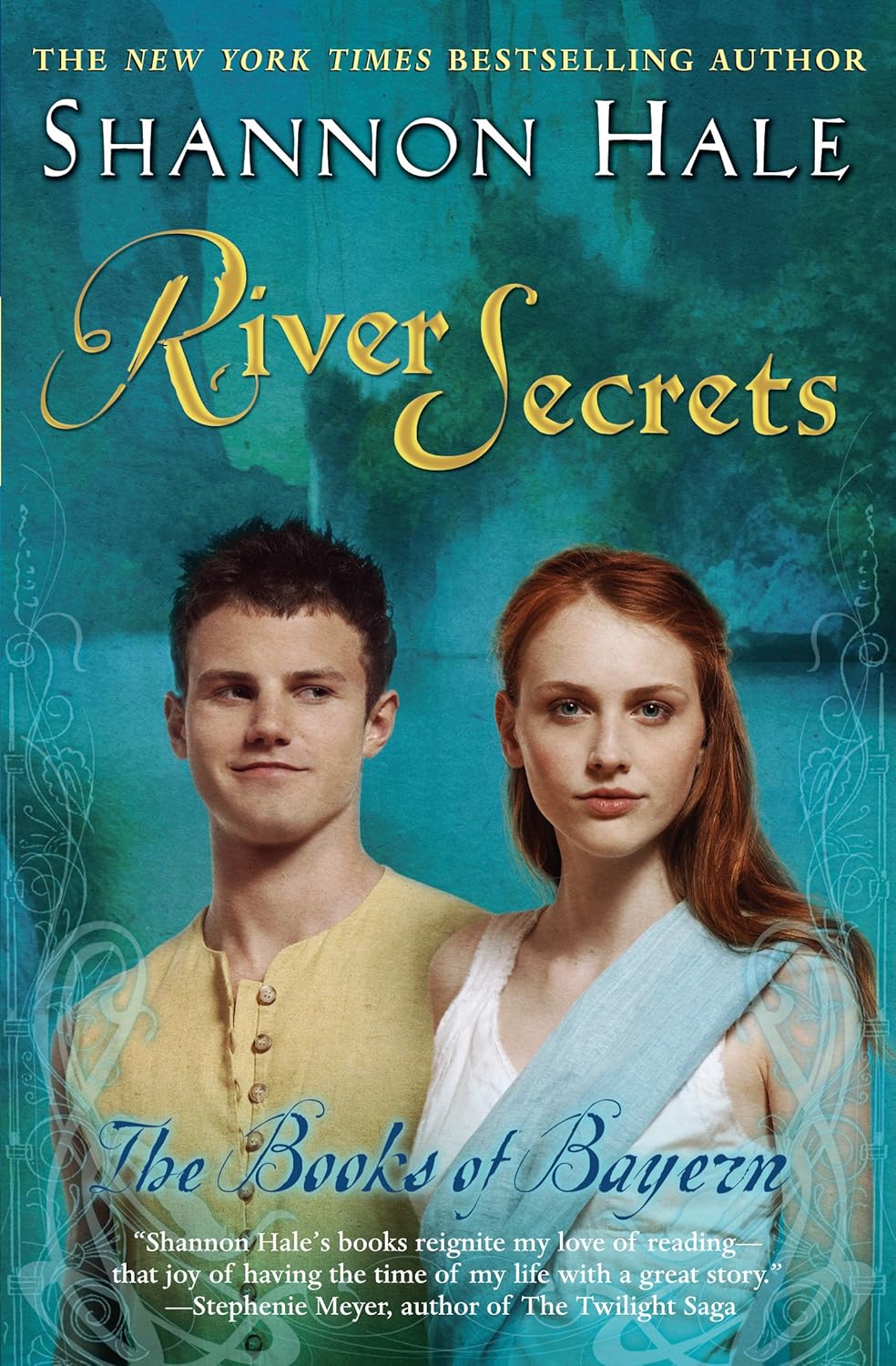
River Secrets - 5 stars

     River Secrets, the third book in The Books of Bayern series by Shannon Hale, is a strikingly different book from the two previous ones. This book is narrated by Razo, unganly, awkward Razo, boy from the Forest and one of Isi's closest friends. Although he is not a very good warrior, for his heroic deeds on Isi's behalf in The Goose Girl he is part of Bayern's Own, a group of elite troops. And in this book, the kingdom if Tira and the kingdom of Bayern are slowly trying to mend their old alliances after the devastating war between them which took place in Enna Burning. And Bayern's Own is going to Tira as part of a diplomatic mission to help make peace.

But when they get to Tira, things are not all as they seem. The people of Tira are not particularly happy to see the representatives of Bayern, and to make things even more serious, bodies have been found. Blackened, burnt bodies. The leader of the Bayern representatives in Tira asks Razo to find out who is doing the burning, but it may turn out to be more than Razo can do alone. He may need to ask for help from some unlikely people, such as the Prince of Tira, and Dasha, a noble Tiran lady. A lady that he might be falling in love with. And there's also the danger that it could be Razo's friend Enna. Is her gift out of control again? Is she killing without even realizing it?

River Secrets is a much more jovial story than the rest of the series. Razo is a light-hearted character with a sense of humor that never shuts up, and you can count on a laugh every page or two. He's also irresistibly charming and endearing as a narrator. I couldn't help but root for him, even if I did find him annoyingly clueless and thick-headed from time to time. Razo is one of those characters you just can't help but like.

     Once again, River Secrets brings back some old characters and includes some new ones. Enna and Finn are important returning characters, and Dasha and the prince of Tira are new ones that I particularly liked. Although this book was far less serious in tone than Enna Burning and even The Goose Girl, it was far from trivial, and I definitely enjoyed this addition to the series. It was a meaningful story about loyalty and love that was fun and entertaining to read.

Link to author website: http://www.squeetus.com/stage/main.html

Wednesday, August 20, 2014

The Outcasts - 4 stars

Review requested by Alaina Bach

The Brotherband Chronicles: The Outcasts
     The Outcasts is the first book in John Flanagan's Brotherband Chronicles. It's set in the same world as his bestselling Ranger's Apprentice series, and focuses on the Skandians, the Viking-like barbarians of the north. It has all the hallmarks of a Flanagan series: dry humor, fast-moving action, engaging characters, and plenty of plot twists.

     The Outcasts centers around Hal, a half Skandian/half Araluen boy who's father died in a raid. Raised by his mother and his father's best friend Thorn, Hal is about to begin his brotherband training, a Skandian method of training boys in the skills they will need to become full-fledged Skandian warriors and sea-farers. If Hal doesn't do well in his brotherband training, he can expect to have a difficult time being accepted aboard a ship when he becomes an adult. Unfortunately, Hal has been chosen as the leader of the most unlikely bunch of young Skandians, and the chances that they'll win the brotherband training are very slim.

     I enjoyed several things about The Outcasts. First, the concept of brotherband training was interesting - what kind of skills do boys need to become Skandian warriors, and how do they acquire those skills? John Flanagan is particularly adapt at writing those things and making them both fun to read and funny to read. I also liked the other boys in Hal's brotherband. They were definitely the most unlikely bunch of heroes I've read about, and the way Flanagan turned them into something heroic was well-written. Also, Flanagan has a certain style of dry humor that makes fun of a situation in a way that I really like - it's clean, it's genuine, and it's everyday humor, the kind everybody can relate to. The humor and the characters are what makes The Outcasts a good read for me.

     The reason I only gave The Outcasts 4 stars is because it was very similar to Ranger's Apprentice. Some of the similarities are simply because he's still the same author writing in the same world, but in my opinion, John Flanagan didn't make his Brotherband Chronicles separate enough from his other series. I saw the same kinds of jokes being made, and the characters of The Outcasts had many of the qualities of some of his Ranger's Apprentice characters. Ranger's Apprentice fans might find the closeness between the two series enjoyable because the Ranger's Apprentice story continues in the new Brotherband Chronicles. I had been hoping, however, to read something different from John Flanagan and see him write some new idea, and so I was somewhat disappointed that he only came up with a spin-off of his previous series. But if you are a fan of Ranger's Apprentice and are looking for more of the same, the Brotherband Chronicles are a must-read. They have all the qualities that made Ranger's Apprentice such a great series, and I've always liked Skandia, so reading about that part of Flanagan's world was also great.

Link to Brotherband Chronicles website: http://www.worldofjohnflanagan.com/the-brotherband-chronicles/

Thursday, May 22, 2014

The Amulet of Samarkand - 5 stars

     The Amulet of Samarkand, the first book in the Bartimaeus Sequence by Johnathan Stroud is a story of djinni and magicians, set in 20th century England. The entire Parliament is composed of magicians, men who have learned the art of summoning magical beings from another dimension to serve them. Meet Nathaniel, a magician-in-training with great talent, and his powerful djinni servant, Bartimaeus. Prepare to be amazed by the breadth of the story Stroud has to tell in this book.

     The book centers upon Nathaniel's quest for revenge. After he was publicly shamed by a powerful magician called Simon Lovelace, he acquires a powerful thirst for revenge. Bartimaeus is summoned, and ordered to steal a powerful protective charm from Lovelace: the Amulet of Samarkand. Bartimaeus is a djinni with a reputation that is outshone by his own ego, but he has an entertaining sense of humor. The interplay before the somewhat stiff-necked and stubborn Nathaniel and quick-tongued, sarcastic Bartimaeus is part of what makes the story so special. 

     Bartimaeus isn't too pleased to find himself summoned by a kid, but he has no choice but to do what Nathaniel says. Unfortunately, after he steals the Amulet, he accidentally leads Lovelace and his demons to the home of Nathaniel's master. It's only because of Bartimaeus that Nathaniel escapes certain death at the hands of a vengeful Lovelace. But the two of them are now adrift in London, and Bartimaeus is itching to be released from the human world. However, Nathaniel is both patriotic and ambitious, and when he learns that Lovelace is at the center of a clever plot to overthrow the Prime Minister, he is determined to see the plan foiled and Lovelace's reputation destroyed. I know: big plans for a twelve-year-old. That's what Bartimaeus thinks as well. How are they, a young, half-trained magician and one demon (no matter how clever) going to defeat some of the best magicians in Parliament? Read and find out.

     The Amulet of Samarkand was a very enjoyable read for me. I think a pattern is developing in my reviews - I really enjoy books with a bit of humor. Bartimaeus brings it to this story, and I really enjoyed him. The story starts a little bit slow, but speeds up toward the middle if you stick with it. I can't really decide what age range I would think The Amulet of Samarkand is specifically targeted at, but any reader who isn't daunted by the size of the book (+300 pages) should like it. This book is also totally unlike any other stories I've read. Johnathan Stroud's writing style is quite different as well, and the Bartimaeus Sequence mixes 20th century England with djinni and magicians in an entertaining and unusual way. Take it from me: if you're looking for something different and interesting to read some afternoon, The Amulet of Samarkand is a good choice. 

     One thing about The Amulet of Samarkand that might not be worthy of 5 stars, at least to some people, is that it was full of footnotes. Mostly they're just information which is necessary for understanding Bartimaeus's powers, or sarcastic backchat. Some hint at Bartimaeus's long and glorious past and all the things he's done the various other times he was summoned into our world. But unless you're a dedicated reader, the footnotes can be distracting and detract from the rest of the story. Other friends of mine who have read this book skipped over the footnotes and still enjoyed the story, so reading them is entirely up to you. I thought they were fun and interesting, but others have found them annoying. But footnotes aside, The Amulet of Samarkand was still an highly entertaining read.

Link to Bartimaeus Sequence website: http://www.bartimaeusbooks.com/index.html

Tuesday, May 13, 2014

Mariel of Redwall - 4.5 stars

     Mariel of Redwall, by Brian Jacques, is one of the Redwall novels. It's a story of a mouse called Mariel who escapes from a tryannical sea-rat king called Gabool the Wild and finds her way to the Abbey of Redwall. But her father is still a prisoner of the evil sea-rat, and Mariel is determined to rescue him. With three companions: Tarquin, Dandin, and Durry Quill, she sets out to return to Bladegirt, Gabool's fortress on the isle of Terramort. But it's a long voyage, and Gabool the Wild has hordes of other sea-rats at his command. Welcome to a riveting novel by Brian Jacques.

     In Mariel of Redwall, Mariel has an adventure which takes her from the great forest of Mossflower on a hair-raising voyage in a sea-rat ship. She meets the gentle abbeydwellers of Redwall Abbey, the fighting hares of Salamandastron, and the villainous sea-rats who serve Gabool the Wild. Only a young mousemaid, Mariel is a mouse with a thirst for revenge. Armed only a knotted rope called Gullwhacker, and her three trusty companions, she sets out to rescue her father: Joseph the Bellmaker. Guided by a vision from the founder of Redwall Abbey, Martin the Warrior, she seeks to find a way back to Terramort so that she can slay the sea-rat who made her a slave.

     Mariel isn't the only one who intends to kill Gabool, however. Rawnblade, the great badger lord of Salamandastron, the mountain fortress filled with fighting hares, is having visions of Gabool. His destiny is driving him toward Terramort. But one badger and one mousemaid may not be enough to slay Gabool and his rat horde. And Joseph the Bellmaker has escaped from Gabool, and he too seeks revenge. 

     This thick little book by Brian Jacques is quite a thriller. It may take guts to stick with it, since it starts a little slowly, but you'll be pleased with what you find later on in the story. The animals that people the world of the Redwall novels are creatures I have come to know and love. The gentle Redwallers in particular are very endearing, but the courageous hares of Salamandastron are my very favorite. Brian Jacques also sprinkles in plenty of marvelous riddles and songs into his stories - now that's something you won't see in many books! This story is well worth the read, and I advise you to give it a try.

Link to Redwall website: http://www.redwallabbey.com/

Saturday, May 10, 2014

Artemis Fowl - 5 stars!

     Artemis Fowl, the first book in the Artemis Fowl series by Eoin Colfer, is about the 12-year-old criminal mastermind, Artemis Fowl. In his search for greater power, wealth, and influence, he stumbles across the existence of a civilization of magical beings - fairies, pixies, and the like. He and his bodyguard and friend Butler - actually, he's a butler, too - kidnap one of the pixies, a fairy named Holly Short. Artemis's plan is to ransom Holly for some fairy gold - but the fairies aren't about to part with any of their gold. They also want to keep their existence secret from other humans. What follows is a hair-raising episode as fairy and human genius match wits. Who will win?

     If that's not thrilling enough as it is, the fairies are equipped with high-tech equipment and magic, while Artemis only has his wits. But Artemis has never been out-witted, and he's quite confident in his ability. Also, the fairies are split into two factions and are arguing about what to do about Artemis. I've never read a book that balanced a high-tech yet magical story as well as Eoin Colfer did in Artemis Fowl. If you're one of those readers who likes to try and solve the mystery before the book gives you the answers, you can try and beat Artemis Fowl, but I guarantee you won't. 

     The story is told from the point of view of many of the characters: Artemis, Butler, Holly, and Foaly, a computer geeky centaur. Other intriguing characters such as Commander Julius Root of the LEPrecon and Butler's little sister Juliet also appear, giving this story a wide and varied cast of characters. It's fun and has it's moment of humor. The characters are genuine and extremely enjoyable, and this story is unlike any other you've ever read. You'll never find characters like Julius Root and Foaly in another book, and you're never going to run across a mastermind like Artemis Fowl. I wouldn't have missed Artemis Fowl for the world. Pick it up. Read it. I mean, who doesn't like what happens when you mix magic and technology, fairies and geniuses?

Link to Artemis Fowl website: http://www.artemisfowl.com/

Tuesday, April 29, 2014

The Squire's Tale - 5 stars

     The Squire's Tale, by Gerald Morris, is a really amazing book about knights and squires, adventures and quests. It's the first book in Gerald Morris's The Squire's Tales series, a 10-book series of retellings of various Arthurian legends with a unique spin on them. Gerald Morris tells a humorous and heartfelt story about knights and magic, with moments of true feeling and plenty of humor. I know I'm going to laugh when I read one of Gerald Morris's The Squire's Tales.

     The Squire's Tale has all the things I look for in a really fun read. It has strong characters in Terence (the squire) and Sir Gawain (his knight). During the course of the book, both of them go on a long quest given them by a faery enchanter and have all sorts of adventures: fighting recreant knights, meeting a mischevious faery, even trying to sort out a few knightly romances. Both Gawain and Terence are honorable and brave - both of them are some of the best examples of real knightly behavior to be found in the book. 

     There are also all the old staples of a story about King Arthur and his knights. Merlin appears, and so does the Lady of the Lake. King Arthur and his wife Guinevere are also characters, as well as a mysterious enemy who threatens King Arthur. In Gerald Morris's story, there are also faeries and enchanters, magical spells and disguises, and mysterious things that happen to Terence and Gawain during their quest. I'd highly recommend this book for all these reasons, plus once you finish the first book there's nine more stories to come!

     I would say this book is probably just about right for readers between 8 and 14. I started reading them when I was 12, and I still love them now, several years later. There's no inappropriate language or content at all, and the book is very engaging. The romance elements in it were brought to the story by other characters and in my opinion were more hilarious than realistic. The 'damsel in distress' and the lovestruck knight made me laugh every time. Morris used them and various other characters to poke fun at the ridiculousness of the pathetic ideas about chivalry and knightly love that came from the original Arthurian tales.

     The thing I liked best about this book and this series by Gerald Morris was that it was the best retelling of King Arthur that I've come across. I like reading about King Arthur and the Knights of the Round Table, so I scout around for stories set in that era. Out of all of them that I've found, The Squire's Tales is my favorite. It's funny, there's adventure, and the true valor and honor of King Arthur and his knights shows in this series.