Showing posts with label 4 stars. Show all posts

Wednesday, September 2, 2015

Chasing Vermeer — 4 stars

If you look back through the list of books Mountain Gal and I have reviewed on this blog together, you’re going to realize that we read fantasy, at least for the most part. However, in the interest of being a helpful resource to people who read other kinds of books, I have been trying to expand my own reading to things I wouldn’t normally pick up. Because (gasp!) there actually are other kinds of books out there.

That's why today’s review is a non-fantasy book. Chasing Vermeer, by Blue Balliett, is set in modern-day Illinois, and it's about two 6th graders, coincidences, and the paintings of a 17th century artist from the Netherlands. A most unlikely combination, in other words.

Chasing Vermeer is a mystery kind of story, but not the whodunit, hunt-for-fingerprints kind of mystery. This mystery is one that has to be solved by believing in coincidence, in chance, and luck. Lots of luck. It has to be solved by looking for clues in everything, by finding connections between perfectly ordinary events that together have a significant meaning. Sherlock Holmes and Nancy Drew would never have solved this mystery—they wouldn’t have seen the clues. But for 6th graders Calder Andalee and Petra Pillay, clues jump out at them from every direction.

There’s nothing particularly unusual about Calder and Petra that makes them perfectly suited to solve this mystery, but it certainly does help that Petra is willing to believe even the most unlikely event could be a clue, and Calder is a visual thinker whose pentominoes—flat geometric figures formed of five squares—help them find many of their best clues. But besides these qualities that make them both uniquely themselves, Calder and Petra are just two ordinary 6th graders—who happen to be in the right places at the right times to solve a mystery, save a painting, and prevent a giant art fraud from taking place.

And that’s really all I’ll say. About the plot, at least.

I figured this book would be targeted toward the 8-12 range, both because of the age of the characters and because of the cover art. (NOTE: the illustrations on the inside are really great too!) However, the story is actually pretty complicated. I had to pay attention to catch all the clues and remember all the connections they had made. I also really liked the way the two characters played off each other. They’d swap ideas and put clues together really well—and they were usually way smarter about it than me. Basically, the mystery was really, really interesting, and was definitely not something you’d be able to solve until the characters did. And it was super complicated, which I think makes a mystery story that much better.

For really critical readers, here's a specific thing about Chasing Vermeer that I'd like to praise. Blue Balliett (that can't possibly be her real name!) has two very young narrators in this story, and I was very pleased with the way she handled the fact that they were solving a mystery that baffled even the FBI. At some point in the course of their sleuthing, they had to end up in danger, but I was worried that Balliett would shrink from that and keep Calder and Petra perfectly safe. But she didn’t. They ended up in very real, very serious danger, and when that happened the tension in the story went up a notch—maybe two. It made for a climax that was memorable, instead of a simple “mystery solved, bad guy in jail” kind of ending.

My final opinion of Chasing Vermeer is that it’s certainly worth reading. The story is fun, there are great characters, and a very interesting mystery! Definitely preferable to Nancy Drew. I’ve also read the sequel, The Wright 3, and that was just as good. There’s a third book that I haven’t gotten a chance to read yet, but given the track record of the first two, I’ll vouch for it being a great book.

Link to Blue Balliett’s website: http://www.blueballiettbooks.com/
And since her website is kinda tricky to maneuver, here’s the link to her Amazon page as well: http://www.amazon.com/Blue-Balliett/e/B001IGLPXG/ref=sr_ntt_srch_lnk_1?qid=1437576663&sr=8-1#

Friday, August 21, 2015

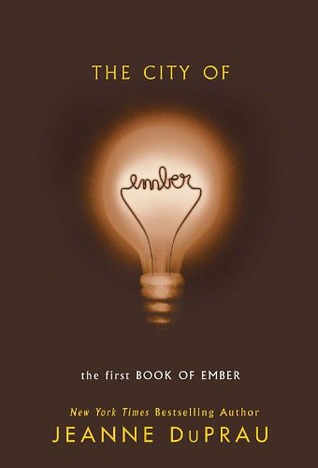
The City of Ember (guest review) ~ 4 stars

Guest post by A.B.


The City of Ember is the first in a four book series by Jeanne DuPrau, and a book that I really enjoyed.

The story starts off on Assignment Day in the city of Ember. By order of the mayor, all citizens shall be given jobs at age 12. Lina Mayfleet hopes to be a messenger, but instead of that she draws the job of Pipeworks laborer, which no one wants because it means long hours of underground work.

However, her classmate Doon Harrow draws messenger – and afterwards, asks Lina if she wants to trade! He wants her job because the generator is underground, and Doon wants to figure out how to fix it. The enormous lights of Ember have kept the darkness back for as long as anyone in the city can remember. There is no light at all unless the electricity is on.

But now, not only are supplies in the city running low, but there have been frequent blackouts. Everyone in the city is afraid that some day, the lights will go out and never come back on.

Lina eagerly trades jobs with Doon, and the two of them go their separate ways. Until one day, Lina finds a secret message, which was inside a box buried deep in her grandmother’s closet. When she finds the message, it’s full of holes, but Lina thinks it could be something important. She shows the message to Doon, and together the two of them try to figure it out...

I liked The City of Ember partly because of the setting of the story. Ember is very different from our world in many ways. Something that was unusual there is that Ember has no animals, just insects. This means that the people do not eat meat, but they eat a lot of vegetables and canned foods. Also, there are no trees in Ember, and the only plants are in the Greenhouses, outside of the city. I also found it interesting that citizens of the city received no more education after age 12.


Of course, the fact that all of Ember depends on the electricity provided by the generator, is also strange in a way. When the lights go out, people are helpless. They can't do anything but wait, terrified, in the dark.

Another thing I liked were the main characters, Lina and Doon. They were believable, which I liked, because they’re not perfect. Their plan
s didn’t always work out, and they had to come up with different ideas, which is something I appreciate in a story.

Overall, I’d say that I thoroughly enjoyed reading The City of Ember. It was a clean book, with no bad language, and it was pretty well-written, making for an exciting read. I would say that it was probably written for readers about ages ten and up, and since I'm a little older than that, I think it was a little below my reading level – but nonetheless engaging and fun. I’m looking forward to reading the second book in the series, The People of Sparks!

Friday, April 17, 2015

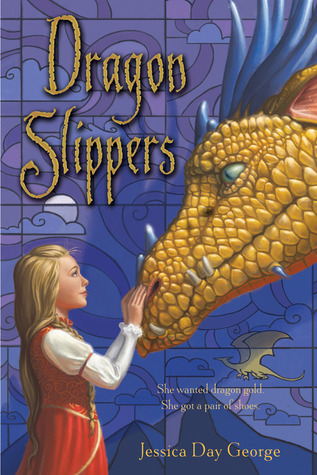
Dragon Slippers (series review) ~ 4 stars

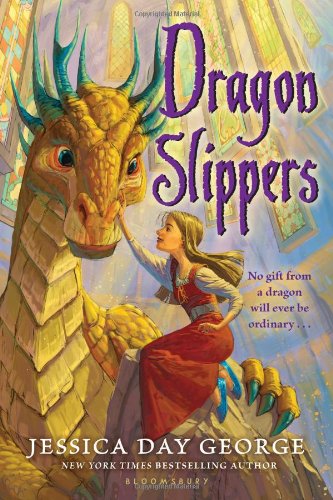
     The Dragon Slippers trilogy by Jessica Day George consists of Dragon Slippers, Dragon Flight, and Dragon Spear. It's the story of an unlikely heroine who uses her dauntless spirit, courage, and embroidery skills(!) to save her country, save her friends, and save the dragons.

     Creel has never been what you might call a damsel-in-distress. After her aunt tried to foist her off on the local dragon in hopes that some prince would rescue her, Creel set off on her own to make her fortune as a dressmaker. Wearing a pair of slippers given to her by a dragon, she soon finds a job and seems about to realize her dreams. She even strikes up an unlikely friendship with Luka, prince of Feravel, as well as befriending another dragon named Shardas. When the normally peaceful and solitary dragons suddenly attack the people of Feravel, Creel is the only one who believes that they might have been forced to attack. Together, she and Luka discover that not only are Creel's slippers far from ordinary, but that the dragons are being controlled by a foreign princess who intends to conquer Feravel. It will be up to Creel to rescue her friends and point out the person who is really behind the Dragon Wars.

     Dragon Slippers happens to be my favorite of this trilogy. Creel is just getting started on her dressmaking business, and she still has a lot to figure out about dragons. I liked the atmosphere of Feravel, and in this book, you get to find out a lot about Creel and what she's like. In the other books, there's more focus on action and on dragons - and while I love dragons, I really liked Creel. Also, since the romance with Luka is just beginning and Creel's two friends Alli and Marta are more involved in this book, we get more interaction with people in this book.
     In Dragon Flight, everything has just returned to normal, and the humans are beginning to get used to living side by side with dragons again. Creel divides her time between her new dressmaking shop, her reward for ending the Dragon Wars, and spending time with her friend Shardas and his mate Velika, who were both wounded during the war. Then the neighboring country of Citatie declares war on Feravel, and Prince Luka learns that Citatie intends to use dragons in their impeding invasion. Creel, Feravel's resident expert on dragons, is sent to Citatie to find out what she can about this invasion force. Once there, she discovers to her horror that not only are the dragons enslaved and alchemically controlled by the king of Citatie, but that the king of Citatie is being controlled himself - by a white dragon. Before the two countries go to war, which would certainly result in Feravel being destroyed, Creel has to find a way to free the enslaved dragons and defeat the white dragon, who is none other than the brother of Shardas. The fate of dragons and of Feravel hangs in the balance.

     This book definitely concentrated on dragons quite a lot, as well as the strange culture of Citatie. I enjoyed this book because this time, although alchemy was used again, the villain wasn't a person. It was another dragon, and so this was more of a dragon civil war than a war between humans. That aspect lends a voice to this book that is different from the previous one. I really liked this book, but not quite as much as I liked Dragon Slippers.

     Peace between humans and dragons has been restored as Dragon Spear begins. The dragons have flown away to remote islands overseas where they no longer pose a threat to the human kingdoms, even if someone were to find a way to control them again. Creel and Luka, soon to be married, fly to these islands to visit their friends, and arrive just as Velika, Shardas' mate and the queen of the dragons, is kidnapped by rogue dragons. These dragons keep humans as slaves and believe they are the chosen followers of the true dragon queen. Though they consider Velika a pretender, their own queen has died and their eggs are poisoned by the fumes of the volcanic island where they live. Desperate, they have kidnapped the pregnant Velika and intend to raise one of her hatchlings as their new queen. Somehow Creel, Luka, and Shardas will have to find a way to rescue Velika and her eggs, and time is running short. The volcano is about to explode and when it does, no one on the island will survive - not the rogue dragons or their human slaves.

     As different as Dragon Slippers and Dragon Flight were from each other, Dragon Spear is even more different from each of them. I actually like that, because although I get the same characters back each time, I don't have to read a repeat of the last book. Every time I get something fresh. Dragon Spear was definitely a book about the dragons - only three humans really have any significant roles in the book: Creel, Luka, and Creel's brother  Hogan. But as far as dragons are concerned, a lot of the ones from the first two books have returned once again, and some new ones are introduced. I also liked getting a little bit of the background story of the dragons - where they came from, how they governed themselves, what things had happened in their past.

     This trilogy was a real gem. For those who like books about dragons but are having a hard time finding a good dragon book that they haven't already read, this is one to try out. I also want to point out that it's not just a dragon book, it's also a very good story as far as plot, setting, and characters go. Even if you're not one of those people who comb the library and bookstore for the latest books with dragons on the cover, this is a trilogy worth adding to your summer reading list.

     I've reviewed another series by Jessica Day George, the Castle Glower series. Dragon Slippers is more complex and detailed than that one, aimed at a slightly higher reading level, but both of them are definitely Jessica Day George series. She always has characters who aren't just characters, they're individuals. They always have plenty of attitude and spice, which keep the story moving even if it isn't action-packed. Also, I like her romances because for one thing, they never dominate the entire story, they just provide another layer to the plot. And for another thing, the guy character in the romance isn't just there to be the other half, he's a person with as much personality as the girl character. That's something that's missing in quite a lot of books, so its one of the reasons I like her romances.

     Another thing I like about Jessica Day George's books is that she adds that little extra touch to make her characters and her stories definitely different from the books they share the shelf-space at the library with. Yes, there are dragons, a country in peril, wars, and even a romance with a prince. But don't forget that Creel makes dresses for a living. That's her special skill. And actually, her talent for dressmaking and embroidery remains a constant and important feature of each of the books, so you never forget that she's more than just a friend of dragons. In other words, this is definitely a trilogy worth reading, especially for the dragon-loving readers out there.

Link to author website: http://jessicadaygeorge.blogspot.com/

Thursday, April 2, 2015

The Books of Umber: Happenstance Found ~ 4 stars

I found P.W. Catanese's first book of The Books of Umber by chance. Part of the reason I checked it out from the library was the fact that Brandon Mull, the author of the Fablehaven series and The Beyonders series, had reviewed it. Our blog's motto is 'Never judge books-or people-by their covers', and I often stick to that rule. But this time I broke it. It just looks so cool!
I know I stay within my book genre preferences. I rarely ever venture out for something new. But going from author to similar author hasn't disappointed me yet, and Brandon Mull's name on this book's cover gained it access to my bookshelf. And gladly so! I was thoroughly pleased by this book. The characters were believable and relatable, though there was some tough love thrown in the mix.

Literally.

On the subject of romance, there is only about 5% out of the 100% goodness in here, and what is mentioned leaves you wanting to hear more. Yes, I said it. More romance. More details, specifically. I love the way Catanese adds mystery to the story. Every hint is subtle, but has a nuclear bomb impact on the reader. That, in my experience, is hard to pull off.

The book begins with a young boy, just awaking, blindfolded, and seemingly alone in a dark environment. As he searches his mind he finds that he has no memory of his past, nor his present, and then someone speaks. And Catanese whisks you away into a world full of mystery and adventure! The boy Happenstance (nicknamed Hap) meets Lord Umber, Sophie, and Oates first thing after he wakes and starts a voyage across the sea on a giant whale-like friend, Boroon, captained by Nima, a part fish, part human young lady. The best bits of the book are the tiny details, and so without giving way and telling the whole story, I cannot say much else.

I will say that Umber is easily my favorite character. His boisterous mood swings, playful attitude, and fun-loving nature catch my attention. But then there are also Sophie, Lady Truden, Happenstance, Balfour...And so the rest are all equals.
I rated this book a four because it held all I was looking for, but it added a sort of cliffhanger at the end, and I know that the next books will continue the mystery. I am trying to leave higher ratings for the future, in other words.

Tuesday, February 24, 2015

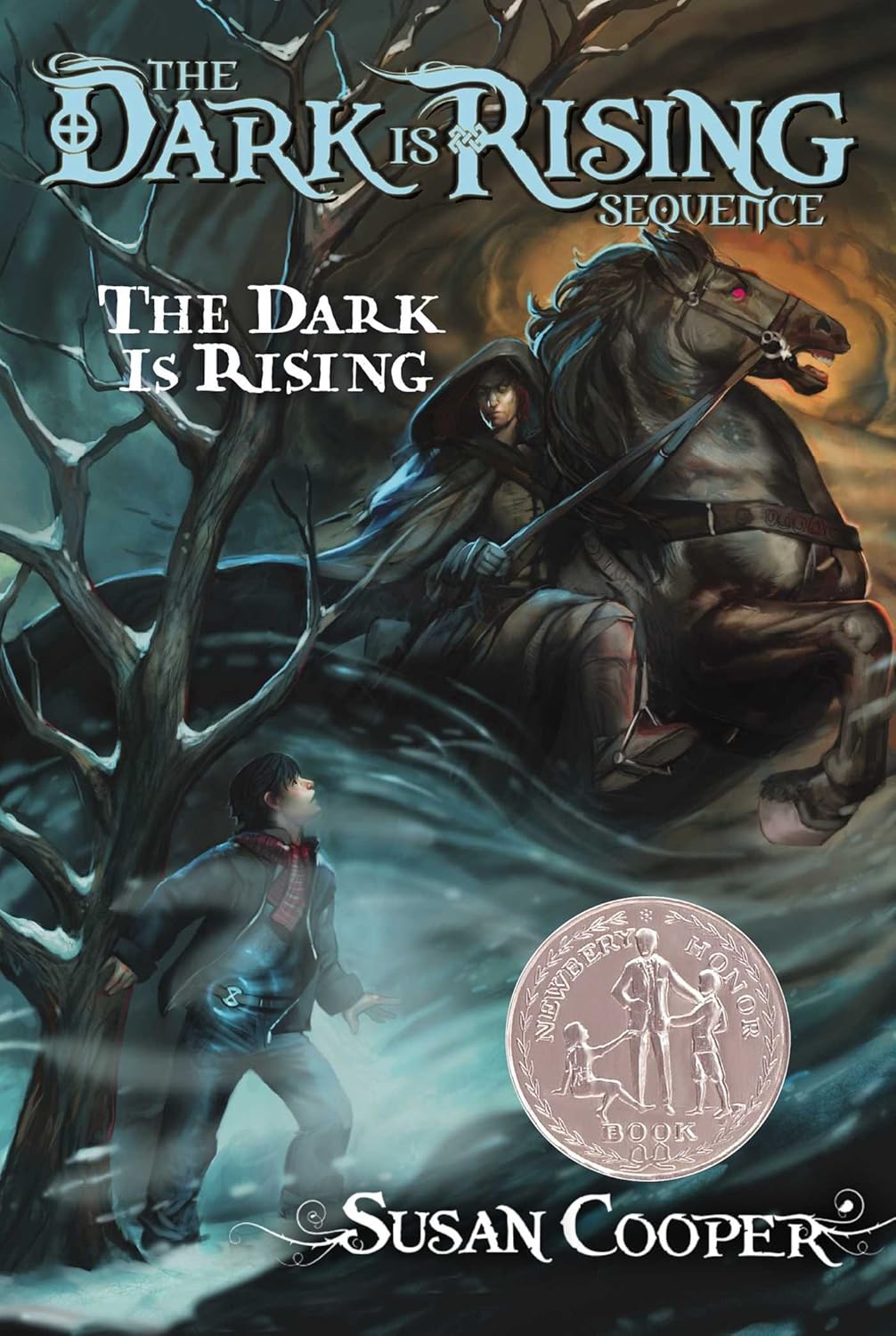
The Dark is Rising (series review) ~ 4 stars

Review requested by Katie

     The Dark is Rising sequence, by Susan Cooper is a mix of Arthurian legends and Irish/Scottish/Welsh folktales where good battles evil in an epic battle that spans all time. Will Stanton is the youngest of the Old Ones, and he is vitally important to this fight. The three Drew children, Simon, Jane, and Barney, are also connected to the fight between the Light and the Dark in ways that even they don't understand.


     In Over Sea, Under Stone, the three Drew children are staying in the seaside village of Tressiwick with their Great-Uncle Merry, who, although he isn't actually related to them, has been a part of their family for as long as they can remember. When Barney finds an ancient map in the attic of the cottage they're vacationing in, it sets them off on a dangerous quest to recover something that will help the Light defeat the Dark forever: the grail. But agents of the Dark have learned about the map as well and they are closing in. I liked the atmosphere of this one - when I started I expected some fluffy story about three kids having a wonderful vacation on the seaside. What I got was just the tip of the iceberg of a very epic, fantastic story that just got bigger and better the further into the series I went.

     The Dark is Rising introduces Will Stanton for the first time, probably my favorite character. The youngest of the Old Ones, beings who wield incredible powers, Will is the last of the Old Ones, the Sign Seeker. It is his task to find the six signs that will be the second of the important tools that the Light can use to defeat the Dark once and for all. The Hunter, a fearsome champion of the Dark, has been assigned to stop Will and steal the signs for the Dark, and Will will need all his wits about him, as well as the help of the first of the old ones, Merriman Lyon. This book was the most complicated of the books. Will goes from a completely ordinary boy to something entirely different, and his journey involves a lot of far-fetched stuff that Susan Cooper somehow makes completely believable under the circumstances. This would be the book I'd reread the most times, just because so much happens.


     Book three of this series, The Greenwitch, is where Will and the Drew children meet for the first time. There's some tension at first as the four of them figure out how to work together, but they've got a very important job to do. The grail has been stolen by the Dark and they have to get it back. Also, a being that belongs to neither the Light or the Dark has possession of a clue that will help strengthen the Light. The Greenwitch is a creature of wild Magic, reborn every year by the women of Tressiwick in a ritualistic ceremony. Together will Merriman Lyon, also known as Great-Uncle Merry, Will and the Drew's have to retrieve the grail and strike a bargain with the unpredictable Greenwitch. What I liked about this book was that this time around, the Old Ones didn't hold all the answers, and the Drews played a very important part in the story, even though they were basically ordinary human beings.

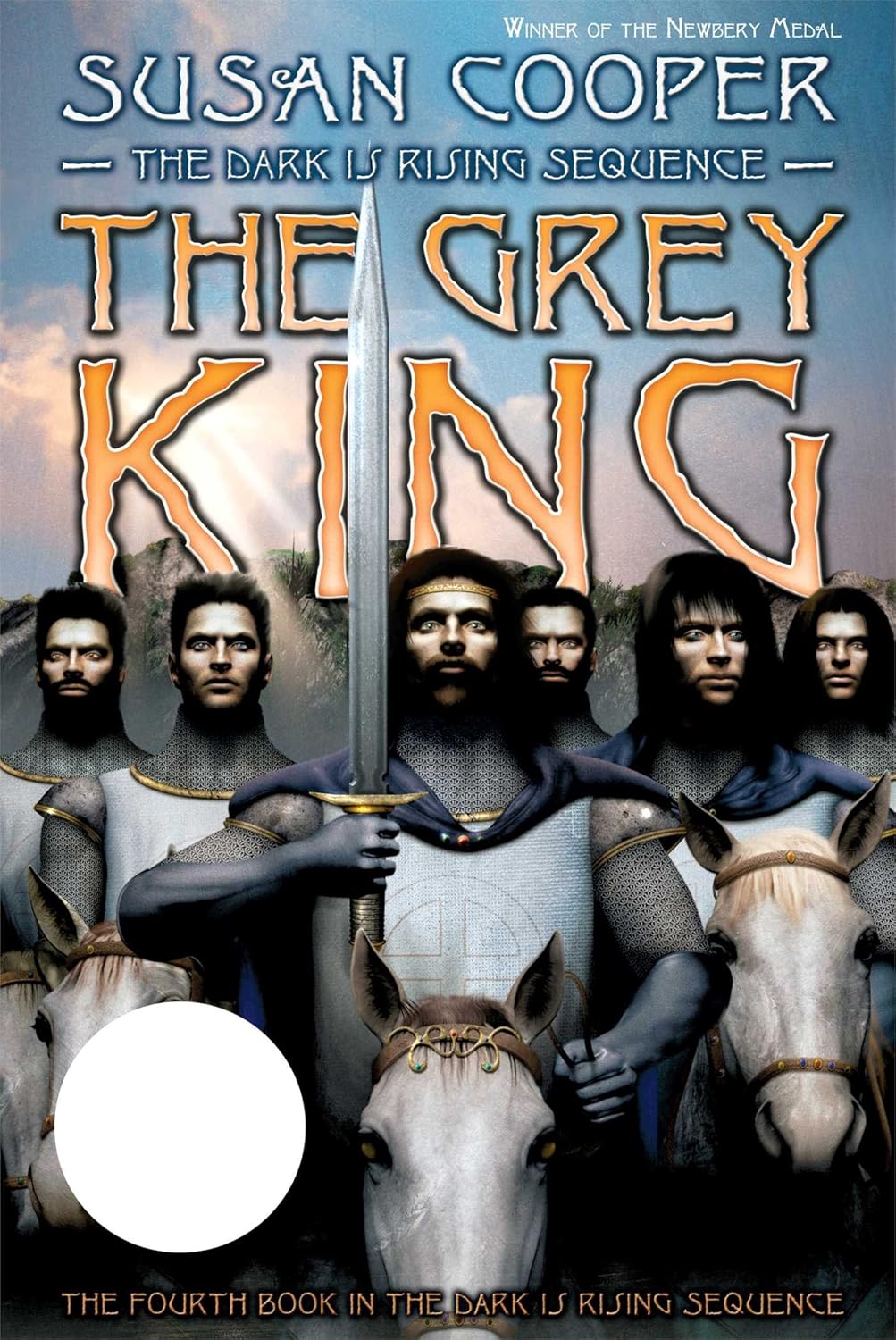
     A new character is added to the group in The Grey King, a Welsh boy called Bran. Will has been sent to Wales for the summer to recover from an illness, and together he and Bran will go on a quest of their own to find a golden harp which must be used to wake the six Sleepers. In this book we get an entirely new setting with its own forces of High Magic, Light, and Dark. There were plot twists here, too, such as Bran's mysterious mother and a dog who can see the wind. What I enjoyed here was getting to see Will working mostly on his own. Merriman was busy elsewhere and wasn't able to help Will directly, unlike in the previous three books. As much as I liked having Merriman show up to save the day, it was good to see Will taking charge in this one, and really learning how to be both an Old One and an (almost) ordinary boy.

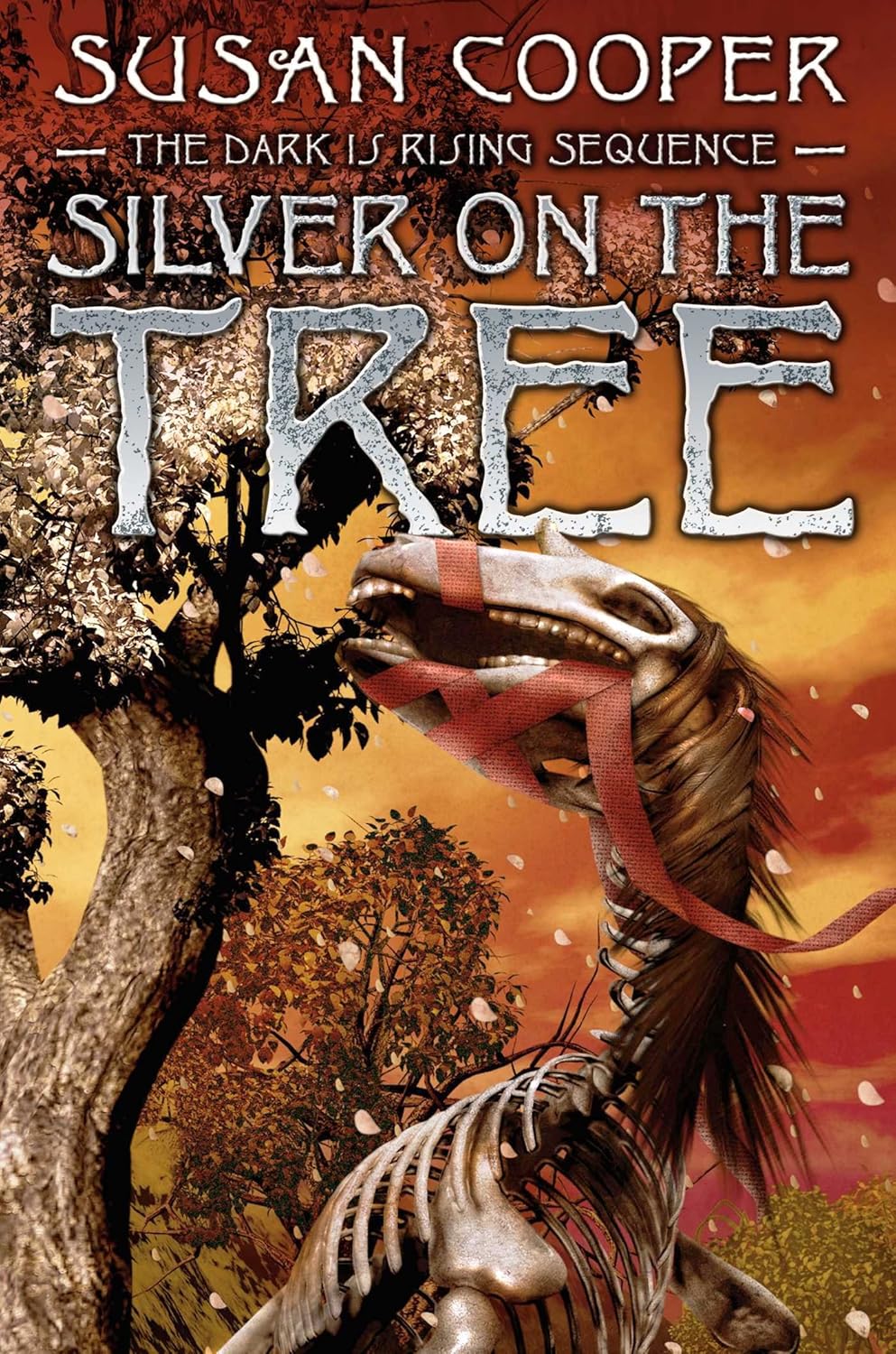
     The final installment of The Dark is Rising sequence is Silver on the Tree. In this book, the story takes a more fantastical turn as the allies of both Light and Dark start to gather. Will, Bran, and the three Drew's have a few final tasks to complete, but they are short on time and their enemies are everywhere. In this book, the adventures of Will and Bran are even more magical than before - not only are they stepping out of time, but they're also going to a new dimension in search of the crystal sword. Then the five of them, along with Merriman, have to finish what was started when the grail was found. The Dark is rising, but the Light has gathered everything they need to destroy it once and for all.

     The Dark is Rising sequence was a thoroughly interesting read. It was a pretty epic adventure, but didn't meander on for hundreds and hundreds of pages. It was to the point, which I appreciated because I could really get at the good parts of the story without having to read 2000 pages to get there. I also really liked Will, Bran, and the Drew's. Sometimes Merriman saved the day once too often, but he is the first of the Old Ones, so he has been around for basically forever and it would take a lot to defeat him. Also, the prominence of Arthurian legends and old folktales in the background of these stories was really intriguing. I've always loved mythology of any kind, and Scottish and Irish mythology isn't involved in stories as often as Greek mythology is, so it was a treat to find it here. And lets not even get started on Welsh folklore! After reading these books, I'd really like to see Wales and read some old Welsh stories.

     In other words, thank you, Katie! If you hadn't suggested this series I might never have picked it up on my own!

Link to author website: http://www.thelostland.com/works/yabooks/bk_dircollector.html

Monday, February 16, 2015

A Lantern In Her Hand ~ 4 stars

     A Lantern in Her Hand, by Bess Streeter Aldrich, is a book about pioneers and pioneer women. It reminded me of the Laura Ingalls Wilder books as well as A Bride Goes West, which are both books about pioneer women. A Lantern in Her Hand tells the story of Abbie Mackenzie Deal, daughter of an Irish peasant woman and a wealthy Scottish man, a girl who wanted to grow up to be a lovely lady. But sometimes dreams don't come true just the way we imagine.

     Abbie Deal has a beautiful voice and beautiful dreams. She thought she would become a lovely lady someday, a famous singer, but when the chance came, she married the man she loved instead and moved to Nebraska. She postpones her dreams and helps her husband to farm and tame the prairie. On the wild frontier with only a few neighbors for company and work for three men to be done, Abbie learns hard lessons about life. As the years pass, they begin to have small successes, life begins to have a certain rhythm and order, and Abbie holds onto her dreams and keeps singing. Then there are the five children, and Abbie postpones her dreams again so that she can save money to send them to school. She watches them get married and move away to start lives of their own as the hands of Time move steadily forward. Will dies, and Abbie is alone except for her children and now grandchildren. She grows older, frailer, she cannot sing, and she cannot travel anymore. At the end of her life, she didn't become the lovely lady that her hopeful six-year-old self dreamed of. But she is a lovely lady all the same - a lovely lady who has lived a long life of love and joy in the middle of a loving group of family and friends.

     I enjoyed A Lantern in Her Hand for a variety of reasons. First, it was a well-told story that covered a huge span of time - from very early in Abbie's life until the day she died. Reading this book was almost like reading a very interesting biography, especially since Bess Streeter Aldrich actually based the life of Abbie on her own mother. A Lantern in Her Hand is a good example of a pioneer book that really portrays the reality of what it was like for them to do what they did. This book also went a step further than most pioneer books and described the life of a pioneer woman in a time when the pioneers had become part of history instead of the cutting edge of history. That was a treat, and something I've been unable to find in other pioneer books I've read. Those pioneers didn't die once America was settled, but you don't often find a book that talks about what they did with the rest of their lives. A Lantern in Her Hand is definitely unique in that respect.

     The other thing that really impressed me in A Lantern in Her Hand was Abbie herself. It's hard not to relate to Abbie as you see her growing up, getting married, having a family, and gradually getting older and older until you suddenly find she's a great-grandmother. Pioneering wasn't the theme of A Lantern in Her Hand, even though it played a significant part. For Abbie, family and friendship was everything. Her strong, enduring pioneer spirit really shows in the entire book, but so does the vital importance of family to her. It was also eye-opening to read about a character who aged by decades over the course of the book, not months or a handful of years as you'll find in most other books. Experiencing a character on that many levels and at that many stages in a life was eye-opening. In that respect, A Lantern in Her Hand was very much like a biography.

     To close, I'd suggest A Lantern in Her Hand to anyone. It was great material, and though the story was long and detailed, the language wasn't complicated. Just the experience of having read the book was rewarding to me, and it was a book that really made me think about life - not just Abbie's but mine and my family's. A book that can do that to you is one worth spending a few evening's reading, and A Lantern in Her Hand, despite being someone's life story, isn't a very big book. It could easily fit into two or three afternoons. So get it, read it. It's a little gem of a book that I'm very glad to have picked up.

Link to Bess Streeter Aldrich Foundation website: http://www.bessstreeteraldrich.org/
     You know the book was written a long time ago when the author has her own museum. Sometimes the old books are the best.

Tuesday, December 30, 2014

Snow White and Rose Red ~ 4 stars

I’ve been a Patricia C. Wrede reader for several years now. She wrote a few Star Wars novels and I've also enjoyed her Enchanted Forest Chronicles. I’ve always liked the spicy, distinct characters in her books, so when I saw she had also written a retelling of the old fairy tale about Snow White and Rose Red, I thought I’d give it a go.

It wasn't quite what I expected from Patricia C. Wrede. I was used to reading her more recent publications, but Snow White and Rose Red was one of the first stories she had published, and her writing has changed a lot since then. Snow White and Rose Red follows the original fairy tale closely enough that I could see where the parallels were, but the characters had changed enough that the story was obviously "wearing new clothes" as I like to put it. It had been fleshed out and made more intricate. All the leaps of logic, typical of old fairy tales, had been ironed out and explained.

Patricia C. Wrede's Snow White and Rose Red is the story of two beautiful sisters, Blanche and Rosamund, who live with their widowed mother near the border of the world of the fay. When a half-fay, half-mortal man called Hugh is subjected to human magic and forced to take the shape of a bear, kind Blanche and Rosamund try to do everything they can to return him to his original shape. This means taking the considerable risk of being discovered and tried as witches by suspicious neighbors. In the end, they need the help of Hugh's brother John, another half-fay, to break the spell. In so doing, they discover that Hugh's transformation was the result of a plot to tear the human world and the world of the fay apart. 

The story concludes with the classic fairy tale ending: the fair maidens wed their new sweethearts, the half-fay Hugh and John. Usually I don't like these kinds of endings, because it makes the romances very unrealistic, but Patricia C. Wrede did an admirable job of making the relationships between the characters real enough that I could see them getting married.

I found Snow White and Rose Red to be a fairly entertaining story. It was written with a more reserved, strict style than other fairy tale retellings that I’ve read. It doesn't have the very personal style that most novels published in the past 5 or 6 years have, but this is mainly because Snow White and Rose Red was published in 1989, before that style of writing became popular. In fact, the style of Snow White and Rose Red is great for that story, because it makes it read more like a fairy tale and adds grace and elegance to it. I also enjoyed the way the original fairy tale was restructured for Wrede’s retelling, and I think that her revision of it added a lot of appeal to the story.

The biggest thing that I noticed about Snow White and Rose Red was the language. Wrede uses ‘thee’ and ‘thou’, in addition to the usual ‘you.’ Other changes to the language, such as some of the more archaic forms of words (forsooth, seemth), and even the use of ‘an’ in the place of 'if' in some cases, all make the language a little more challenging to less experienced readers. To me, these things just added to the unique style of the book, since it hearkens back to an older way of speaking. But for other, less patient readers, this might make it too difficult to be interesting. My twelve-year-old sister Jo also read Snow White and Rose Red, and although she enjoyed it, she did say that the language was sometimes an impediment.

So, in the end, I would just say this.


"An thou can read and understand it, thou’lt know why I sayeth that it seems a goodly book."

Link to author website: http://pcwrede.com/

Thursday, December 25, 2014

Poison ~ 4 stars


Poison, by Bridget Zinn, is a new book to me. I first heard about it when I read a review posted on a blog I follow - Katherine Marie: Writer of Dreams. Find her review HERE. I decided to give Poison a shot after reading Katherine Marie's review, so here's what I thought of it.

Poison is Bridget Zinn's first and only novel - she died in 2011, two years before her book was actually published. Poison is the story of potions master Kyerra, a sixteen-year-old girl who specializes in making perfumes and potions - and poisons. She never imagined she would one day have to use her skills to kill her best friend, the Crown Princess in order to save the kingdom. But the poisoned dart she threw missed, and now Kyerra is on the run, trying to track down the missing princess without getting caught and thrown into the dungeon by the royal guards. With the aid of a magical piglet and a handsome stranger called Fred, Kyerra must find a way to save the kingdom from destruction and ruin. And if she can at all avoid it, she’d like to avoid having to kill her best friend.

I enjoyed Poison more than I expected I would. Going strictly by the title and the cover, I was expecting a more gritty, gut-wrenching story, but I actually found that the story had many similarities to the Castle Glower series that I just recently reviewed. Poison is comfortable, engaging, and funny, with plenty of laughs and moments of light-heartedness. It's a story that gradually reveals the backstory of each of the characters and the events that brought them where they are - a very engaging way to tell a story. There was plenty of action and adventure as well, and a strong mystery element that kept me guessing at every new chapter.


Poison is a book I picked up for fun, casual reading, not a deep, morally engaging story. It was fun, funny, and amusing. I actually laughed while reading it, and not every amusing book can do that for me. I found Poison had an interesting, well-written plot, fascinating and funny characters, and the right mix of charm. What could be more charming than Rosie, the magical piglet? It's unfortunate that Bridget Zinn died before she could write a sequel - I bet it would have been a barrel of laughs.

Thursday, December 11, 2014

Castle Glower series - 4 stars

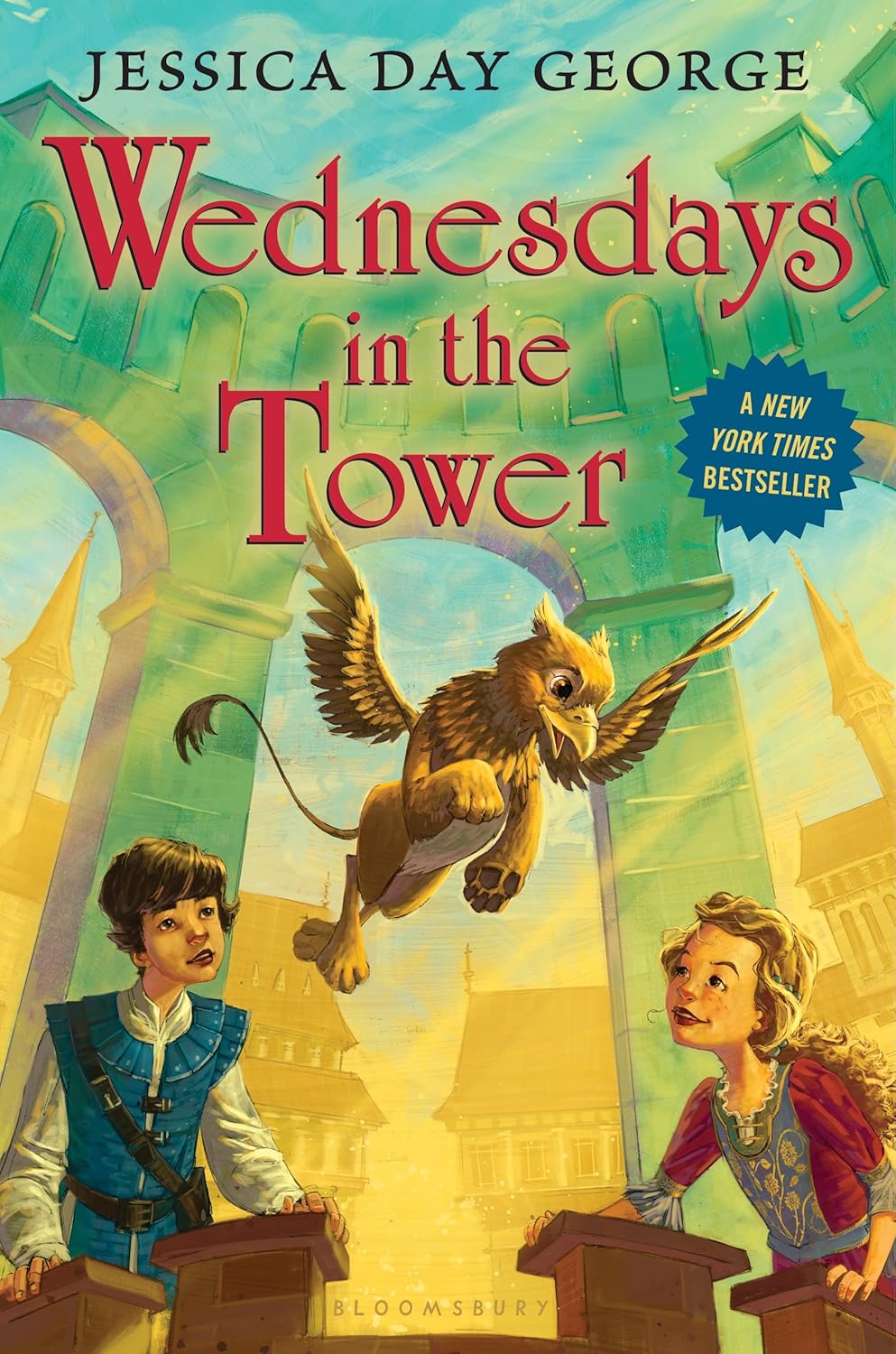
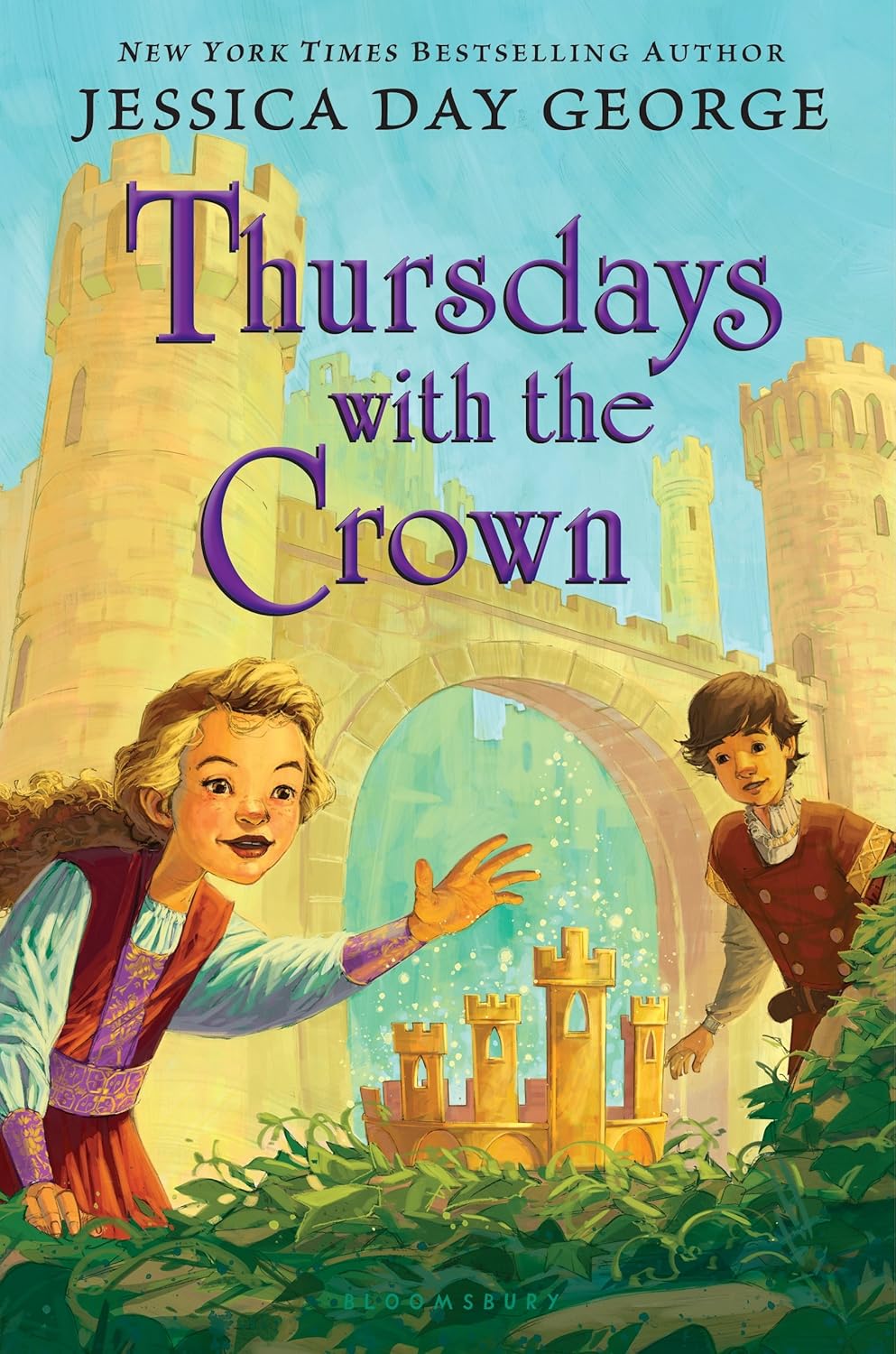
     The Castle Glower series by Jessica Day George is a very charming story about a girl, a griffin, and a castle that is constantly changing. I wouldn't normally describe a series with the word 'charming', since that might give you the idea that it's just another 100 page kid story. But this series really is charming: pleasant, agreeable, and even lovable.

     The story throughout the three published books in this unfinished series is interesting in itself - first the Castle in ambushed, then Celie, the princess of Sleynth, secretly hatches a griffin, and finally she and her siblings are transported to the original home of Castle Glower. I always enjoy a good story about children solving problems bigger than themselves, and Princess Celie does a very good job of that in every book of the series. Also, I was intrigued by the concept the series is built around: the mysterious Castle Glower. It almost seems to be alive, creating new rooms every few days or taking away old ones. No one is sure why or where the rooms come from or where they go to when they disappear. 

     Besides the interest of Castle Glower, the characters are also fun. First of all is Princess Celie, who is a plucky girl of twelve years. She's a fairly practical princess, and she's mapped most of Castle Glower, and is always adding the new rooms to her map. Also, she's Castle Glower's favorite person, and she can count on it to help her in it's own way when she really needs it. When the Castle is under attack, Celie is the best person to help save it. And when the Castle starts to fall apart and no one knows why, Celie is the one who understands the clues the Castle is leaving for them. Besides her special connection to the Castle, Celie is also smart and cheerful even when things get bad.

     Her brother Rolf and sister Lilah are also enjoyable characters, and they're both sweet and act just like family would. Then there's the quaint, dog-loving Prince Lulath and Lilah's sweetheart, Pogue. And there's even a griffin that Celie names Rufus, which is a cute name for a griffin.

     Besides having a great story premise and fun characters, the Castle Glower series is a nice series in other ways. One thing I really enjoyed was that when Celie is in big trouble, she goes to her family for help. In lots of stories, this doesn't happen and the character has to rough it out on their own for various reasons. While there's no problem with this - and in fact, I enjoy it a lot - there's something refreshing and appealing about a character who gets some help for once. Another thing I enjoyed was Celie's sassy sense of humor. I always enjoy characters with a sense of humor.

     I bet the Castle Glower series won't build up a fan base like the Harry Potter series or Lord of the Rings, but they're still a fun, enjoyable read. Not every book has to be a hit series to be good, or even to be someone's favorite. The Castle Glower series isn't my favorite series, but it's one that I have had a good time reading. I'd definitely recommend it, especially to kids. It's about that reading level, is completely clean, and is a very fun series. It might not be entertaining to more advanced readers, but I found it worth reading and definitely worthy of four stars.

Link to author website: http://www.jessicadaygeorge.com/

Wednesday, August 20, 2014

The Outcasts - 4 stars

Review requested by Alaina Bach

The Brotherband Chronicles: The Outcasts
     The Outcasts is the first book in John Flanagan's Brotherband Chronicles. It's set in the same world as his bestselling Ranger's Apprentice series, and focuses on the Skandians, the Viking-like barbarians of the north. It has all the hallmarks of a Flanagan series: dry humor, fast-moving action, engaging characters, and plenty of plot twists.

     The Outcasts centers around Hal, a half Skandian/half Araluen boy who's father died in a raid. Raised by his mother and his father's best friend Thorn, Hal is about to begin his brotherband training, a Skandian method of training boys in the skills they will need to become full-fledged Skandian warriors and sea-farers. If Hal doesn't do well in his brotherband training, he can expect to have a difficult time being accepted aboard a ship when he becomes an adult. Unfortunately, Hal has been chosen as the leader of the most unlikely bunch of young Skandians, and the chances that they'll win the brotherband training are very slim.

     I enjoyed several things about The Outcasts. First, the concept of brotherband training was interesting - what kind of skills do boys need to become Skandian warriors, and how do they acquire those skills? John Flanagan is particularly adapt at writing those things and making them both fun to read and funny to read. I also liked the other boys in Hal's brotherband. They were definitely the most unlikely bunch of heroes I've read about, and the way Flanagan turned them into something heroic was well-written. Also, Flanagan has a certain style of dry humor that makes fun of a situation in a way that I really like - it's clean, it's genuine, and it's everyday humor, the kind everybody can relate to. The humor and the characters are what makes The Outcasts a good read for me.

     The reason I only gave The Outcasts 4 stars is because it was very similar to Ranger's Apprentice. Some of the similarities are simply because he's still the same author writing in the same world, but in my opinion, John Flanagan didn't make his Brotherband Chronicles separate enough from his other series. I saw the same kinds of jokes being made, and the characters of The Outcasts had many of the qualities of some of his Ranger's Apprentice characters. Ranger's Apprentice fans might find the closeness between the two series enjoyable because the Ranger's Apprentice story continues in the new Brotherband Chronicles. I had been hoping, however, to read something different from John Flanagan and see him write some new idea, and so I was somewhat disappointed that he only came up with a spin-off of his previous series. But if you are a fan of Ranger's Apprentice and are looking for more of the same, the Brotherband Chronicles are a must-read. They have all the qualities that made Ranger's Apprentice such a great series, and I've always liked Skandia, so reading about that part of Flanagan's world was also great.

Link to Brotherband Chronicles website: http://www.worldofjohnflanagan.com/the-brotherband-chronicles/

Tuesday, August 12, 2014

Imager - 4 stars

     Imager by L.E.Modesitt, Jr. is the first book in the Imager Portfolio, a series of books revolving around the imagers of Solidar. It's set in a world that could be classified as steampunk (a blend of magic and Victorian age technology), but has a far more complicated plot than most steampunk novels I've read. While they are generally full of fast-moving action and brilliant clashes between opposing sides, Imager takes a different route. It has vibrant and unique characters, but not conspicuous ones. It has action, but that action takes time to wind itself up to its full strength and speed. I found the change refreshing and highly entertaining. Imager was another book I had difficulty tearing myself away from to get jobs done.

     Rhennthyl, the eldest son of a wool merchant, was a very talented journeyman painter until his master was killed in an explosion. Out of a job and with no way to support himself, he realizes that he has the ability to image - he can visualize things and make them real. The Collegium, a school, home, and workplace for people with talents like his takes him in and he begins learning how to image. It doesn't take Rhennthyl long to learn two things: he is a very talented and very strong imager, and he is the target of several assassination attempts. Although he doesn't know why someone is trying to take his life, or who that someone is, he has no choice but to try and find out as much as he can. With the help of his lady friend Seliora, his tutor Master Dichartyn, and his own intuition and skills, he gradually uncovers more of the mystery and finds that its more complex that he could ever have imagined.

     The first book ends in a cliffhanger - thankfully Rhennthyl isn't in any immediate danger, but I know it's just around the corner. I found the story to be engaging, especially as the plot picks up pace with more assassination attempts. Rhennthyl was an interesting character and quite unique. Unlike many characters that could be considered interesting, he has no noticeable major flaws and is a strong, determined, and practical young man. To make up for that, however, he spends most of the book struggling with the fact that he doesn't have enough information - and some of that information is being withheld from him by his instructor, Master Dichartyn. I had to sympathize with his repeated frustrations. 

     The world of the Imager Portfolio is complex and detailed - the names of decidedly foreign and suggest some sort of European culture. The design of the world extends to even the little things like the days of the week and the months of the year. There are names for wines, places to eat out, foods, even the method for measuring time is different! In some books this would be too much to remember and would make things too confusing for a good story, but Modesitt does a very good job of balancing those details and actually uses them to make the sense of complex intrigue even more obvious throughout the book. Complex worlds are something I admire, and I definitely admire Modesitt's way of handling the world he created and making it fit with the story he was telling. 

     Imager was a fairly slow-paced book to start out with, and it never really achieves the breakneck speed of some steampunk novels, but what it lacked in fast-moving action scenes it made of up for in a plot that has more twists and turns that I can count. For those who are interested in a thought-provoking story, the Imager Portfolio is one I'd recommend. It will require digestion and thorough reading, but the story was highly rewarding and entertaining. I'm looking forward to reading the next several books.

     Another thing I have to say about Imager is that although I label it as "teen", "adult", and "epic" this is only mean to convey the language level and the length. There's nothing inappropriate in these stories - in fact, they're cleaner than some books for 8-12 year-old's that I've read. So although my labels may indicate otherwise, Imager is a good, clean book that younger readers could enjoy safely - as long as they were willing to stick with a slow moving, complicated story.

Link to author website: http://www.lemodesittjr.com/