Showing posts with label modern. Show all posts

Wednesday, September 2, 2015

Chasing Vermeer — 4 stars

If you look back through the list of books Mountain Gal and I have reviewed on this blog together, you’re going to realize that we read fantasy, at least for the most part. However, in the interest of being a helpful resource to people who read other kinds of books, I have been trying to expand my own reading to things I wouldn’t normally pick up. Because (gasp!) there actually are other kinds of books out there.

That's why today’s review is a non-fantasy book. Chasing Vermeer, by Blue Balliett, is set in modern-day Illinois, and it's about two 6th graders, coincidences, and the paintings of a 17th century artist from the Netherlands. A most unlikely combination, in other words.

Chasing Vermeer is a mystery kind of story, but not the whodunit, hunt-for-fingerprints kind of mystery. This mystery is one that has to be solved by believing in coincidence, in chance, and luck. Lots of luck. It has to be solved by looking for clues in everything, by finding connections between perfectly ordinary events that together have a significant meaning. Sherlock Holmes and Nancy Drew would never have solved this mystery—they wouldn’t have seen the clues. But for 6th graders Calder Andalee and Petra Pillay, clues jump out at them from every direction.

There’s nothing particularly unusual about Calder and Petra that makes them perfectly suited to solve this mystery, but it certainly does help that Petra is willing to believe even the most unlikely event could be a clue, and Calder is a visual thinker whose pentominoes—flat geometric figures formed of five squares—help them find many of their best clues. But besides these qualities that make them both uniquely themselves, Calder and Petra are just two ordinary 6th graders—who happen to be in the right places at the right times to solve a mystery, save a painting, and prevent a giant art fraud from taking place.

And that’s really all I’ll say. About the plot, at least.

I figured this book would be targeted toward the 8-12 range, both because of the age of the characters and because of the cover art. (NOTE: the illustrations on the inside are really great too!) However, the story is actually pretty complicated. I had to pay attention to catch all the clues and remember all the connections they had made. I also really liked the way the two characters played off each other. They’d swap ideas and put clues together really well—and they were usually way smarter about it than me. Basically, the mystery was really, really interesting, and was definitely not something you’d be able to solve until the characters did. And it was super complicated, which I think makes a mystery story that much better.

For really critical readers, here's a specific thing about Chasing Vermeer that I'd like to praise. Blue Balliett (that can't possibly be her real name!) has two very young narrators in this story, and I was very pleased with the way she handled the fact that they were solving a mystery that baffled even the FBI. At some point in the course of their sleuthing, they had to end up in danger, but I was worried that Balliett would shrink from that and keep Calder and Petra perfectly safe. But she didn’t. They ended up in very real, very serious danger, and when that happened the tension in the story went up a notch—maybe two. It made for a climax that was memorable, instead of a simple “mystery solved, bad guy in jail” kind of ending.

My final opinion of Chasing Vermeer is that it’s certainly worth reading. The story is fun, there are great characters, and a very interesting mystery! Definitely preferable to Nancy Drew. I’ve also read the sequel, The Wright 3, and that was just as good. There’s a third book that I haven’t gotten a chance to read yet, but given the track record of the first two, I’ll vouch for it being a great book.

Link to Blue Balliett’s website: http://www.blueballiettbooks.com/
And since her website is kinda tricky to maneuver, here’s the link to her Amazon page as well: http://www.amazon.com/Blue-Balliett/e/B001IGLPXG/ref=sr_ntt_srch_lnk_1?qid=1437576663&sr=8-1#

Tuesday, August 4, 2015

The Seer of Shadows — 5 stars!

I’m not usually a horror type of person. I don’t like read or watch things that are bound to give me nightmares. But I have to admit that I do read some scary stuff. For instance, The Spook’s Apprentice series has some pretty frightening imagery in it, and The Screaming Staircase by Johnathan Stroud was a poor choice of reading material right before I went to bed. But I liked both of those series despite that, because although they scared me, they didn’t deliberately set out to terrify me permanently right from the beginning. A good scare was just part of the story.

I say this because recently I read another book that was good, but at the same time a little scary. The Seer of Shadows, written by award-winning children/YA author Avi, was a book I picked up for totally casual reading. It’s under 200 pages in hardcover, and I fully expected it to be a quick read on a rainy afternoon that would be forgotten in a few weeks.

Not so. The Seer of Shadows is a story told by Horace Carpentine, and despite his (I think) disastrous name, he’s actually a really good guy. Horace is apprenticed to a little-known photographer who thinks very highly of himself, Enoch Middleditch. One day, Middleditch is approached by a wealthy woman called Mrs. Von Macht who requests a photograph to be taken of her, and for some very curious reasons. Her claim is that she wishes to comfort the spirit of her dead daughter Eleanora by placing the photograph upon her tombstone. But the Von Macht’s black servant girl, Pegg, tells Horace just enough to make him wonder if her story is entirely true.

Strange things begin happening to Horace as soon as Mr. Middleditch is employed to take Mrs. Von Macht’s photograph. Horace is allowed to take his first photographs while at the Von Macht’s lavish home, and when he develops them, a frightening figure is revealed—Eleanora’s ghost! The more photographs he takes, the clearer her figure becomes. Worried, he seeks out Pegg to find out more about Eleanora, and too late they realize that his photographs are evoking Eleanora, allowing her to return as a spirit. And Eleanora’s spirit is bent on one thing—revenge upon the Von Macht’s! If she goes unstopped, she will murder them both. Horace may be the only one who can save them, if he can just find a way to send Eleanora back.

This story is set in New York during the year 1872, a time when photography was still a pretty young art. I really liked how Avi captured the mechanics of early photography in this story, right down to the chemicals that were used to develop the pictures, and even how those early cameras were put together. It was very impressive and very authentic to the time period, which is part of what made the story so easy to get sucked into. Photography was very important to the story, and by getting it right, Avi makes you feel like you’re there, in the story.

As for the scare factor, here’s what I have to say. Obviously, The Seer of Shadows is a ghost story, and some people are scared by that kind of thing. I didn’t think ghost stories could really get to me (then again, I don’t read many) but the last fifty pages of The Seer of Shadows were definitely scary. I can’t lie about that. There actually was a point where I had to shut the book and do something else for about five minutes before I could bear to go back to it. So, yes, I would say The Seer of Shadows definitely had some horror elements in it. Words are powerful. There are some books you just can’t read before bed.

But I still liked it—and I mean, really liked it. I think that has to do with the fact that Avi could scare me, using nothing more than words on a page and my own imagination. The fact that he could do that, and do it to the point where I had to remove myself from the story before I went on, is really a testimony to the quality of his writing and story-telling. Not many books can get you emotionally involved in the lives of completely fictional characters in completely fictional events. The ones that do are the ones that you’re not going to forget, and that you’re going to read and reread over and over again. And to me, The Seer of Shadows is one of those books.

That said, I will admit that The Seer of Shadows is probably not for everyone. The scare factor is very real, and for some people it would be overwhelming. It’s taken me a while to get over being scared enough that I could admire the fact that I was scared. It’s probably not the best book to give your twelve-year-old right before bedtime unless you want to give them nightmares. But for a mature reader who can handle it, I’d say: “Go for it. It’s worth it.” Horace and Pegg are great characters, and the mystery of who Eleanora really was and what happened to her adds a lot of depth to the story.

Link to Avi’s website: http://www.avi-writer.com/
Link to Avi’s blog (I’ve read it—great stuff for fans and writers): http://www.avi-writer.com/blog/

Wednesday, May 6, 2015

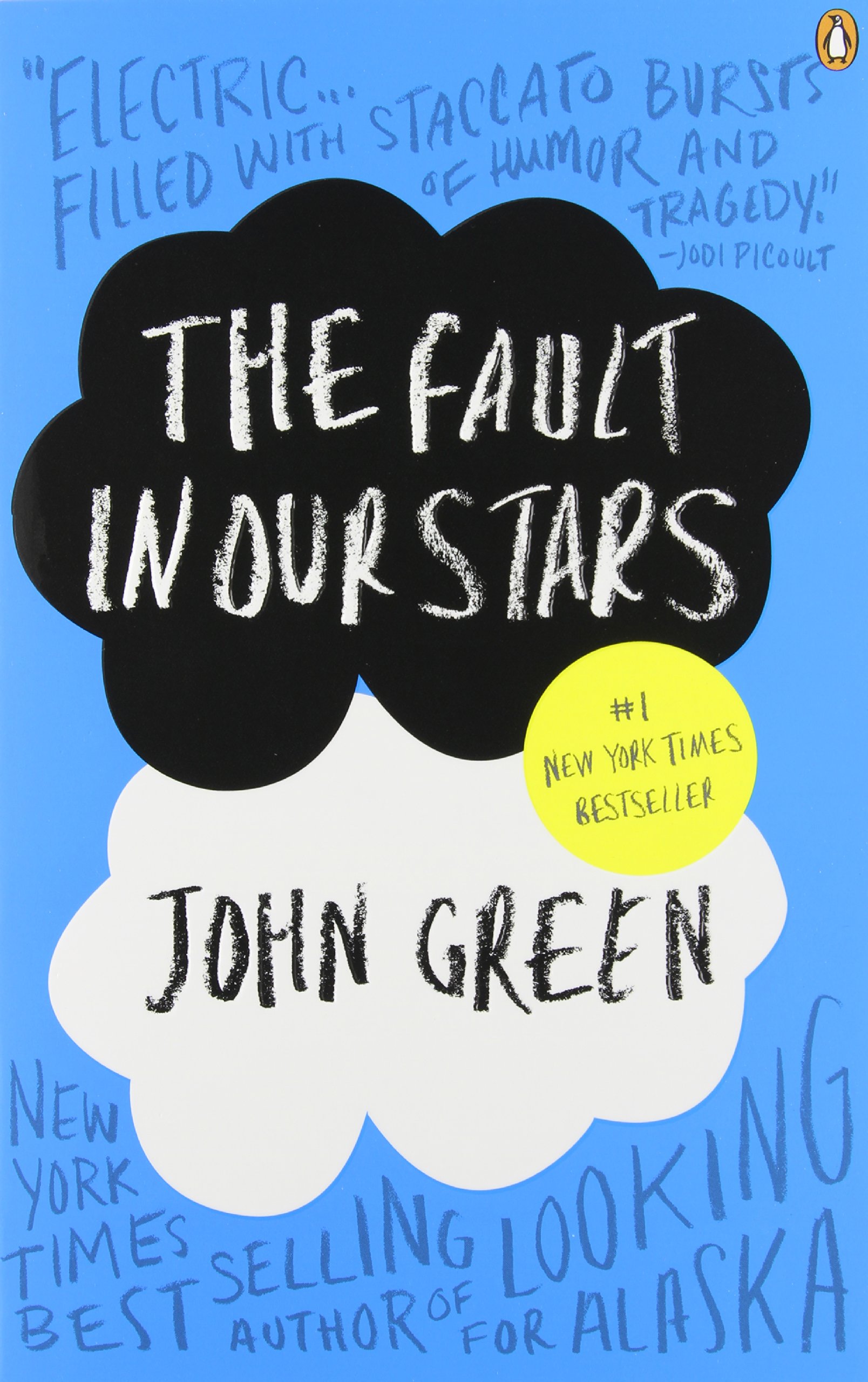
The Fault In Our Stars ~ 1.5 stars

Suggested by kimi

     The Fault In Our Stars, by John Green, is a book that's apparently a huge bestseller. It's so popular that there's already a movie out based on it, which means a lot of people must have liked it a lot. I've never seen the movie, so this will be a review based strictly on the book, but given what I think of the book, I don't think the movie would be much good. And a short disclaimer before I begin - I know this book has its avid fans, and has been given lots and lots of positive reviews. This review is just my opinion, which you can feel free to disregard if you want.

     The main character of this story is Hazel Grace, a sixteen-year-old diagnosed with cancer. She knows she'll be dead within five years - if she's lucky. But when an incredibly handsome boy turns up at her cancer support group, her life begins to turn into a roller-coaster ride that seems like it can only go up. She and Augustus Waters start seeing each other regularly, getting to know each other better. She knows she's in love, but hesitates to get closer to him because she doesn't want him to be heartbroken when she dies. Then Augustus admits that he's had a cancer relapse, and that it's spread to his entire body. Hazel has to watch as he starts to deteriorate from the laughing, drama-inclined person she knew to someone wallowing in depression and hopelessness.

     That's a quick plot synopsis of The Fault In Our Stars. In a nutshell, this is a book about two cancer patients who fall in love but know they have only a few years of life left. The main struggle in the book is the two of them trying to answer the questions: Why am I here? Will I be remembered after I'm gone? You know from the moment you open the book that one or both will be dead before you get to the end - a somewhat depressing beginning to a somewhat depressing book. 

     As far as characters go, I was less than impressed. Hazel wasn't too bad, but her boyfriend Augustus was pretty shallow. Almost everything you learn about him through the course of the book can be traced back to Hazel in one way or another, and it seemed to me that he existed merely to be there for her - to make her happy while he was well and to make her sad when he was dying. Also, the things that Hazel found attractive about him - his sense of humor and his tendency to be theatrically dramatic - didn't do much for me. I didn't find him funny, and his dramatic flair seemed silly and pointless to me. More importantly, I couldn't follow Hazel and Augustus's arguments about the meaning of life and what the afterlife would be, which was a pretty important part of the book. I couldn't figure out where they were getting any foundation for the ideas they had, so the whole discussion was confusing. John Green's beliefs are definitely not mine, and so the point he was trying to make with this book didn't resonate with me, and without that point, his story doesn't have any appeal.

     Besides having a theme that I didn't agree with and some pretty shallow characters, The Fault In Our Stars has a quite a lot of bad language and some other bad content. I was very tired of reading swear words after only fifty pages. My soapbox stand is this: if you're an author, surely you have a wider vocabulary than that! Also, when Hazel and Augustus are in Holland, they spend an afternoon alone together in his apartment. What they did during that time is part of why I give this book such a low review and why this isn't a book I'd be telling a ten-year-old to read. Or for that matter, a fourteen-year-old.

     In fact, the only really positive thing I have to say about The Fault In Our Stars is that it did make me teary toward the end, after Augustus died. I usually say any book that moves me enough to make me have an emotional reaction is a good book, but obviously I don't feel this way about The Fault In Our Stars. Part of the reason those last twenty pages made me sad is because the events were pretty sad - Augustus was only 18 or 19, but his life is over. It was during this small, twenty-page space when Hazel was dealing with Augustus's death that John Green actually managed to do some good writing. That was the only moment when I could really connect with the story and other than that, The Fault In Our Stars was a flop.

     Would I suggest you read this book? No. I'm glad I read it, because now I'll know what people are talking about when they start to rave about how good The Fault In Our Stars is. I won't be one of those people, and I don't think I'll ever read it again. It lacked meaning and purpose, and I don't have a lot of respect for authors who use bad language in their books. In the end, The Fault In Our Stars is a book I don't think I'll be suggesting as reading material for anyone. For me it holds no interest.

Monday, February 16, 2015

A Lantern In Her Hand ~ 4 stars

     A Lantern in Her Hand, by Bess Streeter Aldrich, is a book about pioneers and pioneer women. It reminded me of the Laura Ingalls Wilder books as well as A Bride Goes West, which are both books about pioneer women. A Lantern in Her Hand tells the story of Abbie Mackenzie Deal, daughter of an Irish peasant woman and a wealthy Scottish man, a girl who wanted to grow up to be a lovely lady. But sometimes dreams don't come true just the way we imagine.

     Abbie Deal has a beautiful voice and beautiful dreams. She thought she would become a lovely lady someday, a famous singer, but when the chance came, she married the man she loved instead and moved to Nebraska. She postpones her dreams and helps her husband to farm and tame the prairie. On the wild frontier with only a few neighbors for company and work for three men to be done, Abbie learns hard lessons about life. As the years pass, they begin to have small successes, life begins to have a certain rhythm and order, and Abbie holds onto her dreams and keeps singing. Then there are the five children, and Abbie postpones her dreams again so that she can save money to send them to school. She watches them get married and move away to start lives of their own as the hands of Time move steadily forward. Will dies, and Abbie is alone except for her children and now grandchildren. She grows older, frailer, she cannot sing, and she cannot travel anymore. At the end of her life, she didn't become the lovely lady that her hopeful six-year-old self dreamed of. But she is a lovely lady all the same - a lovely lady who has lived a long life of love and joy in the middle of a loving group of family and friends.

     I enjoyed A Lantern in Her Hand for a variety of reasons. First, it was a well-told story that covered a huge span of time - from very early in Abbie's life until the day she died. Reading this book was almost like reading a very interesting biography, especially since Bess Streeter Aldrich actually based the life of Abbie on her own mother. A Lantern in Her Hand is a good example of a pioneer book that really portrays the reality of what it was like for them to do what they did. This book also went a step further than most pioneer books and described the life of a pioneer woman in a time when the pioneers had become part of history instead of the cutting edge of history. That was a treat, and something I've been unable to find in other pioneer books I've read. Those pioneers didn't die once America was settled, but you don't often find a book that talks about what they did with the rest of their lives. A Lantern in Her Hand is definitely unique in that respect.

     The other thing that really impressed me in A Lantern in Her Hand was Abbie herself. It's hard not to relate to Abbie as you see her growing up, getting married, having a family, and gradually getting older and older until you suddenly find she's a great-grandmother. Pioneering wasn't the theme of A Lantern in Her Hand, even though it played a significant part. For Abbie, family and friendship was everything. Her strong, enduring pioneer spirit really shows in the entire book, but so does the vital importance of family to her. It was also eye-opening to read about a character who aged by decades over the course of the book, not months or a handful of years as you'll find in most other books. Experiencing a character on that many levels and at that many stages in a life was eye-opening. In that respect, A Lantern in Her Hand was very much like a biography.

     To close, I'd suggest A Lantern in Her Hand to anyone. It was great material, and though the story was long and detailed, the language wasn't complicated. Just the experience of having read the book was rewarding to me, and it was a book that really made me think about life - not just Abbie's but mine and my family's. A book that can do that to you is one worth spending a few evening's reading, and A Lantern in Her Hand, despite being someone's life story, isn't a very big book. It could easily fit into two or three afternoons. So get it, read it. It's a little gem of a book that I'm very glad to have picked up.

Link to Bess Streeter Aldrich Foundation website: http://www.bessstreeteraldrich.org/
     You know the book was written a long time ago when the author has her own museum. Sometimes the old books are the best.

Monday, February 2, 2015

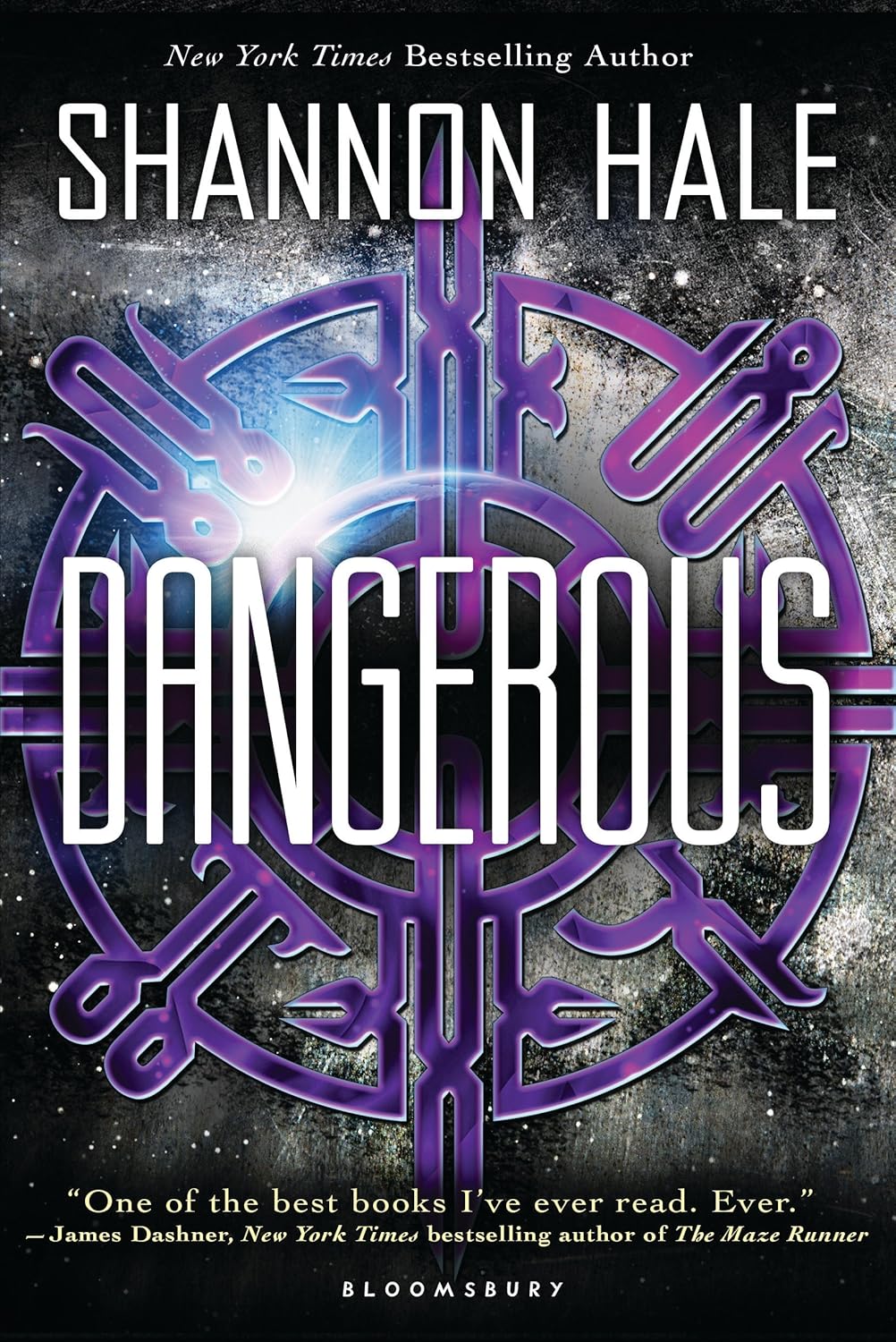
Dangerous - 3.5 stars


     Dangerous, a new novel by Shannon Hale, is a book entirely different from her Books of Bayern series or her Princess Academy series, which are both fantasy. Dangerous reveals an entirely new side of Shannon Hale because it's basically a superhero story, with science and high-action, superpowers, aliens, and then the bad guys on earth trying to use our superheros for their own gain.

     Maisie Danger Brown is an unusual girl to start with, even before anything interesting happens to her. She was born with only one hand to a Spanish-speaking Mom and a biologist Dad. Besides her missing hand and habit of speaking Spanish, there are two other things that make Maisie different from your average person. She's homeschooled and she's obsessed with science and space. So when she gets a chance to attend a space camp for teens, she jumps on it. 

     But Danger is her middle name and somehow can't help attracting it. First, she and four other teens at the space camp are infected by alien technology which gives them superpowers. Maisie can make anything, anything she wants, anything she can think of. It's like a dream come true, but none of the infected kids can be sure what's going to happen next. They know for certain that the infection didn't just 'happen' to them. There was a purpose, and they can all feel it. But their powers are getting out of control, and after the death of one of the new superheroes, the group begins to break up.

     Can Maisie save the team of superheroes from breaking up and wrecking havoc across Earth? Can she figure out what the Purpose that's nagging at them all is? And can she trust her heart now that she's fallen in love? 

     Dangerous was a good book. I don't usually go in for science-fiction type stuff, but this book wasn't quite that. It reminded me a lot of The Avengers, a superhero movie. A team of unlikely people with varied superpowers come together to save the world - maybe from aliens, maybe from something else. It's an action-packed story, but Shannon Hale made it appealing with a singular heroine in the form of Maisie Danger Brown. Maisie has guts, she's smart, and through it all, she tries to do what is right - even when that's not possible to do. 

     There were a few things that keep me from being totally happy with Dangerous, though. I'm totally okay with romance in book, including teen romance that involves kissing, as long as the romance doesn't become the point of the entire story. Maisie's romance wasn't the focus of the book, but she and Wilder kissed way more than I was comfortable with. Despite that, I would have rated Dangerous 4.5 stars except for this one scene when she and Wilder almost went further in their romance than 'just kissing.' And after that, regardless of how good the rest of the story was, I dropped my rating to 3.5 stars.

     Taking an entire star from a rating is a pretty big step, so I want to provide my reasons for that. First, coming from Shannon Hale, just the sheer amount of kissing in Dangerous was kind of a surprise. If you've ever read her Books of Bayern series, you'll know that the kisses are few and far between - and I'm not saying that's a bad thing or a good thing. It's just the way those stories went. And the amount of kissing in Dangerous was just how this particular story goes. I can understand that - doesn't mean I approve of it 100%, but I can tolerate it, and it doesn't get in the way of my enjoying the story. But then there was the almost scene, and that really bothered me. 

     Without getting really deep into this, I basically felt a little betrayed by Shannon Hale for doing that. One, because it was totally unexpected from her. But every writer has a right to write whatever he or she feels like, so that's not her fault. It's up to me to either put up with it and keep reading, or decide it's too much and quite. I didn't quit, but I was more than a little disappointed that Shannon Hale decided to go there. Two, I'm not a fan of that kind of content. I can put up with it, but I don't like it and it really bothers me. The third reason I was so bothered by the almost scene goes back to the fact that Maisie is homeschooled.

     Now, maybe I'm overreacting and being really harsh in my judging here, but everyone should be entitled to their own opinion, and I'm just writing mine. I felt that early on, when Maisie first meets Wilder, she was being represented as a niave homeschooler who has no idea what people are like. Also, when she and Wilder are kissing within three weeks of having met each other, I thought it was going too fast and made Maisie seem gullible. Later, during the almost scene, the way things lined up and the way Maisie thought again felt like they were casting a bad light on homeschoolers. Please note that I don't judge Shannon Hale for writing a homeschooler. Nothing I noticed offended me really - I just smiled and shook my head. It's a fictional book about fictional events and people. I can bear if the book isn't flawlessly realistic.

     I'm also 100% certain that Shannon Hale didn't mean for anyone to have this kind of reaction to Dangerous. She talked to several homeschoolers during the writing of the book, and had people give her feedback on how she represented them. And on the whole, she did a great job. Maisie seemed just like any normal person - and that's really the problem. Homeschoolers are (except in extreme cases) just normal people. The homeschooling didn't really add anything to the story. It's a trivial detail, and the book would probably have been better if it weren't there. When you make your character distinct in some way as big as making her one-handed or homeschooled, readers expect that detail to be vital to the story (at least I do), and homeschooling wasn't. And by having that detail there, Dangerous gets judged a certain way. Maybe all this is hogwash, but its what I thought. If you read Dangerous and have an opinion about how homeschooling and almost were written, comment below - I'd love to hear from you.

     In the end, the almost in Dangerous bugs me, but besides that I really enjoyed it. It had great characters, great action, and a great plot. I discovered I have a thing for superpowers, and these were really cool! Plus the aliens were obviously not a rip-off of something that had been written before. In a genre full of science-fiction-alien-invasion stories, I think Shannon Hale has carved out her own niche with superheros and a brand of bad guys that no one has thought of before. If you're really picky about the content you're getting in a book, the almost might be too much for you, but the rest of the book is very good. I'm not a big sci-fi reader, but I liked it. The romance was stronger than suited me, but the plot itself was captivating and gives a good example of how talented Shannon Hale is. She wrote a book outside of her normal fantasy genre, and came up with something very distinct and interesting.

     As a final note to a really long review - I apologize, I had no idea I'd go on this long! - I want to share this statement I found on Shannon Hale's website:  
Dangerous is a "novel that asks, How far would you go to save the ones you love? And how far would you go to save everyone else?" A big question for just one book to deal with, but Shannon Hale does a good job of it.
Link to author website: http://www.squeetus.com/stage/main.html
Also, there's a post on Hale's blog where she talks about Dangerous and the main character, Maisie Danger Brown, which you can find HERE if you're interested in hearing more.

Sunday, January 25, 2015

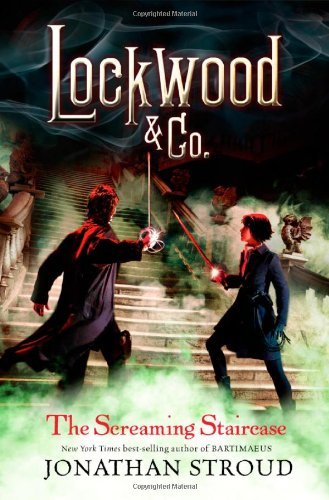
The Screaming Staircase - 4.5 stars

Second edition cover
     The Screaming Staircase by Johnathan Stroud is another new book I picked up recently. Johnathan Stroud wrote the Bartimeaus Sequence - I reviewed the first book in that series earlier. I've liked most of what I've read from Stroud. A few of his stand-alone novels didn't appeal to me much, but I've always liked the Bartimeaus Sequence, so when I saw he was writing another series, I gave it a go.

     The Screaming Staircase is the first book in the Lockwood and Co. series. It could be only a trilogy, which would be a shame, but since it's not finished yet - the second book in the series, The Whispering Skull, only came out September 2014 - I don't know. But so far, I've really enjoyed the first two books, so I'm probably going to be getting myself any sequels he comes up with.

     This story is set in London. A sinister Problem has been troubling the world for nearly fifty years now. All manner of ghosts and spirits have begun to appear in rapidly increasing numbers, and they don't appear to be friendly. Unfortunately, only young people have the ability to perceive these spirits. Many different agencies have sprung up, employing hundreds of adolescents and children to find and destroy these Visitors, as the spirits are called.. Lucy Carlyle is a brave and talented young agent with the ability to hear the Visitors. When she teams up with clever, charismatic Anthony Lockwood and his mildly repulsive assistant George, they all have hopes that the agency is about to make its mark on the world.

     Unfortunately this is not to be, and after their latest case ends disastrously with a house going up in flames, Lockwood and Co. face the possible end of their new agency. To save it, they must brave the most dangerous haunted house in London, perhaps in all of England. Combe Carey Hall has a reputation of spirits and hauntings that stretches back several centuries - long before the Problem really began. Can the three intrepid agents survive the horrors of the Screaming Staircase and the Red Room? Can they put an end to the haunting of Combe Carey Hall, or will they be the next three lives the forces of that house have taken?

     The Screaming Staircase was definitely a page-turner. Stroud balanced the comfy relationship of the three-person agency with a lot of fast-paced action and really dangerous situations. I was also really captivated by the originality of the plot. The story is set in slightly post-modern London, but it wasn't sci-fi at all. Something else that I found was interesting was the fact that agents use rapiers to fight Visitors - what's not to like about some dashing teens with flashing, silver-coated blades? Furthermore, there was definitely a mystery element to this story, and although the clues were there, I was kept deliciously guessing the entire time. I think you can agree that that's a mark of very good story-telling.

First edition cover
     As for the characters of The Screaming Staircase, they display Stroud's trademark sarcasm and humor. If you're like me and couldn't get enough of Bartimeaus in the Bartimeaus Sequence then the characters in Lockwood and Co. have a taste of that same sharp wit and irresistible, careless charm. Lucy is a very plucky and extremely admirable young lady. I didn't expect her to be my favorite, but she is, hand's down. It's also hard not to be charmed into liking the irrepressible Lockwood, and though I still have my doubts about George, he turned out to be a good egg after all. 

     Another mark of Stroud's ability to write very, very good stories is the Visitors. The descriptions of ghosts, spirits, and other things not quite of this world that stem from the Problem are incredibly riveting, and though I really should say 'realistic' that's what I'm going to go with. I honestly wished I hadn't started to read the climax after dark, because what they encountered in the Red Room was actually pretty scary stuff. If you've got a problem with getting emotionally involved with a book and getting as freaked out as the characters are, then you'll probably want to save The Screaming Staircase for strictly daytime reading.

     Other than that, The Screaming Staircase was a captivating and fun read from an author I know and trust to write good, high-quality material and tell intriguing stories. I'm actually really impatient for the next book to be published.

Link to series website: http://www.lockwoodandco.com/

Thursday, January 1, 2015

The Grimm Legacy ~ 3 stars

     The Grimm Legacy, by Polly Shulman, was a spontaneous read for me. I've never heard of Shulman before, or read any of her writing, but when I stumbled across the book on Amazon, I thought it looked interesting, particularly the cover. The description also said that it involved the Grimm Brothers' fairy tales, like Hansel and Gretel, The Twelve Dancing Princesses, and lots of the more obscure ones - ever heard of Jordina and Joringel? That one isn't exactly a bedtime story, I can tell you that. But I like fairy tales - even the obscure ones - so I decided to give The Grimm Legacy a go.

     The Grimm Legacy starts out like some sort of modern day mystery-and-magic story, with an ordinary teenage girl called Elizabeth going to an ordinary high school and having ordinary crushes on -- well, not on ordinary guys, but you get the idea. The story quickly takes a turn in a very interesting direction, however, when Elizabeth is hired to work at a library/museum call the repository. The repository contains the largest collection of items in the world. And not just any collection. Not only do they have one of nearly every kind of shoe, household item, tool, article of clothing, and even book that has ever been created, there are also special vaults that hold certain, important, powerful items.

     Items that appear to come straight from the pages of the Grimm Brothers' fairy tales. And when Elizabeth is allowed to work in these vaults, she learns that some of them are actually really magical, just like in the stories. These magical items, along with anything else in this enormous collection, can be borrowed. But some of the magical items are losing their power or being replaced with fakes! It's up to Elizabeth and her coworkers, Anjali, Marc, and Aaron, to solve the mystery and return the items - without getting themselves caught, fired, or turned into statues by the thief. 

     For the first five or six pages of The Grimm Legacy, I was wondering if this was going to turn out to be another middle-grade level story about problems in school, witches and wizards, and teen romances. I've read a few of those, and they've never struck me as particularly interesting, or well-written. But The Grimm Legacy isn't one of those - it's amazingly unique. Although it does have elements of a middle-age story about a girl in high school with crushes on boys, it also has a dash of magic that spruces up that otherwise dreary concept and makes it something that's actually very entertaining to read.

     I was, however, a little disappointed by the romance. Elizabeth starts the book with a crush on Marc, a basketball player for her school's team. She also gets to know Aaron, who works with her at the repository. For most of the book, I was never sure which guy she'd end up with, because Marc sometimes seemed to be dating Anjali, who Aaron had a crush on. I know, confusing. And that was part of what turned me off. But the romances were also a little cookie-cutter - a little too perfect. Maybe that's just me, but they didn't really detract from the story.

     In the end, I liked it enough to be interested in how it ended, and I may check out the sequel, The Well's Bequest. It's not a book I'm going to reread frequently, but it was fun while it lasted. And it was a pretty well-written story, with an interesting plot, and just enough characters to be fun, without getting over-complicated. It's not really a boys' book, but my younger sister is reading it now, and I think she's going to like it at least as much as I did.

Link to author website: http://www.pollyshulman.com/